Secular Calvinism?

Adherents of the political tendency known as libertarianism often defend their positions with appeals to economic theory.  They do not often show a high regard for the concerns of environmentalism.  So when a libertarian think tank publishes a book that equates the academic discipline of economics with the environmentalist movement, one may well take notice. 

In The New Holy Wars: Economic Religion vs Environmental Religion in Contemporary America, Robert H. Nelson of the Independent Institute argues that the forms of academic economics that have influenced policymaking in the US in recent decades, like the forms of environmentalist thought that have begun to play a role in public affairs, are secularized versions of Calvinism.  How so?  To quote the Independent Institute’s summary:

The deepest religious conflicts in the American public arena today—the New Holy Wars—are crusades fought between two secular religions: economic religion and environmental religion. Each claims to be scientific, even value-neutral, yet they seldom state their underlying commitments explicitly, let alone subject them to scrutiny. Environmental religion views wilderness as sacred, seeks salvation through the minimization of humankind’s impact on nature, and proselytizes using imagery meant to stir spiritual longings. In contrast, economic religion worships technological innovation, economic growth (as measured by GDP), and efficiency (as revealed by cost-benefit analysis) and is presided over by a priesthood of Ph.D. economists who communicate in a liturgical language unintelligible to the layperson.

Nelson is himself an economics Ph.D, having received that degree from Princeton University in 1971.  If one of the tenets of the religion of economics is that economics is not a religion, that would make him a wayward priest.  The summary goes on:

Although rarely acknowledged, environmental religion owes its moral activism, ascetic discipline, reverence for nature, and fallen view of man to the Protestant theology of John Calvin. A remarkable number of American environmental leaders, including John Muir, Rachel Carson, David Brower, Edward Abbey, and Dave Foreman, were raised in the Presbyterian church (the Scottish branch of Calvinism) or one of its offshoots. Earlier forerunners of modern environmentalism who were influenced by Calvinism include the American transcendentalists Ralph Waldo Emerson and Henry David Thoreau and the French philosopher Jean-Jacques Rousseau, who offered a secular version of the fall of man from the original “state of nature [in which] man lived happily in peace.”

That’s an interesting claim, and a list of very diverse people.  Nelson seems to focus on the USA, but it would be interesting to contrast the environmentalisms that have taken hold in countries with histories of Calvinism with the environmentalisms that have taken hold where Calvinism was never ascendant.  Onward:

Economists often rely on assumptions that are better categorized as theological than as scientific. Many economists assume that human welfare is a product of the consumption of goods and services alone and that the institutional arrangements that produce those goods and services can be ignored. Some economists assume that eradicating poverty will end crime and usher in a new era of morality. Also, economists typically assume that psychological stress caused by an economic transition to a more efficient allocation of resources is negligible and not worth factoring in. “If [emotional burdens] were actually given full account, it would be impossible to say in principle whether a market system is economically efficient,” writes Robert Nelson.

Coming from a libertarian economist, the statement that “If [emotional burdens] were actually given full account, it would be impossible to say in principle whether a market system is economically efficient” is as amazing as Luther’s Ninety Five Theses were coming from a Roman Catholic priest in 1520. 

The missionaries of environmental religion have managed to get some of their dogmas implemented in poor countries, often with devastating consequences for local populations. Under the banner of saving the African environment, they have promoted conservation objectives that have displaced and impoverished Africans. This catastrophe has occurred because environmental religion has misunderstood African wildlife management practices and problems.

To the extent that this is true, I suspect it is not because of the intellectual forebears of contemporary environmentalists, but because those environmentalists have come to Africa as agents of Western bureaucracies.  As such, they have been constrained to act and think in the terms those bureaucracies made available to them, terms which often have little connection to the social and ecological realities of Africa. 

There is another, shorter, summary on the same page:

“Economics and environmentalism are types of modern religions.” So writes Independent Institute Senior Fellow Robert H. Nelson, author of The New Holy Wars: Economic Religion versus Environmental Religion in Contemporary America, an in-depth study of the origins and implications of the conflict between these two opposing belief systems.

“If it makes a reader of this book more comfortable, he or she may think of it as an examination of the ‘spiritual values’ of economics versus the ‘spiritual values’ of environmentalism,” writes Nelson in his introduction. “For me, though, it is a distinction without a difference.”

In The New Holy Wars, Nelson probes beneath the rhetorical surface of economic and environmental religion to reveal their clashing fundamental commitments and visions. By interpreting their conflict as theological, Nelson is able to show why these creeds almost invariably talk past each other and why their conflict is likely to continue to dominate public discourse until one party or the other backs down—or unless an alternative outlook rises to challenge their influence in the public arena.

In addition, by exploring little-known corners of American intellectual history, Nelson shows how environmentalism and economics have adapted Judeo-Christian precepts in ways that make them more palatable in an age of secularism. In many cases, Nelson is able to demonstrate a direct lineage from traditional religious beliefs to tenets held by mainstream economists and environmentalists.

Some readers of this blog have expressed interest in “political theology,” the idea that there are no truly political belief systems, but that all political theories are simply theological doctrines in disguise.  This notion is often associated with the German legal scholar (and onetime NaziCarl Schmitt (1888-1985.)  Say what you will about Schmitt’s detestable activities from 1933 to 1937, he made a powerful case for political theology.  Nor did he originate the notion; it can be traced back to Cicero’s Laws (especially book 1, chapter 8), and back of Cicero to the Stoics, with the idea that a certain memory of the Divine lingers in the human mind and that the various legal codes and religious practices of the world result from the attempts of various peoples to translate  that memory into a guide for action.  If there is truth in political theology, then we would expect both economics and environmental theories to be driven by unacknowledged theological commitments.

Can the USA become a normal country again?


He wanted to to return to normalcy

I posted a “Periodicals Note” about The American Conservative‘s March issue a few weeks ago, then realized I’d never put one up for the February issue.  That’s a shame, because there was a lot of great stuff in it. 

I loved this line, a quote from Julian Sanchez of the libertarian Cato Institute: “Thus far, the approved conservative position appears to have been that Barack Obama is some kind of ruthless Stalinist with a secret plan to turn the United States into a massive gulag—but under no circumstances should there be any additional checks on his administration’s domestic spying powers.”

Ted Galen Carpenter sums up The American Conservative‘s whole worldview with the opening paragraphs of his piece titled “New War Order.”   So I’ll quote them in extenso:

For a fleeting moment 20 years ago, the United States had the chance to become a normal nation again. From World War II through the collapse of European communism in 1989, America had been in a state of perpetual war, hot or cold. But with the fall of the Berlin Wall, all of that could have changed. There were no more monsters to destroy, no Nazi war machine or global communist conspiracy. For the first time in half a century, the industrialized world was at peace.

Then in December 1989, America went to war again—this time not against Hitler or Moscow’s proxies but with Panamanian dictator Manuel Noriega. Tensions between George H.W. Bush’s administration and Noriega’s government had been mounting for some time and climaxed when a scuffle with Panamanian troops left an American military officer dead. On Dec. 20, U.S. forces moved to oust and arrest Noriega. Operation Just Cause, as the invasion was called, came less than a month after the Berlin Wall fell, and it set America on a renewed path of intervention. The prospect of reducing American military involvement in other nations’ affairs slipped away, thanks to the precedent set in Panama.

How real was the opportunity to change American foreign policy at that point? Real enough to worry the political class. Wyoming Sen. Malcolm Wallop lamented in 1989 that there was growing pressure to cut the military budget and that Congress was being overwhelmed by a “1935-style isolationism.” But the invasion of Panama signaled that Washington was not going to pursue even a slightly more restrained foreign policy.

That the U.S. would topple the government of a neighbor to the south was hardly unprecedented, of course. The United States had invaded small Caribbean and Central American countries on numerous occasions throughout the 20th century. Indeed, before the onset of Franklin Roosevelt’s Good Neighbor Policy in the 1930s, Washington routinely overthrew regimes it disliked.

During the Cold War, however, such operations always had a connection to the struggle to keep Soviet influence out of the Western Hemisphere. The CIA-orchestrated coup in Guatemala in 1954 and the military occupations of the Dominican Republic in 1965 and Grenada in 1983 all matched that description. Whatever other motives may have been involved, the Cold War provided the indispensable justification for intervention. And for all the rhetoric about democracy and human rights that U.S. presidents employed during the struggle against communism, there was no indication that Washington would later revert to the practice of coercing Latin American countries merely, in Woodrow Wilson’s infamous words, to teach those societies “to elect good men.” Thus the invasion of Panama seemed a noticeable departure. Odious though he may have been, Noriega was never a Soviet stooge.

(more…)

Do you favor or oppose ___ serving in the military?

Thanks to Language Log for results of a CBS News poll showing these response rates:

Do you favor or oppose homosexuals serving in the military?  Strongly favor, 34%; somewhat favor, 25%; somewhat oppose, 10%; strongly oppose, 19%

Do you favor or oppose gay men and lesbians serving in the military?  Strongly favor, 51%; somewhat favor, 19%; somewhat oppose,7%; strongly oppose, 12%

Dictionary Too Sexy for Grade-Schoolers

backspace.com

Grade-schoolers learn sexy words on the street corner instead.

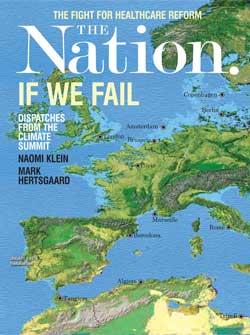
The Nation, 15 February 2010

Ramon Fernandez was a French fascist who actively collaborated with the Nazis during their occupation of France.  His son, Dominique Fernandez, has written a biography of his father.  The Nation‘s review describes this biography as the culmination of Dominique Fernandez’ life’s work, his attempt to comprehend what his father did and why he did it.

Anyone who hoped that the election of Barack Obama as US president heralded a return to the rule of law will be dismayed by the news sections of this issue.  An article on “America’s Secret Afghan Prisons” lays out evidence that the Mr O’s administration, so far from ending Bush-Cheney’s policies of torture  and disappearance, has intensified those policies.  That article’s author, Anand Gopal, gave an interview about the story, which you can listen to here

Reports suggesting that three men who allegedly hanged themselves at the Guantanamo Bay detention camp in 2006 were in fact murdered move the editors to say that Mr O’s refusal to order investigations into the charges against his predecessor amount, not only to dereliction of his duty as a law-enforcement officer, but to a cover-up of crimes against humanity. 

Defense Secretary Robert Gates’ acknowledgement that the Blackwater Group’s soldiers-for-hire are operating in Pakistan and the Pentagon’s subsequent assertion that the secretary never said the words he was shown on television saying prompts the magazine to quote the Washington adage, “Never believe anything until it’s been officially denied.”  Any Nation readers unconcerned by Blackwater’s expanding operations might want to look at a web-only piece, “Blackwater’s Youngest Victim.”

Cindy McCain in Favor of Recognizing Homosexuals as People

washingtonpost.com

Sane Mrs. McCain

Separated at birth?

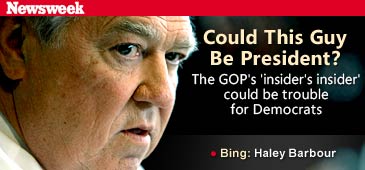
Newsweek thinks Mississippi’s Governor Haley Barbour looks like a future president:

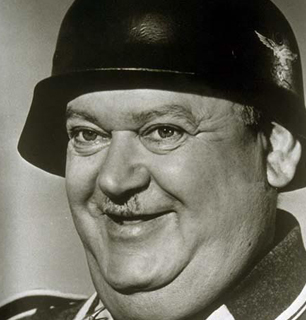
I think he looks more like a figure from the past:

Pete Seeger

Pete Seeger turned 90 in May; his birthday party, an intimate little gathering of 18,000 of his closest personal friends, was released on DVD this month, leading to some publicity.  Here are a few videos in his honor.

If You Love Your Uncle Sam (Bring ’em Home.)  Sadly, this Vietnam-era song is not just for nostalgia; here‘s an updated version.  

Wimoweh, with the Weavers

What Did You Learn in School Today?

Guantanamera

Solidarity Forever

The Nation, 4 January 2010

Several reports on the Copenhagen summit on climate change draw Alexander Cockburn out with a column trumpeting his dissent from the view that by dumping such great volumes of greenhouse gases in the upper atmosphere humans are doing enormous harm to the environment.  Cockburn never convinces me when he mounts this hobby-horse of his, but I must confess to taking pleasure in the self-righteous sputtering that fills the letters to the editor in the subsequent issues.  For every well-reasoned counterargument from someone with a grasp of the science and a solid case to make against Cockburn’s claims, the magazine must receive hundreds of letters from people who are not at all equipped to analyze climate data but who are entirely prepared to denounce a heretic and cast him out.  I’m fairly sure that Cockburn is wrong and his detractors are right about climate.  At the same time, I’m quite certain that he is doing a public service by luring would-be enforcers of orthodoxy into the open.  He’s even doing a favor to them; if the self-appointed Grand Inquisitors have the sense to read their letters and realize that they have made fools of themselves,  they might shed their crusading demeanor and adopt a more wholesome attitude.

On The Nation‘s website, there’s a piece about the president of Italy’s parliament, Gianfranco Fini.  The piece notes the rather amazing fact that this man whose political career began in the neofascist Italian Social Movement has became “the country’s most responsible right-wing politician.”  Several months ago, The Independent praised Fini’s willingness to stand up to Prime Minister Silvio Berlusconi in defense of values like accountable government, a secular state, and openness to immigration, values that liberals and socialists are supposed to care about but that the leaders of Italy’s center-left parties seldom lend their full-throated support.  The Independent called Fini “the best leader the Italian Left never had.”  This really is an extraordinary transformation; as recently as 1994, Fini described Benito Mussolini as “the greatest statesman of the twentieth century.”  How anyone could possibly apply that label to il Duce is beyond me.  Before Mussolini came to power he was in some ways an intriguing figure, I grant you.  He led an highly colorful life, full of adventure and rich in ideas.  As a national leader, however, Mussolini was a disaster by any standard of evaluation.  The evil he did (for example, sending 3,000 Italian Jews to die in Hitler’s camps) infinitely outweighed any good with which he could be credited, yet in the end it was his sheer incompetence that triumphed even over his murderous villainy.  This is a digression, I suppose; Gianfranco Fini seems to be highly competent, and no more likely to commit murder than the average Western European politician. 

Katha Pollitt’s annual list of worthy charities includes, as usual, MADRE, a fund that backs various groups of women in poor countries who have organized themselves to combat their own problems on their own terms.  For example:

In Iraq, it supports Yanar Mohammed’s network of secret shelters for women fleeing domestic violence and honor murder. In Kenya, it works on water purification projects that free women from the task of transporting water over long distances. In Bolivia, it helps indigenous women prepare to run for political office. Right now, 100 percent of your gift goes directly to projects.

Barry Schwabsky’s review of some recent retrospectives on abstract painting includes a snippet that may provoke a response.  After telling us that he experiences art one work at a time and looks with a skeptical eye on all art history that describes movements and schools, Schwabsky says:

Abstraction arguably should have even less to do with movements than any other art: a movement of abstractionists would be a contradiction in terms, like a church of atheists. Abstractionists, like atheists, are united only in what they reject. Abstraction is not a specific way of doing art–on what basis can Jackson Pollock, Lucio Fontana and Daniel Buren be considered part of a single movement? Rather, it is a considered effort not to do what Western artists have made it their job to do for hundreds of years: namely, to construct credible depictions of people, places and things. What if anything else goes?

Perhaps that’s why, as Bob Nickas points out in his new book Painting Abstraction: New Elements in Abstract Painting (Phaidon Press; $75), “so many contemporary artists who paint nonrepresentational pictures reject the notion that their work is in fact abstract.” They realize that the name itself, as handy and unavoidable as it undoubtedly may be, conveys a false sense of unity. Other commonalities, even those that would rightly strike us as quite superficial, can be more important.

Tiger Woods crops up.  Ever since news started hitting the papers of Woods’ very active extramarital sex life, I’ve been thinking of William Blake.  “Tiger, tiger, burning bright,/ in the forests of the night…”  Or is it “Tiger, Tiger, burning sensation/ experienced during urination…”  Anyway, the item here is all about how Tiger Woods has spent his career promoting sleazy schemes by global bad actors such as Chevron and the Philippine government, all the while pretending that he had nothing to do with politics.

Venue

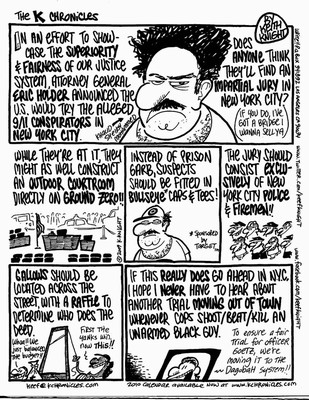
Keith Knight’s latest K Chronicles cartoon:

Some recent comments by Barack Obama, and a little joke about them:

In an interview with NBC News, Obama said those offended by the legal privileges given to Mohammed by virtue of getting a civilian trial rather than a military tribunal won’t find it “offensive at all when he’s convicted and when the death penalty is applied to him.”

Obama quickly added that he did not mean to suggest he was prejudging the outcome of Mohammed’s trial. “I’m not going to be in that courtroom,” he said. “That’s the job of the prosecutors, the judge and the jury.”

 The president then elaborated: “I’m not going to be on the jury that will report its guilty verdict at 3pm on September 11, 2010, nor will I be the one who administers the lethal injection that will kill Khalid Sheikh Mohammed a week before Election Day 2012.  I used to teach constitutional law, so I can tell you that it would be a violation of due process for me to do those things.”   

In fact, I do believe that they can find an impartial jury in New York City.  I would go so far as to say that Manhattan is probably the one place in the USA where it would be easiest to empanel twelve jurors who can judge the case against Khalid Sheikh Mohammed on its merits.  That’s not only because the island is a bastion of liberalism, but also because the further you go from Ground Zero the more Americans you find who feel they have to prove that 9/11 was an event in their own lives and not just something they saw on TV.  If as Knight sarcastically suggests they did set up a temporary courtroom on the former site of the World Trade Center, the attacks would have a definite reality for the jurors- they would be real events, with specific causes, specific consequences, specific forms that could be examined empirically.  Go a thousand miles away, and the attacks become a symbol with an infinite variety of overpowering emotional associations.  That’s part of the reason why the Bush-Cheney administration had an easier time using the attacks to sell its agenda to voters far outside of New York than to those in the city in those first years of the “War on Terror.”