The Nation, 9 November 2009

nation 9 nov 09For me, the highlight of this issue was a review of Mary Beard‘s The Fires of Vesuvius: Pompeii Lost and Found.  Beard’s “down to earth portrait of Pompeii” is informed by her grasp of “the latest research in demography, the history of Roman politics, architecture, ancient economics, feminist and post-colonial studies.” 

The same issue includes a number of articles about the war in Afghanistan.  As the editors summarize this symposium:

The principal rationale for America’s expanding military commitment in Afghanistan is that a Taliban takeover there would directly threaten US security because it would again become a safe haven for Al Qaeda to plot attacks against the United States. But the essays by Stephen Walt and John Mueller strongly refute that assumption, pointing out that a Taliban victory would not necessarily mean a return of Al Qaeda to Afghanistan, and that in any case the strategic value of Afghanistan and Pakistan as base camps for Al Qaeda is greatly exaggerated and can be easily countered.

Similarly, proponents of sending more troops to Afghanistan argue that Taliban success would embolden global jihadists everywhere and destabilize Pakistan in particular. Yet, as the essays by Selig Harrison and Priya Satia show, this narrative does not fit the realities. While American policy-makers and Al Qaeda may think of this as a grand meta-struggle between the United States and global jihadism, many Taliban fighters are motivated by other factors: by traditional Pashtun resistance to foreign occupation; by internal ethnic politics, such as rebellion against the Tajik-dominated government of Hamid Karzai; or by anger over the loss of life resulting from American/NATO aerial attacks that have gone awry.

As for Pakistan, the essays by Manan Ahmed and Mosharraf Zaidi explain why the Taliban threat to Pakistan is not as serious as many assume, and why a newly democratic Pakistan has turned increasingly against Islamist extremists. As Ahmed and Zaidi suggest, Pakistanis are quite capable of defending their country–not for American interests but for their own reasons–and Pakistani stability is more likely to be threatened than enhanced by military escalation in Afghanistan.

And finally, Robert Dreyfuss offers an exit strategy: as it winds down its counterinsurgency, Washington should encourage an international Bonn II conference that would lead to a new national compact in Afghanistan.

Well, not quite “finally.”  The issue also includes a piece by Ann Jones about Afghan women.  Jones mentions groups like Feminist Majority that argue for a continued US troop presence in the name of Afghan women’s rights.  She mentions her own years of experience working with women in Afghanistan, and gives it as her assessment that “an unsentimental look at the record reveals that for all the fine talk of women’s rights since the US invasion, equal rights for Afghan women have been illusory all along, a polite feel-good fiction that helped to sell the American enterprise at home and cloak in respectability the misbegotten government we installed in Kabul.”  In light of the fiercely patriarchal Shi’ite Personal Status Law (the SPSL, “or as it became known in the Western press, the Marital Rape Law,”) she goes on to say that “From the point of view of women today, America’s friends and America’s enemies in Afghanistan are the same kind of guys.”  She is unimpressed by the number of women in the Afghan parliament:

But what about all the women parliamentarians so often cited as evidence of the progress of Afghan women? With 17 percent of the upper house and 27 percent of the lower–eighty-five women in all–you’d think they could have blocked the SPSL. But that didn’t happen, for many reasons. Many women parliamentarians are mere extensions of the warlords who financed their campaigns and tell them how to vote: always in opposition to women’s rights. Most non-Shiite women took little interest in the bill, believing that it applied only to the Shiite minority. Although Hazara women have long been the freest in the country and the most active in public life, some of them argued that it is better to have a bad law than none at all because, as one Hazara MP told me, “without a written law, men can do whatever they want.”

Jones sees little hope, and much tragic irony in the possibilities facing Afghanistan:

So there’s no point talking about how women and girls might be affected by the strategic military options remaining on Obama’s plate. None of them bode well for women. To send more troops is to send more violence. To withdraw is to invite the Taliban. To stay the same is not possible, now that Karzai has stolen the election in plain sight and made a mockery of American pretensions to an interest in anything but our own skin and our own pocketbook. But while men plan the onslaught of more men, it’s worth remembering what “normal life” once looked like in Afghanistan, well before the soldiers came. In the 1960s and ’70s, before the Soviet invasion–when half the country’s doctors, more than half the civil servants and three-quarters of the teachers were women–a peaceful Afghanistan advanced slowly into the modern world through the efforts of all its people. What changed all that was not only the violence of war but the accession to power of the most backward men in the country: first the Taliban, now the mullahs and mujahedeen of the fraudulent, corrupt, Western-designed government that stands in opposition to “normal life” as it is lived in the developed world and was once lived in their own country. What happens to women is not merely a “women’s issue”; it is the central issue of stability, development and durable peace. No nation can advance without women, and no enterprise that takes women off the table can come to much good.

Jones knows Afghanistan quite well; I know it not at all.  I can only hope that there is something left in the local culture of the seeds from which a relatively woman-friendly Afghanistan once grew, and that those seeds will again send up green shoots once foreign armies leave the country .

It’s a Long Long Way- UB40

WARNING: EXCESSIVE BLASPHEMY

What do we need to have in common if we are to communicate with each other?

Regular readers of this site know that Believer1, alias Mrs Acilius, is a sociologist.  Lately she’s been spending time with a school of thought called Symbolic Interactionism.  American social theorist George Herbert Mead is usually named as the founder of Symbolic Interactionism.  The Believer has shared with me some claims that Symbolic Interactionists make that she finds problematic.  For example, Mead defined communication as something that occurs if and only if one person sets out to elicit a particular response from another person and then sees that other person respond in that way.  So, if I tell you a joke in order to make you laugh, I have communicated with you if and only if I have seen you laugh.  When she reads this sort of thing, the Believer transforms into the Disbeliever.  Could anyone really use the word “communication” only in this very narrow sense? 

blogger-in-computer1The November 2009 issue of Chronicles: A Magazine of American Culture includes a number of pieces that remind me of Symbolic Interactionism.  The highlight of the issue is Chilton Williamson’s column.  Williamson seems to have a Mead-like sense of the limits of communication.  Williamson finds fault with the mass media, not only for being controlled by corporations and other self-interested bureaucracies, nor for showing political biases in one direction or other, but precisely because they are massive.  Williamson writes:

[T]he mass media of today are capable only of lies.  Or, to put it another way, they are incapable of speaking, or transmitting, truth, including the so-called facts… The media have nothing worthwhile to say because the audience they address is, by definition, a mass audience- that is, in terms of genuine human communication, no audience at all.  Both the right and the left, Republicans and Democrats, have been denouncing media bias for generations.  Media bias, they claim, prevents the people from having the true facts about public life, and thus makes democracy unworkable.  But really the situation is the same no matter which side runs the show.  The media represents the massed mental power of the corporate world, political as well as business, and that power is the power of the Prince of Lies.  “In this age of democracy,” John Lukacs says, “[the] intrusion of mind into matter tends to increase.”  This is because mind intruded into matter becomes mere matter- in other words, mere product.

Williamson contrasts the USA that Alexis de Tocqueville described in 1831, where “Americans lived and breathed the politics of their towns, their states, and their country,” and where political debate was the usual mode of conversation among men, with our version of the same country:

Today, Americans assiduously avoid discussing politics in social situations.  Their political conversations occur almost in hiding, among family or like-minded associates, or one-way– nightly, in the privacy of their dens in front of the television set- as Hannity and Beck reinforce their own opinions: remote and unanswerable presences, but reassuring ones.  It is all a bit like watching pornography.

How do those of us who find Hannity and Beck anything but reassuring respond to this situation?

The homogenized, disinfected, carefully controlled, and apparently neutral and anodyne content sustained by the mass media, by denying notice to, and access by, minority opinion, quite naturally ensures that dissenters develop progressively hostile, extreme, and unreasonable opinions and ideas and resort to the relatively unregulated internet to express them.  Unlike the official media, the web is a bedlam of raw personal opinion, but here lack of constraint has the same result as overconstraint: suspicion, uncertainty, and resentment… The unpleasant truth is that every writer needs an editor, albeit an honest editor who is as well an individual and a human being, not a corporate automaton.  Ultimately, unrestrained populist babble is no more reliable than the corporate monotone that pretends to inform us about the shape and content of the modern world we inhabit.  

The products mass media bring to the market less and less resemble tools through which we can look at the world, more and more take on the character of accessories with which we decorate ourselves.  Williamson quotes Jean Guéhennoc, who wrote that “the ultimate stage of democracy by media will be reached when political debate no longer has any influence on actual decisions but on the collective perception that a people has of itself.”  It may seem superfluous, but Williamson follows this quote with a reference to Barack Obama, elected by a people overwhelmingly opposed to his predecessor’s policies of war in Asia and bailouts for Wall Street, who has used his office to expand wars and bailouts alike. 

How have we come to this desperate pass?

Short of either a nuclear winter or a global-warming summer that destroys much of the natural world and civilization along with it, the media will dominate what remains of that civilization for as far as the human eye can see.  The media are no plot but a technological excrescence that was not designed overall but incrementally, and according to technological and financial, rather than human, logic.  There is the problem.  Mass communications are destructive because they claim to communicate without doing so, and the reason they cannot communicate is that human communication multiplied by scores of millions of times is impossible.  To address everyone at once is to address nobody at all. 

For Williamson, communication among human beings means connection among human beings.  A charismatic speaker may be able to form some kind of connection with a large group, but even the most charismatic speakers are limited in the kind of connection they can form with such a group, and thus with the kind of message they can communicate; “Christ Himself appears to have limited his audiences to 5000 people, while saving His choicest teachings for private discussions with the Twelve.” 

(more…)

What is an “ex-gay”?

When a friend asked me shortly after my religious conversion what an “ex-gay” was, I replied, “Oh, that’s what evangelicals call their gay people.”

[Disputed Mutability, via Eve Tushnet]

Fun with Stats


I love this but I wish it was about my stats friend SPSS.  Oh and of course, they should have taken the God’s name in vain part out.  I don’t know why most rappers think rap can’t be clean.

Crushie moves into the Acilius-Believer1 household

Hi all,

I am sorry I have not been on the blog lately.  I usually am sick of computers by the time I am free.

I really want to share this video of our newest family member enjoying a swim.  He was given to us by a really good friend.  He is definitely a gift that keeps on giving, in a good way.  Enjoy!

Crushie’s first swim

Pattern recognition

Friend of the blog Armelle Europe has posted a couple of hilarious videos by Alfred Williams at her website, Ukulele and Languages.  If you like puns, you’ll like “I Can’t Think of Any Jokes“; if you like visual puns, you’ll like “Trinidad Looks Quite Like Wales.”  Some time ago, Armelle embedded a video of Alfred Williams performing “Love Machine” in Latin, which I include below.

Machina Amoris

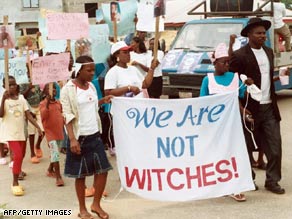
Christians Torture “Witch” Children

Nigerian Child Witch Hunt Protest

Nigerian Child Witch Hunt Protest

Nigerian families pay pastors to exorcise, torture, and kill suspected witch children.

Child Killer Bishop Sunday Ulup-Aya

Petition to Prosecute Child Killer Helen Ukpabio

Sexuality, Women, and the Movies

Eve Tushnet promotes her review of some recent film release with a mock headline declaring it  “A terrific date movie!  Unless you’re heterosexual or something.”  I love that “or something.”  I’m not sure whether she includes her non-heterosexual self among those for whom the picture is a less than terrific date movie. 

Click to read

Click to read

Friend of the blog Duncan Mitchel has recently put up two posts (here and here) about something that Tushnet’s line reminded me of.  In a 1985 edition of her strip Dykes to Watch Out For, cartoonist Alison Bechdel lays out a test for movies.  “One, it has to have at least two women in it; who, two, talk to each other about, three, something besides a man.”  Duncan calls this “Liz Warren’s Rule,” because Alison says she got it from her friend Liz Warren.  In his first post, Duncan looks at some published works that predate the DTWOF strip and include precursors of the Rule; in his second, he describes a South Korean movie that surprises him by meeting the requirements of the Rule.  Some of the precursors seem to me a bit harsh; for example, in an essay published in 1975 Samuel R. Delany wrote that “any novel that does not, in this day and age, have a strong, central, positive relation between women can be dismissed as sexist (no matter the sex of the author) from the start.”  A woman who had written a novel which did not have such a relation at its center might be rather surprised to find Mr Delany dismissing her work as sexist, but that’s what the guy said.

Earworms

Poopy in closeup (click for video)

Poopy in closeup (click for video)

A couple of weeks ago, Ukulele Hunt included Poopy Lungstuffing’s “Dolly Got a Haircut” in the weekly roundup of uker vids.  It’s been playing in my head ever since.  I invite you to listen and see if you have the same reaction.  It sounds a lot like the song Tom Waits would have written if he’d spent his childhood as a young girl who was self-conscious about her mental health. 

If Poopy’s song does stick in your head and you’re looking for something to vie with it, you might stay on YouTube and switch to TorontoUkes.  They’ve posted a bunch of videos from this month’s Corktown Ukulele Jams.  I’d say five of the strongest entries include Marianne Girard’s cover of “What a Wonderful World,”  Paul Yedema’s of “Drinking EX and Asking Why,” and Sunny Widerman’s of “Levon.”   Of the originals, my favorites are Zoe Henderson’s “Cryin’ in My Sleep” and Eve Goldberg’s “Pineapple Sorbet.”  

Girard’s “What a Wonderful World” is radically simpler and more wistful than Israel Kamakawiwo’ole’s iconic version.  Her version doesn’t compete with his, but has a quiet strength of its own.  Yedema and Henderson play gentle, sad, country-and-western style tunes; if you’re in the mood for a good cry, either one could help you get there.  Goldberg’s tune, a ukulele transcription of a guitar piece of hers, is light and chipper; if you’re in a good mood to start with, it’ll make you very happy.  If you are looking for a song to help you raise your spirits, Sunny Widerman’s mighty performance of Elton John’s  hit should help you gather your resolve. (more…)