
Thanks to Armelle for promoting this documentary about Ukuleles for Peace, a group that brings Jewish and Muslim children in Israel together to play ukuleles. Daphna Orion and Paul Moore are the husband-and-wife team behind the organization; their comic bickering in Part One is worth the price of admission.
All posts in category Wars and Rumors of Wars
Ukuleles for Peace
Posted by acilius on March 1, 2010
https://losthunderlads.com/2010/03/01/ukuleles-for-peace-2/
Can the USA become a normal country again?

He wanted to to return to normalcy
I posted a “Periodicals Note” about The American Conservative‘s March issue a few weeks ago, then realized I’d never put one up for the February issue. That’s a shame, because there was a lot of great stuff in it.
I loved this line, a quote from Julian Sanchez of the libertarian Cato Institute: “Thus far, the approved conservative position appears to have been that Barack Obama is some kind of ruthless Stalinist with a secret plan to turn the United States into a massive gulag—but under no circumstances should there be any additional checks on his administration’s domestic spying powers.”
Ted Galen Carpenter sums up The American Conservative‘s whole worldview with the opening paragraphs of his piece titled “New War Order.” So I’ll quote them in extenso:
For a fleeting moment 20 years ago, the United States had the chance to become a normal nation again. From World War II through the collapse of European communism in 1989, America had been in a state of perpetual war, hot or cold. But with the fall of the Berlin Wall, all of that could have changed. There were no more monsters to destroy, no Nazi war machine or global communist conspiracy. For the first time in half a century, the industrialized world was at peace.
Then in December 1989, America went to war again—this time not against Hitler or Moscow’s proxies but with Panamanian dictator Manuel Noriega. Tensions between George H.W. Bush’s administration and Noriega’s government had been mounting for some time and climaxed when a scuffle with Panamanian troops left an American military officer dead. On Dec. 20, U.S. forces moved to oust and arrest Noriega. Operation Just Cause, as the invasion was called, came less than a month after the Berlin Wall fell, and it set America on a renewed path of intervention. The prospect of reducing American military involvement in other nations’ affairs slipped away, thanks to the precedent set in Panama.
How real was the opportunity to change American foreign policy at that point? Real enough to worry the political class. Wyoming Sen. Malcolm Wallop lamented in 1989 that there was growing pressure to cut the military budget and that Congress was being overwhelmed by a “1935-style isolationism.” But the invasion of Panama signaled that Washington was not going to pursue even a slightly more restrained foreign policy.
That the U.S. would topple the government of a neighbor to the south was hardly unprecedented, of course. The United States had invaded small Caribbean and Central American countries on numerous occasions throughout the 20th century. Indeed, before the onset of Franklin Roosevelt’s Good Neighbor Policy in the 1930s, Washington routinely overthrew regimes it disliked.
During the Cold War, however, such operations always had a connection to the struggle to keep Soviet influence out of the Western Hemisphere. The CIA-orchestrated coup in Guatemala in 1954 and the military occupations of the Dominican Republic in 1965 and Grenada in 1983 all matched that description. Whatever other motives may have been involved, the Cold War provided the indispensable justification for intervention. And for all the rhetoric about democracy and human rights that U.S. presidents employed during the struggle against communism, there was no indication that Washington would later revert to the practice of coercing Latin American countries merely, in Woodrow Wilson’s infamous words, to teach those societies “to elect good men.” Thus the invasion of Panama seemed a noticeable departure. Odious though he may have been, Noriega was never a Soviet stooge.
Posted by acilius on February 15, 2010
https://losthunderlads.com/2010/02/15/can-the-usa-become-a-normal-country-again/
Comments on youtube by Howard Zinn
You guys might be interested in this.
Posted by lefalcon on February 12, 2010
https://losthunderlads.com/2010/02/12/comments-on-youtube-by-howard-zinn/
How to avoid becoming a “faceless, slinking thing”

If only Robert A. Taft were still alive...
The March issue of The American Conservative notices a reissue of Russell Kirk’s The Political Principles of Robert A. Taft. Taft, long the Republican Party’s leader in the US Senate, opposed US entry into the Second World War; that was a common position on the American Right before 7 December 1941. Unlike many of the conservatives who had been reluctant to commit the USA to war with Germany, Taft continued to resist the creation of a militarized superstate after America’s would-be warlords shifted their attentions from the defeated Germany to the insurgent Communist powers.
Taft never accepted the premises of the Cold War. He led opposition to the formation of NATO, faulted President Truman for ignoring the Constitution and sending US troops into the Korean War without congressional authorization, argued against the doctrine of “collective security,” demanded reductions in military spending, and in 1950 braved widespread derision to predict that if the US continued the interventionist policies of the day, American troops might someday be sent to war in some preposterous place like Vietnam. Not even Taft would dare to incite the laughter that would greet a warning that Americans might someday be sent to make war in Afghanistan.
When Taft died, the New Bedford, Massachusetts Standard Times said that he had left a void that the Republican Party would never fill. While there might still be a political group under that name for many years to come, it was destined to be a “faceless, slinking thing” for want of a man like Senator Taft. I don’t suppose we can call today’s Republicans “faceless,” and their spokesmen are more likely to strut and preen than to slink, at least when the cameras are on them. But their unfailing support of ever-larger military budgets and an ever-wider scope of authority for the government headquartered in Washington DC would have struck Taft and his coevals as the very opposite of conservative.
You might think that cultivating a cheerful outlook and making a consistent effort to show that cheerfulness would be a sure way to avoid becoming a “faceless, slinking thing.” But depending on what brings you to those habits, they may have the opposite effect. Self-declared misanthrope Florence King reviews Barbara Ehrenreich’s Bright-Sided: How the Relentless Promotion of Positive Thinking Has Undermined America. King begins with Ehrenreich’s description of her time as a breast-cancer patient, a time spent in a world slathered with pink and buried under teddy bears. While breast-cancer professionals may intend to create a space where women can feel free to let go of burdens that might get in the way of their healing, what they have actually brought about suggests to Ehrenreich and to King not a liberation from troubles, but an exile from adult womanhood. Relentless cutesiness infantilizes women, while “The emphasis placed on industrial-strength cheerfulness also [leads] to victim-blaming… and self-punishing guilt… Ehrenreich soon discovered that ‘dissent is a form of treason.’ One day she posted hers on an online message board and heard back ‘You need to run, not walk, to some counseling.'” It wasn’t enough she had to be in medical treatment to be freed of cancer, she was also supposed to go into psychological treatment to be brought into conformity with the prescribed attitudes.
When a person is diagnosed with a major disease, the number and variety of people who wield power over that person often increases dramatically. Suddenly, one is dependent on the good conduct of health-care professionals and the goodwill of friends and relatives. Such an experience of subjection can be quite demoralizing all by itself. Added to the suffering and weakness that disease inflicts on the body, this subjection might be enough to teast any person’s mettle. If one’s new masters use their power to force one to display cheerfulness amid the agonies of disease, one might well be stripped of one’s dignity, and feel like a “faceless, slinking thing.”
I suppose people who wield power might themselves become “faceless, slinking things.” That was the point the New Bedford editorialist was making about the post-Taft Republican Party, that under the leadership of Dwight Eisenhower that party had come to echo the Democrats’ will to make war abroad and centralize authority at home. Traditional conservatives had traded their principled opposition to statism, and with it their dignity, for a chance to play the role of Caesar in the new drama of empire. One statesman who seems to have thought along lines that Senator Taft might have favored was George Ball, who was undersecretary of state in the Kennedy and Johnson administrations. A piece in this issue carries the subhed “From Vietnam to Palestine, George Ball got it right.” Taft and Taftians may well have thought Ball was right, but did he escape the fate of becoming a “faceless, slinking thing”? This question haunts the piece.
Posted by acilius on February 5, 2010
https://losthunderlads.com/2010/02/05/how-to-avoid-becoming-a-faceless-slinking-thing-2/
Chronicles, January and February 2010
When I wonder what’s gone wrong with the USA in recent years, I often come back to the idea that many of my countrymen have succumbed to a sort of mass narcissism. US news outlets and public figures seem to believe that they have; when any sort of anti-Americanism anywhere in the world makes news, few voices with a national audience dare to go into depth about what might drive people to act against the USA or its citizens. It’s as if the American public could not tolerate any reference to itself except in the form of a continuous stream of unrestrained flattery.
Thus the US media often depicts acts of violence against Americans, be they acts of war carried out by enemy combatants or acts of terrorism carried out by private individuals, as if they were not only unjustified, but unmotivated. Since we are not to admit that there is anything about the USA that could possibly be seen as unattractive, we are not allowed to say that anyone could have a reason, even a bad reason, to attack Americans. When Americans are attacked, therefore, the attacks appear in the news not as the deeds of people who are driven to respond to some or other event or policy that has angered them, but as things that exist independently of any sort of cause-and-effect. In that way, the attacks are taken out of time and are presented to the public as entities that have always existed and will always exist. Thus we have obsessive coverage of security lapses, even very minor lapses such as the gate-crashers at the White House last year. An attack might be lurking nearby, seeking an opportunity to occur. We must therefore be ever more on guard against attacks, which means in practice that we must be ever more submissive to the demands of the security apparatus and its masters. Mass narcissism thereby leads to mass degradation.
 The two most recent issues of ultra-conservative Chronicles magazine both contain pieces that challenge this narcissism. Ted Galen Carpenter’s article in the February issue about US torture policies that took shape under the Bush/ Cheney administration and that continue under Obama and Biden cites reports that show those policies to be the main motivation for foreign fighters who went to Iraq to fight Americans in the years after 2003. It’s a shame Carpenter’s article isn’t online; the whole thing is a powerful indictment of torture, and of advocates in the Bush and Obama administrations.
 The January 2010 issue carries a column in which “paleolibertarian” Justin Raimondo says that his job as editor of antiwar.com is complicated by the fact that most of his readers and many of those who write for the site are on the political left. He is often puzzled by his readers’ unwillingness to accept the conclusions of their own arguments. So, “For years, opponents of endless military intervention in the Middle East have been warning that our actions will lead to ‘blowback,’ a term used by the CIA to indicate the old aphorism that ‘actions have consequences.'” Thus far Raimondo and his readers are in agreement. However, when Raimondo suggested in a recent antiwar.com column that Major Nidal Malik Hasan may have acted on behalf of al-Qaeda when he massacred fellow US soldiers at Fort Hood, he was deluged with harsh criticism. Unwilling to see the shooting as the major’s attempt to retaliate for US policies that had killed his fellow Muslims, many fans of the site insisted that the attack was orchestrated by the US national security apparatus to inflame anti-Muslim sentiment and rebuild public support for the wars in Afghanistan. The mainstream press, meanwhile, tried in those early days after the massacre to ignore Major Hasan’s religion and his record of vehement opposition to US Middle Eastern policy, instead peddling the theory that as a psychiatrist he “had, in effect, ‘caught post-traumatic stress disorder, the very affliction it was his job to ameliorate. According to this theory, the warfare-induced stress experienced by his patients had rubbed off on Hasan to such an extent that he went ballistic.” The PTSD-by-proxy theory may preserve our national narcissism, ascribing the attack to a cloud of mental illness that drifts from one person to another, giving us an excuse to dismiss any questions about what we as a people may have done to provoke it. Raimondo is having none of it:
[T]he facts are these: Major Hasan was perfectly correct in stating that the United States is embarked on a war against Islam, and that no one who is a practicing Muslim can consider taking up arms against his fellows in this fight. All pieties to the effect that we’re on the side of the “good” Muslims notwithstanding, the United States has been fighting what is essentially a religious war. Is it an accident that we’re currently occupying two Muslim countries, and are threatening to make war on a third?
Of course, the September 11 attacks didn’t have to be the first shot in a “clash of civilizations,” as the famous phrase goes. We could have treated Osama bin Laden and his crew the same way we treated the Mafia and other criminal gangs from the land of my ancestors: not by invading Italy, but by targeting their leaders, tracking them down, and pursuing them relentlessly until they were all captured or killed.
Later in the same column:
The horror of my left-liberal readers at the arrival of blowback in the form of Major Hasan is understandable, but the denial of reality is self-defeating and, as I have shown, self-contradictory. You can’t say a “civilizational” war is a bad idea because we’re not prepared to accept the consequences, and then, when the war commences, refuse to accept the consequences. We do indeed have a “Muslim problem” in this country as a direct result of our crazed foreign policy. That is the lesson of the Fort Hood massacre, and denial won’t get us anywhere.
Raimondo goes on to draw further conclusions. We can sustain “our crazed foreign policy” only if we adopt an equally crazed domestic policy, and create “Muslim-free zones” wherever there are potential targets for sabotage or terror attacks. I suspect that Raimondo intends the construction “Muslim-free” to jolt readers by its similarity to the Nazis’ word Judenrein. Nor does Raimondo see this nightmare scenario as an impossiblity: indeed, he declares that “Another attack on the scale of September 11 would effectively lead to the de facto abolition of the Constitution, the disappearance of liberalism, and the end of any hope that we can rein in our rulers in their quest to dash the American ship of state on the rocky shoals of empire.” The very leaders who speak to us only in words of the sweetest flattery may be preparing us for a future of servitude. The very media enterprises that treat us as if our sensibilities were too delicate to endure a word of criticism may be preparing themselves for a future under the direction of a ministry of propaganda.
Posted by acilius on January 31, 2010
https://losthunderlads.com/2010/01/31/chronicles-january-and-february-2010/
Jesus Guns

Posted by CMStewart on January 19, 2010
https://losthunderlads.com/2010/01/19/jesus-guns/
“Why I Am Opposed to the War in Vietnam,” by Martin Luther King, Jr
No moving picture, but extremely moving words. A 1967 speech doesn’t have any business being so relevant to the events of 2010. The “demonic destruction tool” Dr King describes from about the 5 minute mark on is still operating quite smoothly.
Posted by acilius on January 18, 2010
https://losthunderlads.com/2010/01/18/why-i-am-opposed-to-the-war-in-vietnam-by-martin-luther-king-jr/
Femicide
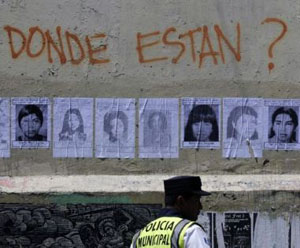
“There are about 100 million women less on this earth than there should be. Women who are ‘missing’ since they are aborted, burnt, starved and neglected to death by families who prefer sons to daughters. . The estimated number of women who are missing are 44 million in China, 39 million in India, 6 million in Pakistan and 3 billion in Bangladesh. This is the single largest genocide in human history.” -Lucinda Marshall, Feminist Peace Network
“More than 3,800 women and girls have been murdered in Guatemala since the year 2000. What local activists are calling ‘femicide’ is spreading in Guatemala and throughout Latin America. . Guatemala’s femicides are notable for their brutality as well as the impunity that exists for the perpetrators. Countrywide, a mere 1-2% of crimes against life are effectively prosecuted, meaning that someone who commits murder in Guatemala has a 98-99% chance of escaping prosecution and punishment.” -Center for Gender and Refugee Studies
Posted by CMStewart on January 6, 2010
https://losthunderlads.com/2010/01/06/femicide/
Cybugs

Posted by CMStewart on December 31, 2009
https://losthunderlads.com/2009/12/31/cybugs/
Virtue Engendered; or, Big States Breed Small Souls
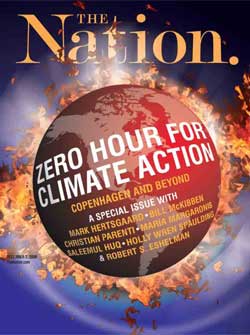 I found two highlights in this issue: a review of Michael Sandel’s Justice: What’s the Right Thing to Do? and a review of David Finkel’s The Good Soldiers.
Harvard philosopher Michael Sandel is a major figure in the revival of “virtue ethics,” the school of thought pioneered by Aristotle. As its name suggests, virtue ethics tends to emphasize the importance of developing particular character traits. Virtue ethics was out of fashion among academic philosophers for quite a long time, but now it seems to be on an equal footing with the two other leading schools of ethical thought, utilitarianism and deontology. Utilitarianism is a set of approaches that take their cue from Jeremy Bentham’s definition of the Good as that which brings the greatest amount of pleasure to the greatest number of people; deontology first crystallized in the work of Immanuel Kant, defender of the idea that moral duty and rational understanding are inseparable one from another. So, an advocate of utilitarianism might argue that we should sustain friendships because societies composed of people who like each other tend to have lots of healthy and cheerful citizens, and an advocate of deontological ethics might argue that we should sustain friendships because the universe only makes sense to people who recognize a duty to grow close to each other. An advocate of virtue ethics, on the other hand, might argue that being a friend means developing traits of character that are valuable in themselves and that can be attained in no other way.
Sandel, like other virtue ethicists, is associated with a tendency in political theory called “communitarianism.” Communitarians criticize classical liberalism for its image of the individual human being as a self-contained unit. As The Nation‘s reviewer puts it:
Nearly thirty years ago, in his massively influential debut in political theory, Sandel argued that communal belonging precedes individual freedom–that, in his language, the self is “encumbered” and therefore not altogether prior to the ends it chooses. An intrepid technical dissection of his colleague [John] Rawls’s epoch-making A Theory of Justice (1971), Liberalism and the Limits of Justice made Sandel’s name as a “communitarian.” Sandel demonstrated that for Rawls, the freedom of individual choice alone is the morally relevant starting point for inquiry into justice, an assumption that renders things like family ties, religious belief, group loyalty and historical identity irrelevant, except as a secondary extra. Communitarians like Sandel, Charles Taylor (with whom Sandel studied as a Rhodes scholar at Oxford) and Michael Walzer responded that most people, even in liberal societies, prize those things at least as much as personal autonomy. The most attractive part of Sandel’s criticism was his contention that relationships, rather than being the result of previous choices, are the sphere in which identity is possible at all. (To put it in more technical terms, there is no individual subject not intersubjectively constituted from the first.) Ever since making these claims, even as political theory has substantially evolved, Sandel has continued to argue for the priority of the communal good in an account of justice, even as he recognizes its risks for liberty.
Because a person’s virtues are part of his or her identity, communitarianism and virtue ethics inevitably go hand in hand.
The same review discusses a book by Amartya Sen that prompts the reviewer to mention that many philosophers were dismayed when political theorist John Rawls declared that the nation-state was “the natural forum for justice.” Otherwise dedicated Rawlsians rebelled against this pronouncement, arguing that justice requires a worldwide framework. I value Sandel and the communitarians because their position points to a different response to Rawls. I haven’t studied Rawls’ work deeply, but what I have read suggests to me that his theory does indeed presuppose the nation-state as the standard of community. The communitarians, on the other hand, have the intellectual resources to challenge that standard, not by arguing that the nation-state is too small to be just, but that it is too big. The nation-state, especially in the form of continental behemoths like the USA or the former USSR or China or India or the European Union, is bloated beyond any capacity to nurture healthy relationships. The only connection citizens of such enormous empires can achieve with each other is the one they feel when they cheer their rulers on and rejoice as their warriors smash the Enemy, whoever that Enemy may be at the moment. The qualities of character that we develop when we do those things are hardly to be called virtues.
That big states breed small souls is supported by material cited from David Finkel’s reports from Iraq. The American public is separated from the perspective of the American soldier by official censorship, and so has a distorted view of what is being done in its name in Iraq. Senior American commanders, too, have a distorted view, in their case because sycophantic briefing officers tell them what they want to hear rather than what their subordinates on the ground are actually seeing and doing. The reviewer describes a scene in which Finkel reports on a briefing given to the celebrated General David Petraeus. Finkel attended the briefing, and had been an eyewitness of the firefights deascribed in the briefing. He makes it clear that what the general heard had little or no relationship to the events Finkel saw. Even ground troops themselves see an ever smaller portion of what they are doing; “the Pentagon’s continued dependence on unmanned Predator drone attacks in Afghanistan and Pakistan means that even soldiers aren’t seeing the full contours of the global battlefield,” as the reviewer points out. Of course, it’s long been an axiom of military history that a researcher should ask a participant in a battle for eyewitness accounts only of events that took place within a meter of that participant’s face, and shouldn’t expect extreme clarity even in those accounts. But these added degrees of separation certainly don’t improve our ability to take responsibility for what is done in our name. Finkel apparently pulls out the emotional stops in an attempt to protest against this separation:
The chasm between over here and over there is central to another heartbreaking sequence, when the wife of a severely wounded soldier transferred from Iraq to the National Naval Medical Center in Bethesda, Maryland, remembers a visit from President Bush. Finkel recounts not only what the soldier’s wife said to the president–“Thank you for coming”–and not only what she wished she had said to him–“He doesn’t know how it feels”–but why she hadn’t said it: “Because I felt it would not have made any difference.” Communication is fruitless, because if Bush can’t see the problem staring at him from that hospital bed, he’s already living on too remote a planet.
Posted by acilius on December 3, 2009
https://losthunderlads.com/2009/12/03/virtue-engendered-or-big-states-breed-small-souls/
Who writes this?
 acilius
 believer1
 lefalcon
 losthunderlads
 vthunderlad
 Panther Red