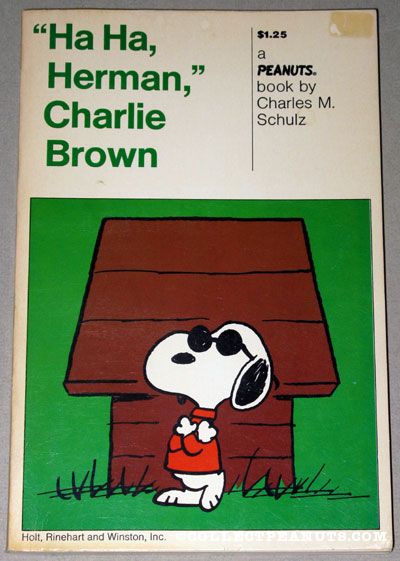
T. H. Huxley in 1860
The title of this post is a quote from Thomas Henry Huxley. I came across it a few months ago, when I was reading an old paperback I found in a used book store. The book was Voices from the Sky, by Arthur C. Clarke (Mayflower Press, 1969.) The cheap, high-acid paper hadn’t aged well in the decades since the book was printed; the pages crumbled in my hands as I read. All I kept from it is the top half of page 155, a bit from an essay titled “Science and Spirituality.” On the previous page, Clarke had mentioned the widespread impression that science and religion are irreconcilable. To which he says:
It is a great tragedy that such an impression has ever arisen, for nothing could be further from the truth. ‘Truth’ is the key word; for what does science mean except truth? And of all human activities, the quest for truth is the most noble, the most disinterested, the most spiritual.
It is also the one most likely to inculcate humility. Said T. H. Huxley a century ago: ‘Sit down before fact as a little child, be prepared to give up every preconceived notion, follow humbly wherever abysses nature leads, or you shall learn nothing.’
Science has now led, in our generation, to the ultimate abyss- that of space. Questions to which philosophers and mystics have given conflicting answers for millennia will soon be answered, as our rocket-borne instruments range ever further from Earth.
Several things about these paragraphs arrested my attention. Clarke usually called himself an atheist, and it was to describe his own opinions that Huxley coined the word “agnostic.” So it is rather odd to see one of them invoke the other in defense of religious values. Moreover, it seems a bit naive to assert that space is “the ultimate abyss.” Ultimate in size space may be, unless of course there are parallel universes, in which case the space in which we live may be only fraction of an infinitely larger abyss. But for all we know, the mysteries of space may yet pale in significance and complexity next to those of the subatomic world, or of some other field of study. The final sentence is, if anything, even more naive. Surely the most interesting thing about science is not its ability to answer familiar questions, but its ability to raise unfamiliar questions. Philosophers and mystics have not given conflicting answers for millennia to, for example, the question of whether Venus ever had plate tectonics. Without scientific inquiry, not only would we not have the concept of plate tectonics, we wouldn’t even know that Venus had a surface. Once scientific inquiry has reached a certain point, our habits of mind and our whole view of nature change in ways too subtle to notice and too numerous to count. In truth, the essay showed many signs of hasty composition; it was far from Clarke’s best, and I was surprised to see it published in a collection.
I tracked the Huxley quote down. It comes from a letter Huxley wrote to the Reverend Charles Kingsley on 23 September 1860. The letter appears on pages 217-221 of Life and Letters of Thomas Henry Huxley, edited by Leonard Huxley (London: MacMillan and Company, 1900); the sentence Clarke quotes appears on page 219 of that book. Kingsley had sent Professor and Mrs Huxley a letter of condolence on the death of their young son, in which he alluded to the doctrine of the immortality of the soul. Huxley’s response is worth reading in full, though I will quote only a few selections. Kingsley had mentioned various arguments that are supposed to bolster the doctrine of the immortality of the soul. Huxley’s response makes it clear what these arguments were:
I feel that it is due to you to speak as frankly as you have done to me. An old and worthy friend of mine tried some three or four years ago to bring us together—because, as he said, you were the only man who would do me any good. Your letter leads me to think he was right, though not perhaps in the sense he attached to his own words.
Thus Huxley sets the gracious tone of the letter, and makes it clear that he disagrees with Kingsley. Next:
To begin with the great doctrine you discuss. I neither deny nor affirm the immortality of man. I see no reason for believing in it, but, on the other hand, I have no means of disproving it.
Certainly a classic statement from the first self-described agnostic!
Pray understand that I have no a priori objections to the doctrine. No man who has to deal daily and hourly with nature can trouble himself about a priori difficulties. Give me such evidence as would justify me in believing anything else, and I will believe that. Why should I not? It is not half so wonderful as the conservation of force, or the indestructibility of matter. Whoso clearly appreciates all that is implied in the falling of a stone can have no difficulty about any doctrine simply on account of its marvellousness. But the longer I live, the more obvious it is to me that the most sacred act of a man’s life is to say and to feel, “I believe such and such to be true.” All the greatest rewards and all the heaviest penalties of existence cling about that act. The universe is one and the same throughout; and if the condition of my success in unravelling some little difficulty of anatomy or physiology is that I shall rigorously refuse to put faith in that which does not rest on sufficient evidence, I cannot believe that the great mysteries of existence will be laid open to me on other terms. It is no use to talk to me of analogies and probabilities. I know what I mean when I say I believe in the law of the inverse squares, and I will not rest my life and my hopes upon weaker convictions. I dare not if I would.
So does Huxley present himself as a scientist, and as a stout defender of the methods of science. I am surprised at his statement that “the longer I live, the more obvious it is to me that the most sacred act of a man’s life is to say and feel, ‘I believe such and such to be true.’ All the greatest rewards and all the heaviest penalties of existence cling about that act.” When Huxley wrote that sentence, he was 35 years old. I’m older than that now, and the longer I live the more obvious it is to me that to say and to feel “I believe such and such to be true” is usually a waste of time, and quite often the mark of a jackass. Maybe that’s just because I spend a lot of time on the web, or maybe not.
Huxley then sets out to show how a thoroughly scientific mind approaches Kingsley’s views:
Measured by this standard, what becomes of the doctrine of immortality?You rest in your strong conviction of your personal existence, and in the instinct of the persistence of that existence which is so strong in you as in most men.
To me this is as nothing. That my personality is the surest thing I know—may be true. But the attempt to conceive what it is leads me into mere verbal subtleties. I have champed up all that chaff about the ego and the non-ego, about noumena and phenomena, and all the rest of it, too often not to know that in attempting even to think of these questions, the human intellect flounders at once out of its depth.
It must be twenty years since, a boy, I read Hamilton’s essay on the unconditioned, and from that time to this, ontological speculation has been a folly to me. When Mansel took up Hamilton’s argument on the side of orthodoxy (!) I said he reminded me of nothing so much as the man who is sawing off the sign on which he is sitting, in Hogarth’s picture. But this by the way.
I cannot conceive of my personality as a thing apart from the phenomena of my life. When I try to form such a conception I discover that, as Coleridge would have said, I only hypostatise a word, and it alters nothing if, with Fichte, I suppose the universe to be nothing but a manifestation of my personality. I am neither more nor less eternal than I was before.
Nor does the infinite difference between myself and the animals alter the case. I do not know whether the animals persist after they disappear or not. I do not even know whether the infinite difference between us and them may not be compensated by their persistence and my cessation after apparent death, just as the humble bulb of an annual lives, while the glorious flowers it has put forth die away.
Surely it must be plain that an ingenious man could speculate without end on both sides, and find analogies for all his dreams. Nor does it help me to tell me that the aspirations of mankind— that my own highest aspirations even — lead me towards the doctrine of immortality. I doubt the fact, to begin with, but if it be so even, what is this but in grand words asking me to believe a thing because I like it.
Science has taught to me the opposite lesson. She warns me to be careful how I adopt a view which jumps with my pre-conceptions, and to require stronger evidence for such belief than for one to which I was previously hostile.
My business is to teach my aspirations to conform themselves to fact, not to try and make facts harmonise with my aspirations.
Science seems to me to teach in the highest and strongest manner the great truth which is embodied in the Christian conception of entire surrender to the will of God. Sit down before fact as a little child, be prepared to give up every preconceived notion, follow humbly wherever and to whatever abysses nature leads, or you shall learn nothing. I have only begun to learn content and peace of mind since I have resolved at all risks to do this.
This rather resolves the paradox of the atheist Clarke invoking the agnostic Huxley in defense of religion. Huxley is responding graciously to his friend’s sincere attempt to comfort him in a moment of extreme affliction. In that endeavor, he assures Kingsley that he seeks to cultivate the same virtues Kingsley hopes his religion will engender, and simultaneously makes it clear that he does not accept Kingsley’s religion. Clarke was known for a similar combination of friendliness and forthrightness in his dealings with believers, and I surmise that in this letter he may have found a kindred spirit.
Huxley mentions arguments in favor of the immortality of the soul that Kingsley had not made, notably the idea “that such a system is indispensable to practical morality.” Huxley’s objection to this argument is emotionally powerful and scientifically astute:
As I stood behind the coffin of my little son the other day, with my mind bent on anything but disputation, the officiating minister read, as a part of his duty, the words, “If the dead rise not again, let us eat and drink, for to-morrow we die.” I cannot tell you how inexpressibly they shocked me. Paul had neither wife nor child, or he must have known that his alternative involved a blasphemy against all that was best and noblest in human nature. I could have laughed with scorn. What! because I am face to face with irreparable loss, because I have given back to the source from whence it came, the cause of a great happiness, still retaining through all my life the blessings which have sprung and will spring from that cause, I am to renounce my manhood, and, howling, grovel in bestiality? Why, the very apes know better, and if you shoot their young, the poor brutes grieve their grief out and do not immediately seek distraction in a gorge.
The words that shocked Huxley came from I Corinthians chapter 15, verse 32. Here is the passage Huxley probably heard, taken from the funeral service in the Church of England’s 1662 Book of Common Prayer. It comprises verses 20 through 58 of that chapter:
Now is Christ risen from the dead, and become the first-fruits of them that slept. For since by man came death, by man came also the resurrection of the dead. For as in Adam all die, even so in Christ shall all be made alive. But every man in his own order: Christ the firstfruits; afterward they that are Christ’s, at his coming. Then cometh the end, when he shall have delivered up the kingdom to God, even the Father; when he shall have put down all rule, and all authority, and power. For he must reign, till he hath put all enemies under his feet. The last enemy that shall be destroyed is death. For he hath put all things under his feet. But when he saith, all things are put under him, it is manifest that he is excepted, which did put all things under him. And when all things shall be subdued unto him, then shall the Son also himself be subject unto him that put all things under him, that God may be all in all. Else what shall they do which are baptized for the dead, if the dead rise not at all? Why are they then baptized for the dead? and why stand we in jeopardy every hour? I protest by your rejoicing, which I have in Christ Jesus our Lord, I die daily. If after the manner of men I have fought with beasts at Ephesus, what advantageth it me, if the dead rise not? Let us eat and drink, for to-morrow we die. Be not deceived: evil communications corrupt good manners. Awake to righteousness, and sin not: for some have not the knowledge of God. I speak this to your shame. But some man will say, How are the dead raised up? and with what body do they come? Thou fool, that which thou sowest is not quickened, except it die. And that which thou sowest, thou sowest not that body that shall be, but bare grain, it may chance of wheat, or of some other grain: But God giveth it a body, as it hath pleased him, and to every seed his own body. All flesh is not the same flesh; but there is one kind of flesh of men, another flesh of beasts, another of fishes, and another of birds. There are also celestial bodies, and bodies terrestrial; but the glory of the celestial is one, and the glory of the terrestrial is another. There is one glory of the sun, and another glory of the moon, and another glory of the stars; for one star differeth from another star in glory. So also is the resurrection of the dead: It is sown in corruption; it is raised in incorruption: It is sown in dishonour; it is raised in glory: It is sown in weakness; it is raised in power: It is sown a natural body; it is raised a spiritual body. There is a natural body, and there is a spiritual body. And so it is written, The first man Adam was made a living soul; the last Adam was made a quickening spirit. Howbeit, that was not first which is spiritual, but that which is natural; and afterward that which is spiritual. The first man is of the earth, earthy: the second man is the Lord from heaven. As is the earthy, such are they that are earthy: and as is the heavenly, such are they also that are heavenly. And as we have borne the image of the earthy, we shall also bear the image of the heavenly. Now this I say, brethren, that flesh and blood cannot inherit the kingdom of God; neither doth corruption inherit incorruption. Behold, I shew you a mystery: We shall not all sleep, but we shall all be changed, in a moment, in the twinkling of an eye, at the last trump, (for the trumpet shall sound,) and the dead shall be raised incorruptible, and we shall be changed. For this corruptible must put on incorruption, and this mortal must put on immortality. So when this corruptible shall have put on incorruption, and this mortal shall have put on immortality; then shall be brought to pass the saying that is written, Death is swallowed up in victory. 0 death, where is thy sting? 0 grave, where is thy victory? The sting of death is sin, and the strength of sin is the law. But thanks be to God, which giveth us the victory through our Lord Jesus Christ. Therefore, my beloved brethren, be ye stedfast, unmoveable, always abounding in the work of the Lord, forasmuch as ye know that your labour is not in vain in the Lord.
Is Paul suggesting in this passage that those who disbelieve in the immortality of the soul will skip the funerals of their loved ones in order to visit the nearest all-you-can-eat buffet, and thus committing “a blasphemy against all that was best and noblest in human nature”? I think not. He does not mention funerals, or the first shock of mourning; he does not deny that it is natural for us, as animals, to grieve out our grief when death has put someone we love forever out of our reach. He talks about baptism, and martyrdom, and day after day spent under the shadow of persecution. The reward for all of this trouble is to be found in an immense drama that began with Adam and Eve and that will continue until the end of time, a drama in which everyone, alive and dead has a role to play. If this drama is not really in production, if our efforts do not really connect us the living with the dead who went before s and their efforts will not connect the living to us after we die, why bother with the whole thing? Better to embrace laziness and live the easiest possible life than to sustain so demanding an enterprise. Such laziness might not preclude a period of howling grief fit to impress any ape, though it would set a limit to the ways in which a person is likely to change his or her habits in the aftermath of that period.
Of course, when Huxley heard the passage above he was standing at the open grave into which his young son’s coffin had just been lowered. It would be unreasonable to think ill of a person subject to such extreme stress for taking a few words out of their context and putting an unwarranted construction on them, especially when the priest speaking them represented a group that was alien to Huxley’s beliefs and hostile to him personally. I do wonder, though, why it was just that construction that came to Huxley’s mind. Obviously, I don’t know. But I think I do know what Irving Babbitt would have thought about it. Babbitt (1865-1933) was a professor of French and Comparative Literature at Harvard whose works have had a great influence on me. The poet and critic T. S. Eliot took some classes from Babbitt, and after Babbitt’s death wrote that “To have been once a pupil of Babbitt’s was to remain always in that position”; even for someone like myself, born decades after Babbitt’s death and familiar with him only through his books, Babbitt’s influence is permanent.
Irving Babbitt might have read Paul much as he read the Buddha. In the course of the denunciation of the elective system then being introduced to American higher education that runs through his book Literature and the American College (Boston and New York: Houghton Mifflin,1908,) Babbitt wrote:
A popular philosopher has said that every man is as lazy as he dares to be. If he had said that nine men in ten are as lazy as they dare to be, he would have come near hitting a great truth. The” elective system has often been regarded as a protest against the doctrine of original depravity. This doctrine at best rests on rather metaphysical 1 foundations, and is hard to verify practically. The Buddhists are perhaps nearer the facts as we know them in putting at the very basis of their belief the doctrine, not of the original depravity, but of the original laziness, of human nature. (page 53)
with this clarification:
The greatest of vices according to Buddha is the lazy yielding to the impulses of temperament (pamada); the greatest virtue (appamada) is the opposite of this, the awakening from the sloth and lethargy of the senses, the constant exercise of the active will. The last words of the dying Buddha to his disciples were an exhortation to practice this virtue unremittingly (page 53 note 1)
In the introduction to his translation of the Dhammapada,* Babbitt enlarges on this discussion, drawing a contrast between appamada and karma. Both words mean “work,” but Babbitt claims that in the Dhammapada and the other early Buddhist scriptures written in the Pâli language karma carries the sense of an effort sustained over a long period, several lifetimes in fact, that culminates in a kind of knowledge that can be acquired in no other way. Babbitt made a habit of attributing his favorite ethical ideas simultaneously to all the great sages of the ancient world, east and west; nothing would have appealed to him more than declaring a familiar passage in Paul to be identical in content to the doctrines of the Buddha.
Babbitt used the Buddha and the other sages as an arsenal of sticks with which to beat his intellectual arch-nemesis, Jean-Jacques Rousseau. For Babbitt, Rousseau was the patriarch of the Romantic movement, and the essence of the Romantic movement was an embrace of mere whim. Indeed, the sentences I quoted from Literature and the American College introduce one of his innumerable denunciations of Rousseau, in that case denouncing him for confusing “work,” which the Buddha understood as a virtue that quiets the spirit, with mere activity and busy-ness, which the Buddha regarded as a vice in which we escape from our true obligations. For the Rousseau of Babbitt’s imagination, violent displays of emotion were events of great significance, while projects requiring long years of steady labor and harsh self-discipline were trivialities.
I suspect that Babbitt would have seen a child of the Romantic movement in Huxley’s reaction. Rousseauism primed Huxley to conceive of his bereavement, not in terms of a scheme like Paul’s that subordinates the whole of life to an immense drama in which the living and the dead all have roles to play, but in terms of the intense emotional experiences in the early stages of mourning. Presented with Paul’s statement that without a belief in the Resurrection, this drama would not make sense, Huxley then heard that without such a belief his intense emotional experiences would not make sense. Observing the indications of the same experiences in the apes, Huxley concluded that either Paul was mistaken, or the apes were believers in the Resurrection. Babbitt could be quite harsh in his judgments of spokesman for Romanticism; in Huxley’s remarks, he might well have seen a man unable to distinguish between, on the one hand, “the lazy yielding to temperament” that the howling ape represents and the commitment to a life on the grand scale that Paul’s letter and the Buddha’s sayings describe.
Babbitt was no more religious than Huxley or Clarke, as a matter of fact. But some of his associates and followers were. If Huxley were writing to one of them, perhaps he would have criticized Paul from another angle, and with another ethological example drawn from elsewhere in the animal kingdom. There are nonhuman animals who subordinate their immediate needs and pleasures to long-term goals and the good of a group, whether penguins going months without food to incubate their young, social insects devote their whole lives to the acquittal of a single set of tasks within the hive or swarm of which they are part, etc etc. Granted, humans have brain functions that do not exist in those other animals, and so we respond to incentives differently than they do. So a latter-day defender of the idea that a belief in personal immortality is indispensable to practical morality among humans might argue that only an explicit narrative connecting generation to generation can enable us to do what comes naturally to our distant cousins elsewhere in the animal kingdom. And of course a latter-day Huxley could ask for evidence supporting this psychological claim.
Huxley was no Buddhist or Christian. One sentence quoted above suggests that his ethical views were a form of Neo-Stoicism. That sentence is “My business is to teach my aspirations to conform themselves to fact, not to try and make facts harmonise with my aspirations.” This is a rather neat summary of the Stoic aspiration to peace of mind through an acceptance of the world as it is. I find further evidence of Stoicism in other passages. A long paragraph between the two portions that I quoted above argues that in fact, the virtuous are likelier than the wicked to prosper in this world, a view often associated with Stoicism. In that paragraph, Huxley also argues that we should put the physical laws of nature on a par with moral laws, and not regard those who suffer in consequence of “physical sins” as instances of wronged innocents. That certainly fits into most Stoic models of “the natural law.” And following the description of his son’s funeral, we find this remarkable passage. I will let it stand as the last word:
Kicked into the world a boy without guide or training, or with worse than none, I confess to my shame that few men have drunk deeper of all kinds of sin than I. Happily, my course was arrested in time—before I had earned absolute destruction—and for long years I have been slowly and painfully climbing, with many a fall, towards better things. And when I look back, what do I find to have been the agents of my redemption? The hope of immortality or of future reward? I can honestly say that for these fourteen years such a consideration has not entered my head. No, I can tell you exactly what has been at work. Sartor Resartus led me to know that a deep sense of religion was compatible with the entire absence of theology. Secondly, science and her methods gave me a resting-place independent of authority and tradition. Thirdly, love opened up to me a view of the sanctity of human nature, and impressed me with a deep sense of responsibility.
If at this moment I am not a worn-out, debauched, useless carcass of a man, if it has been or will be my late to advance the cause of science, if I feel that I have a shadow of a claim on the love of those about me, if in the supreme moment when I looked down into my boy’s grave my sorrow was full of submission and without bitterness, it is because these agencies have worked upon me, and not because I have ever cared whether my poor personality shall remain distinct for ever from the All from whence it came and whither it goes.
And thus, my dear Kingsley, you will understand what my position is. I may be quite wrong, and in that case I know I shall have to pay the penalty for being wrong. But I can only say with Luther, “Gott helfe mir, Ich kann nichts anders.”
I know right well that 99 out of 100 of my fellows would call me atheist, infidel, and all the other usual hard names. As our laws stand, if the lowest thief steals my coat, my evidence (my opinions being known) would not be received against him.
But I cannot help it. One thing people shall not call me with justice and that is—a liar. As you say of yourself, I too feel that I lack courage; but if ever the occasion arises when I am bound to speak, I will not shame my boy.
*originally published by Oxford in 1936, reissued by New Directions in 1965; this bit is on pages 91-93




 acilius
 believer1
 lefalcon
 losthunderlads
 vthunderlad
 Panther Red