Fun and Easy Magic Spells

Spells should be cast with respect and reverence. 

Keep in mind the Rule of 3: Spells cast with intent of malevolence will cause malevolence to return to the spellcaster threefold. Spells cast with intent of benevolence will cause benevolence to return to the spellcaster threefold.

Spells for Halloween or anytime:  

royalcandycompany.com

CHARMED CANDY  

Created by: Sir Summer ShiningStar

 Given to: the Great Puzuzu 

 
You will need: a handful of candy; a white or orange candle 
 What to do: Light the candle, and put the candies in a pile. Make a triangle with your index fingers and thumbs of both hands, and move them in a deosil (clockwise) direction over the candies while chanting:
  
“Charmed are these candy treats.
 
  Good fortune to all I merry meet!”


Then give away the candies to friends and family and three people you don’t know. 
  
————————————————————————————


prime.peta.org

prime.peta.org

MIND OF A FROG

This spell gives a person the mind of a frog.

Point to a particularly dense person and say:

“Higady, pigady, pong! I give you a mind of a frog.”

The dense person’s intelligence should then skyrocket to that of a frog.

————————————————————————————

allposters.com

allposters.com

LITTLE BO PEEP SPELL TO FIND LOST OBJECTS

Created by: Silver RavenWolf

Objects can be returned to you if they have not been destroyed and they want to come back. Objects carry energy too, even if they don’t “think” in the way we do.

 On a piece of paper, write a description of the object you have lost. Hold the open paper on the palm of your hand. Say the words “Little Bo Peep” three times, then crumple the paper in your hand, as if you’ve just caught a fairy- which you just did! Keep the paper closed in your hand. Search for the object you have lost. Don’t let the fairy out until you find the object.
(And you thought fairy tales were just kiddie stories!)

 Sometimes the energy of the object would be better off somewhere else. If this happens, the object will not return to you. If you can’t find what you lost within a week, be sure to let the fairy go.


The triumph of civil society

Rebecca Solnit on “How 9/11 should be remembered.”  Some key paragraphs:

New Yorkers triumphed on that day eight years ago. They triumphed in calm, in strength, in generosity, in improvisation, in kindness. Nor was this something specific to that time or place: San Franciscans during the great earthquake of 1906, Londoners during the Blitz in World War II, the great majority of New Orleanians after Hurricane Katrina hit, in fact most people in most disasters in most places have behaved with just this sort of grace and dignity.

And:

Hollywood movies and too many government pandemic plans still presume that most of us are cowards or brutes, that we panic, trample each other, rampage, or freeze helplessly in moments of crisis and chaos. Most of us believe this, even though it is a slander against the species, an obliteration of what actually happens, and a crippling blow to our ability to prepare for disasters.

Hollywood likes this view because it paves the way for movies starring Will Smith and hordes of stampeding, screaming extras. Without stupid, helpless people to save, heroes become unnecessary. Or rather, without them, it turns out that we are all heroes, even if distinctly unstereotypical ones like that elderly woman who got Fichtel back on his feet. Governments like the grim view for a similar reason: it justifies their existence as repressive, controlling, hostile forces, rather than collaborators with brave and powerful citizenries.

Read the rest

Eight years of one day

tomwaitsEight years ago today some Tom Waits songs started running through my head.  “Yesterday is Here” seemed very timely; “today’s grey skies, tomorrow is tears,/ you’ll have to wait til yesterday is here.”  That song is on the album Frank’s Wild Years; several times in those days I set my CD player to play two cuts from Frank’s Wild Years, “Yesterday is Here” and “Cold Cold Ground.” 

Another Waits tune that seemed to fit the day very well was “The Fall of Troy” from the Dead Man Walking soundtrack.  It’s about a boy who watched helplessly while his brother Troy was shot to death in a robbery.  The whole song is full of extremely apt lines.   “It’s hard to say grace and to sit in the place,/ of someone missing at the table./ Mom’s hair’s sprayed tight and her face in her hands/ Watching TV for answers to me/ After all, she’s only human/ and she’ll have to find her own way home.” 

“The Fall of Troy” would usually get me crying, back then.  If crying felt good, I’d turn to Heartattack and Vine and listen to “Jersey Girl.”  That would get me sobbing.  Waits said that before he wrote that song he never thought he’d use “sha-la-la” in lyrics; eight years and one day ago, I never thought “sha-la-la” would elicit tears from me.

The Declaration of Independence

IN CONGRESS, JULY 4, 1776
The unanimous Declaration of the thirteen united States of America

WWhen in the Course of human events it becomes necessary for one people to dissolve the political bands which have connected them with another and to assume among the powers of the earth, the separate and equal station to which the Laws of Nature and of Nature’s God entitle them, a decent respect to the opinions of mankind requires that they should declare the causes which impel them to the separation.

We hold these truths to be self-evident, that all men are created equal, that they are endowed by their Creator with certain unalienable Rights, that among these are Life, Liberty and the pursuit of Happiness. — That to secure these rights, Governments are instituted among Men, deriving their just powers from the consent of the governed, — That whenever any Form of Government becomes destructive of these ends, it is the Right of the People to alter or to abolish it, and to institute new Government, laying its foundation on such principles and organizing its powers in such form, as to them shall seem most likely to effect their Safety and Happiness. Prudence, indeed, will dictate that Governments long established should not be changed for light and transient causes; and accordingly all experience hath shewn that mankind are more disposed to suffer, while evils are sufferable than to right themselves by abolishing the forms to which they are accustomed. But when a long train of abuses and usurpations, pursuing invariably the same Object evinces a design to reduce them under absolute Despotism, it is their right, it is their duty, to throw off such Government, and to provide new Guards for their future security. — Such has been the patient sufferance of these Colonies; and such is now the necessity which constrains them to alter their former Systems of Government. The history of the present King of Great Britain is a history of repeated injuries and usurpations, all having in direct object the establishment of an absolute Tyranny over these States. To prove this, let Facts be submitted to a candid world.

He has refused his Assent to Laws, the most wholesome and necessary for the public good.

He has forbidden his Governors to pass Laws of immediate and pressing importance, unless suspended in their operation till his Assent should be obtained; and when so suspended, he has utterly neglected to attend to them.

He has refused to pass other Laws for the accommodation of large districts of people, unless those people would relinquish the right of Representation in the Legislature, a right inestimable to them and formidable to tyrants only.

He has called together legislative bodies at places unusual, uncomfortable, and distant from the depository of their Public Records, for the sole purpose of fatiguing them into compliance with his measures.

He has dissolved Representative Houses repeatedly, for opposing with manly firmness his invasions on the rights of the people.

He has refused for a long time, after such dissolutions, to cause others to be elected, whereby the Legislative Powers, incapable of Annihilation, have returned to the People at large for their exercise; the State remaining in the mean time exposed to all the dangers of invasion from without, and convulsions within.

He has endeavoured to prevent the population of these States; for that purpose obstructing the Laws for Naturalization of Foreigners; refusing to pass others to encourage their migrations hither, and raising the conditions of new Appropriations of Lands.

He has obstructed the Administration of Justice by refusing his Assent to Laws for establishing Judiciary Powers.

He has made Judges dependent on his Will alone for the tenure of their offices, and the amount and payment of their salaries.

He has erected a multitude of New Offices, and sent hither swarms of Officers to harass our people and eat out their substance.

He has kept among us, in times of peace, Standing Armies without the Consent of our legislatures.

He has affected to render the Military independent of and superior to the Civil Power.

He has combined with others to subject us to a jurisdiction foreign to our constitution, and unacknowledged by our laws; giving his Assent to their Acts of pretended Legislation:

For quartering large bodies of armed troops among us:

For protecting them, by a mock Trial from punishment for any Murders which they should commit on the Inhabitants of these States:

For cutting off our Trade with all parts of the world:

For imposing Taxes on us without our Consent:

For depriving us in many cases, of the benefit of Trial by Jury:

For transporting us beyond Seas to be tried for pretended offences:

For abolishing the free System of English Laws in a neighbouring Province, establishing therein an Arbitrary government, and enlarging its Boundaries so as to render it at once an example and fit instrument for introducing the same absolute rule into these Colonies

For taking away our Charters, abolishing our most valuable Laws and altering fundamentally the Forms of our Governments:

For suspending our own Legislatures, and declaring themselves invested with power to legislate for us in all cases whatsoever.

He has abdicated Government here, by declaring us out of his Protection and waging War against us.

He has plundered our seas, ravaged our coasts, burnt our towns, and destroyed the lives of our people.

He is at this time transporting large Armies of foreign Mercenaries to compleat the works of death, desolation, and tyranny, already begun with circumstances of Cruelty & Perfidy scarcely paralleled in the most barbarous ages, and totally unworthy the Head of a civilized nation.

He has constrained our fellow Citizens taken Captive on the high Seas to bear Arms against their Country, to become the executioners of their friends and Brethren, or to fall themselves by their Hands.

He has excited domestic insurrections amongst us, and has endeavoured to bring on the inhabitants of our frontiers, the merciless Indian Savages whose known rule of warfare, is an undistinguished destruction of all ages, sexes and conditions.

In every stage of these Oppressions We have Petitioned for Redress in the most humble terms: Our repeated Petitions have been answered only by repeated injury. A Prince, whose character is thus marked by every act which may define a Tyrant, is unfit to be the ruler of a free people.

Nor have We been wanting in attentions to our British brethren. We have warned them from time to time of attempts by their legislature to extend an unwarrantable jurisdiction over us. We have reminded them of the circumstances of our emigration and settlement here. We have appealed to their native justice and magnanimity, and we have conjured them by the ties of our common kindred to disavow these usurpations, which would inevitably interrupt our connections and correspondence. They too have been deaf to the voice of justice and of consanguinity. We must, therefore, acquiesce in the necessity, which denounces our Separation, and hold them, as we hold the rest of mankind, Enemies in War, in Peace Friends.

We, therefore, the Representatives of the united States of America, in General Congress, Assembled, appealing to the Supreme Judge of the world for the rectitude of our intentions, do, in the Name, and by Authority of the good People of these Colonies, solemnly publish and declare, That these united Colonies are, and of Right ought to be Free and Independent States, that they are Absolved from all Allegiance to the British Crown, and that all political connection between them and the State of Great Britain, is and ought to be totally dissolved; and that as Free and Independent States, they have full Power to levy War, conclude Peace, contract Alliances, establish Commerce, and to do all other Acts and Things which Independent States may of right do. — And for the support of this Declaration, with a firm reliance on the protection of Divine Providence, we mutually pledge to each other our Lives, our Fortunes, and our sacred Honor.

John Hancock

New Hampshire:
Josiah Bartlett, William Whipple, Matthew Thornton

Massachusetts:
John Hancock, Samuel Adams, John Adams, Robert Treat Paine, Elbridge Gerry

Rhode Island:
Stephen Hopkins, William Ellery

Connecticut:
Roger Sherman, Samuel Huntington, William Williams, Oliver Wolcott

New York:
William Floyd, Philip Livingston, Francis Lewis, Lewis Morris

New Jersey:
Richard Stockton, John Witherspoon, Francis Hopkinson, John Hart, Abraham Clark

Pennsylvania:
Robert Morris, Benjamin Rush, Benjamin Franklin, John Morton, George Clymer, James Smith, George Taylor, James Wilson, George Ross

Delaware:
Caesar Rodney, George Read, Thomas McKean

Maryland:
Samuel Chase, William Paca, Thomas Stone, Charles Carroll of Carrollton

Virginia:
George Wythe, Richard Henry Lee, Thomas Jefferson, Benjamin Harrison, Thomas Nelson, Jr., Francis Lightfoot Lee, Carter Braxton

North Carolina:
William Hooper, Joseph Hewes, John Penn

South Carolina:
Edward Rutledge, Thomas Heyward, Jr., Thomas Lynch, Jr., Arthur Middleton

Georgia:
Button Gwinnett, Lyman Hall, George Walton

Brubakers Got Back

Down with Justinian!

justinian-mosaic

In ancient times, the Romans observed a festival called the Parilia every year on 21 April.  We remember this festival as “Foundation of Rome Day,” since first-century Romans like Ovid believed that 21 April was the day when Romulus laid out the boundaries of the new city.  The Romans settled on  753 BC as the year of the city’s founding only centuries after they had agreed on 21 April as the day.  From their point of view, the day returned regularly and could be celebrated, while the year was gone forever and therefore had no practical value.   

Apparently to emphasize the association between the Parilia and the founding of Rome, the emperor Hadrian changed the name of the festival to Romaea in AD 121.  The importance of 21 April outside the city of Rome rather declined as the center of the empire moved eastward in the centuries after Hadrian; by the time the western empire officially collapsed in AD 476, it is doubtful whether the festival was observed in the east at all.  When in AD 547 the Byzantine emperor Justinian decreed a new system for naming years, the Romaea or Parilia lost all official status in the east. 

So, those of us who have a soft spot for Foundation of Rome Day have a grudge against Justinian.  Apparently, we are represented at Language Log, where Bill Poser today posts a note about some of the more hideous aspects of Justinian’s proudest achievement, the law code known as the Corpus Iuris Civilis.

The Ascension, or Six Hundred Days In Her Life

chicken-stir-fry

Tonight’s stir fry (chicken and veg, fairly bland thrown-together sauce of:

  • non-fiery “fiery sauce” +
  • non-spicy “spicy habanero sauce” +
  • soy sauce (the only reliable sauce in there!)

Yakisoba (lightly fried thin noodles) not shown.

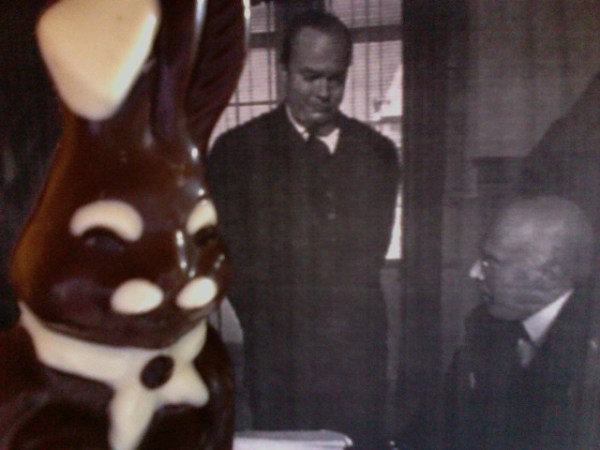
choco-foster-kane

I found this chocolate bunny which apparently honors the character Charles Foster Kane. Admirable!

Ash Wednesday

No juniper tree

No juniper tree

T. S. Eliot was a student of Irving Babbitt’s at Harvard.  Afterward, Eliot often claimed to be a disciple of Babbitt’s.  “Once to have been a student of Babbitt’s was to remain always in that position,” Eliot wrote.  Eliot sent letters to Babbitt under the salutation “Dear Master.”  Babbitt never answered any of these letters.  Babbitt never made it clear whether he was repelled by “Dear Master” or he disliked Eliot for some other reason. 

Be that as it may, in 1989-1990 I spent a good deal of my time reading books by Babbitt and his circle of followers.  Since Eliot was the most famous of those who wished for admission to that circle, part of that time I studied Eliot.  My favorite of his poems is “Ash Wednesday.”  Today is Ash Wednesday.  So:

I

Because I do not hope to turn again
Because I do not hope
Because I do not hope to turn
Desiring this man’s gift and that man’s scope
I no longer strive to strive towards such things
(Why should the agèd eagle stretch its wings?)
Why should I mourn
The vanished power of the usual reign?
(more…)

George Washington’s Letter to the Hebrew Congregation of Newport, Rhode Island

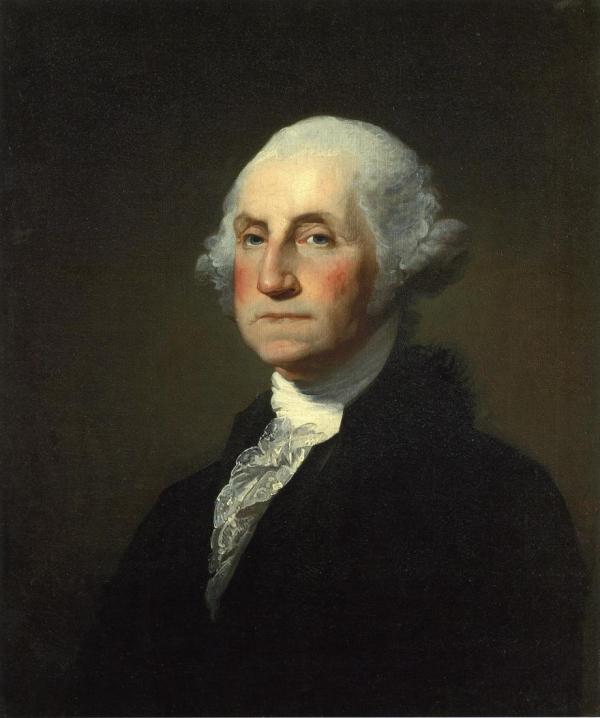
gilbert_stuart_williamstown_portrait_of_george_washington

Since today is George Washington’s birthday, I decided to include my favorite of his writings, his letter to the Congregation Yeshuat Israel of Newport, Rhode Island. 

Letter from George Washington to the Hebrew Congregation at Newport

c. August 1790
 

Gentlemen:

While I received with much satisfaction your address replete with expressions of esteem, I rejoice in the opportunity of assuring you that I shall always retain grateful remembrance of the cordial welcome I experienced on my visit to Newport from all classes of citizens.

The reflection on the days of difficulty and danger which are past is rendered the more sweet from a consciousness that they are succeeded by days of uncommon prosperity and security.

If we have wisdom to make the best use of the advantages with which we are now favored, we cannot fail, under the just administration of a good government, to become a great and happy people.

The citizens of the United States of America have a right to applaud themselves for having given to mankind examples of an enlarged and liberal policy—a policy worthy of imitation. All possess alike liberty of conscience and immunities of citizenship.

It is now no more that toleration is spoken of as if it were the indulgence of one class of people that another enjoyed the exercise of their inherent natural rights, for, happily, the Government of the United States, which gives to bigotry no sanction, to persecution no assistance, requires only that they who live under its protection should demean themselves as good citizens in giving it on all occasions their effectual support.

It would be inconsistent with the frankness of my character not to avow that I am pleased with your favorable opinion of my administration and fervent wishes for my felicity.

May the children of the stock of Abraham who dwell in this land continue to merit and enjoy the good will of the other inhabitants—while every one shall sit in safety under his own vine and fig tree and there shall be none to make him afraid.

May the father of all mercies scatter light, and not darkness, upon our paths, and make us all in our several vocations useful here, and in His own due time and way everlastingly happy.

G. Washington

More substance than you might expect

This afternoon NPR had a segment with two of the people behind SMITH Magazine.  They were talking about “Six Word Memoirs on Love and Heartbreak,”  the new book that has come from SMITH’s “six word memoir” feature.  The inspiration was a piece by Hemingway, as sad as it was brief: “For Sale: Baby shoes, never worn.”   Not all of theirs are that sad, I hasten to assure you.  Some of the more memorable:

Tried men, tried women, like cats. 

Confess in anguish to imaginary gods.

My Mom warned me about musicians.

Found love when apartment caught fire.

Years passed.  I never let go. 

Hates Valentine’s Day, loves me instead.

Yes, dear.  You’re right.  I’m sorry.

Here’s a promotional video for the book.