
Humble Uker embedded this irresistible video in a post yesterday:
All posts by acilius
Gorilla Man, by Caitlin Rose
Posted by acilius on September 28, 2010
https://losthunderlads.com/2010/09/28/gorilla-man-by-caitlin-rose/
Ukulele news on NPR this morning
About an unsuccessful attempt in San Francisco to set a record for largest uke ensemble:
http://www.npr.org/templates/story/story.php?storyId=130148461
Posted by acilius on September 27, 2010
https://losthunderlads.com/2010/09/27/ukulele-news-on-npr-this-morning/
I think you should be more explicit here in step two
 Recently I took a lot of books to the nearest used book store. My main goal was to free up space in the apartment, but since the guy doesn’t pay cash for books and I’m not inclined to give him books for free I had to take store credit. That meant picking up a few books. What he had that I could imagine myself reading were popular science books about cosmology written in the 1950s, 1970s, and 1990s. It’s been fun looking through those. It’s as if I’ve been mentally reenacting the development of grand scale physical theory as it has played out over the last 60 years. So I started with The Nature of the Universe, a series of lectures delivered in 1950 by Fred Hoyle, who coined the phrase “Big Bang” as a silly name for what he regarded as a ludicrous hypothesis. Then I moved on to a somewhat later book suggesting that the hypothesis might not be so ludicrous, to a still later book that explains it as a settled fact, and then to a relatively recent book which shows impatience with people who still talk about the Big Bang when the the real questions are all about the period of extremely rapid cosmic inflation that followed immediately after the Big Bang.
Seeing how dramatically cosmology has changed in the last 60 years and how much more powerful its arguments have become, it’s easy to think that physics must have reached maturity in that time. One might think that physicists are done making great discoveries, and that in the next few years they will tidy up the few remaining problems facing their discipline. Looking more closely, a different picture emerges. So, reading one of the more recent books I came upon a reference to proton decay, including the casual remark that in the distant future, several trillion years from now, there won’t be any protons left. I was curious as to how long it takes a proton to decay and what happens to the little fellow while he is decaying. So I googled “how long does it take a proton to decay?” That brought up some articles saying that we don’t know how long it takes protons to decay, and that as a matter of fact we have no proof that they decay at all. No one has ever seen a proton decay, and since we know virtually nothing about the internal structure of the proton we cannot very well describe the process by which that structure would dissolve. Knowing so little about the proton, we are in the dark not only about the origin and future of the proton, but we are also in the rather embarrassing position of not being able to explain why objects have mass. The Large Hadron Collider is supposed to inform this ignorance, but at the moment physics is left with an enormous blank space. This blank space suggests, not a mature science with only a few loose ends left to tie up, but a young science whose greatest discoveries are very likely still to be made.
Perhaps I will cap off my read-through of old popularizations of cosmology with a look at Stephen Hawking‘s forthcoming book. This book has already received a great deal of commentary, most of in response to this quote:
I haven’t yet seen the book, and these two sentences are not included in this excerpt from it published in Time magazine, or this one from the Wall Street Journal. So I don’t know what Hawking is driving at with this line. Since the book only became available on the 7th of this month, few in the armies of commenters can have seen it either. Not even philosopher Ervin Laszlo quotes any part of the book aside from these 35 words.
It would therefore be both unfair to Hawking and superfluous for me to become yet another person who has reacted to these two sentences without reading the book from which they are taken. So I will confine myself to mentioning some ideas of which this line has reminded me, ideas which I do not attribute to Hawking.
The discussion surrounding Hawking’s two sentences tends to be summed up in headlines like “Stephen Hawking: God Was Not Needed to Create the Universe,” “”Hawking’s Rejection of God Unpersuasive, Say Faith Leaders,” and “God Has No Role in the Universe, Says Stephen Hawking.” The idea that the existence of the physical universe in some way or other proves the existence of a supernatural being who created and governs that universe is known as “the argument from design.” To the extent that the 35 words quoted above summarize Hawking’s project fairly, that project would represent an attempt to refute the argument from design. Over the centuries, other arguments have been advanced to prove that God exists; I very much doubt that an attempt to refute the ontological proof or the transcendental argument would inspire the furious reaction these 35 words have elicited in so many quarters. Many people who are quite willing to see the other arguments as exercises for logic students to work through seem to be passionately attached to the argument from design, even to equate acceptance of its soundness with religious belief.
This state of affairs puzzles me. As a teacher in a university classics program, I often talk with students about the mythological ideas of the ancient Greeks and Romans. In these ideas, we see a culture which showed an intense concern with the birth of the gods, and an equally intense concern with the origins of various human populations. The ancients usually worshipped their gods, not one at a time, but in groups. Therefore, they needed stories that included descriptions of the primordial cosmos to explain what the kinship relations were among the gods. Only with that knowledge could they properly appease the unseen forces that they believed to hold great power over their lives. Most of the ancients lived, not as atomized individuals, but as members of close-knit kinship groups. Therefore, they needed stories that included descriptions of the origins of the human race to know who their relatives were, and which groups were offshoots of other groups. What pagan Greeks and Romans did not seek to find in myth was an account of the origin and basic governance of the physical universe. Greek and Latin mythological texts simply take it for granted that “there is something rather than nothing,” that “the universe exists.”
To give just one example, the most famous Greek mythological text treating of the world before humans was Hesiod’s Theogony. Not only does Hesiod say that the first cosmic entities emerged spontaneously from the void; this idea doesn’t even strike him as something needing explanation. The gods did not create the physical world, as they were all descended from the entities formed in that first moment of spontaneous generation. Hesiod does not appeal even obliquely to any process that might have produced the Earth. “At first there was a gaping void, and then came into being deep-breasted Earth, the unshaken foundation of all the immortal gods who occupy the snowy peaks of Olympus, and shadowy Tartarus deep in the Earth’s wide ways, and Eros, most lovely of the immortals, who undoes the strength of minds and limbs and counsels both human and divine .” And that’s it- from there on out we’re on to the interesting part, the cosmic family tree.
This blasé disregard for the origin of the physical world did not set the Greeks and Romans apart from their neighbors in the ancient Mediterranean world. The ancient Hebrews, for example, were so bored by the topic that they placed two contradictory accounts of the origin of the world side by side in chapters one and two of Genesis, and then spent a good many centuries producing sacred texts that barely mention either account. Having established that they were not an subgroup of any other existing nation, the Hebrews could go on to other subjects.
It has only been in the modern world that the idea has taken hold that the physical world operates like a machine, and that if there are gods who govern it they must be machinists. With the prevalence of this idea, the “argument from design” became vitally important to believers of many stripes. Thomas Aquinas (1225-1274) is often cited as the father of the argument from design, but it is worth pointing out that he in fact rejected the forms of the argument that are familiar today. In Question 2, Article 3 of the Summa Theologica, Thomas pairs the following objection and response:
Posted by acilius on September 24, 2010
https://losthunderlads.com/2010/09/24/i-think-you-should-be-more-explicit-here-in-step-two/
What we’ve posted on the Tumblr site
Since our most recent substantive post here, we’ve posted all of this stuff on our Tumblr site:
-a link to the announcement of a new comic book a friend of ours made
-a video of classical ukuleleist Valèry Sauvage playing Ken Middleton’s arrangement of a traditional Irish tune
-a little joke about a political controversy that’s been raging in the USA
-a one-panel comic about Botticelli’s Birth of Venus
-a video of ukuleleist The Bradlands playing Mrs Brown You’ve Got a Lovely Daughter, accompanied by a link to Phranc’s ukulele version of the same song
-a video of Bosko and Honey performing with The Uke Box
-an animated short, made in 1973 and narrated by Orson Welles, dramatizing Plato’s allegory of the Cave
We haven’t moved from this site to that one. It’s just that we’ve all been a bit busy, and it’s been easier to find a couple of minutes to slap a video or a link on Tumblr than to do the sort of writing we usually produce for this site. We’ll post more stuff here soon.
Posted by acilius on September 24, 2010
https://losthunderlads.com/2010/09/24/what-weve-posted-on-the-tumblr-site/
Our Tumblr site
We should probably mention that we’ve been posting things at our Tumblr site, “Thunderlads After Hours,” lately. We’ve made no attempt to publicize it, so we’ve attracted a grand total of one follower so far; but she is ukulele superstar Victoria Vox, so we’re quite pleased.
Posted by acilius on September 9, 2010
https://losthunderlads.com/2010/09/09/our-tumblr-site/
Brush with greatness
The sound you hear is my jaw hitting the floor. I’ve been the one monitoring our gmail account (losthunderlads at gmail dot com) lately. So today I opened it and saw two messages from George Hinchliffe. As in the co-founder of the Ukulele Orchestra of Great Britain. He made some kind remarks about this blog.
Posted by acilius on September 7, 2010
https://losthunderlads.com/2010/09/07/brush-with-greatness/
Popular web comic mentions “Ancient Texts”
Classical scholars take note! Jessica Hagy of Indexed may be aware of your existence.
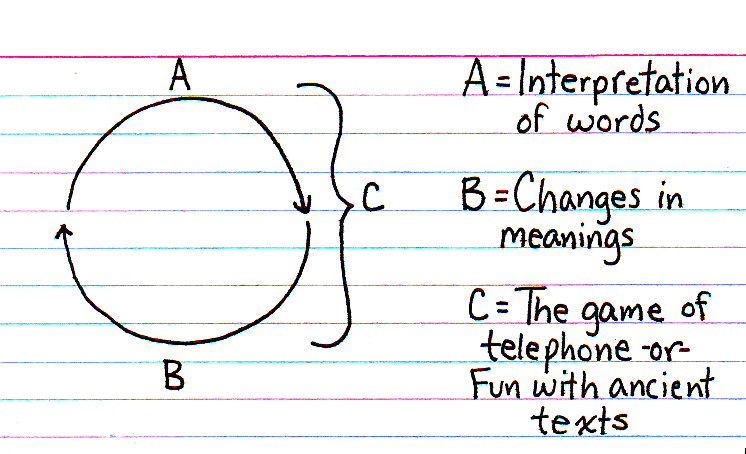
Posted by acilius on August 17, 2010
https://losthunderlads.com/2010/08/17/popular-web-comic-mentions-ancient-texts/
Is all social life schooling?
I’ve always read a lot of magazines. Before we started this blog in June 2007, if I came up with an idea while reading one of them I would sometimes make a note of it in a word processing document. More often I would just forget about it. Now I post “Periodicals Notes” in which I make those ideas available here.
Among these old documents I recently found some speculation triggered by this paragraph on page 23 of The Nation for 19 June 2006: “In his 1964 book Ma’alim fi al-Tariq (Milestones), [Sayyid] Qutb wrote that ‘if woman is freed from her basic responsibility of bringing up children’ and, whether on her own or by pressure from society, seeks to work in jobs such as ‘a hostess or a stewardess in a hotel or ship or air company,’ she will be ‘using her ability for material productivity rather than the training of human beings.’ This, he claimed, would make the entire civilization ‘backward.’” What intrigued me about this précis was the idea that “the training of human beings” is the activity that separates healthy societies from backward ones.
Augustine of Hippo, in the City of God and the dialogue de Magistro, takes a similar view. The City of God is a sort of cultural history of the Roman Empire, tracing how various religious ideas have influenced events from the legendary period of the seven kings of Rome up to Augustine’s own day. Rather than simply dismissing the ideas he disagrees with, Augustine treats them as early stages in the process that would prepare the Mediterranean world for Christian doctrine. This process of learning involved the whole of Greco-Roman society. In the dialogue de Magistro, he asks what purposes speech serves, and concludes that every one of those purposes is a form, of teaching. If all speech is teaching, then all social life must be educational.
Around the same time I read the issue of The Nation with that essay about Sayyid Qutb, I read the Spring 2006 issue of Telos. That issue includes an article by Aryeh Botwinick called “A Monotheistic Ethics: Ben Zoma’s Mishnah” which finds such a view in the Babylonian Talmud, in Ben Zoma’s comments on the passage “Who is wise? He who learns from everyone.” I rather doubt that Sayyid Qutb read the Babylonian Talmud, or Augustine for that matter. I suspect that Qutb, Augustine, and Ben Zoma came independently to the view that society is above all a place for teaching and learning.
Posted by acilius on August 12, 2010
https://losthunderlads.com/2010/08/12/is-all-social-life-schooling/
Herman Vandecauter, “Meusette d’Argenteau”
Here’s one of our favorite ukulelists, Herman Vandecauter:
Posted by acilius on August 6, 2010
https://losthunderlads.com/2010/08/06/herman-vandecauter-meusette/
Fundamentalisms
I’ve often wondered about the word “fundamentalism.” The word seems to refer less to a specific set of beliefs than to an attitude of militant certitude about one’s beliefs. So an “Islamic fundamentalist” and a “Christian fundamentalists” can look at each other, each serene in the conviction that the other will be damned for obscene folly.
How widely can the word be applied? We hear sometimes about “Hindu fundamentalists”; while no one can deny that there are aggressively militant Hindus, some do deny that the word “fundamentalism” can be stretched to cover a body of religious practices that are not built around a holy book or the story of a prophet. On the other hand, there are those who argue that militant Hindu nationalists have been trying to refashion Indian religious traditions in the image of the monotheistic movements commonly known as fundamentalist.
If fundamentalism isn’t particular to any one religion or even to any one category of religions, is it even necessary to be religious to be a fundamentalist? Or, to ask a related question, if fundamentalism isn’t about particular religious doctrines but about the believer’s attitude towards doctrines, then wouldn’t we expect fundamentalists who change only in that they have lost faith in their religious doctrines to approach disbelief in the same way they had formerly approached belief? That is, would we not expect fundamentalist theists who ceased to believe in their God or gods to become equally fundamentalist atheists unless they had undergone some change in their approach to their beliefs?
Yesterday, Arts & Letters Daily linked to a several-week-old piece on Slate that reminded me of these questions. The most interesting bits of that piece were quotes from Australian science blogger John Wilkins. Wilkins has denied that “fundamentalist atheism” is a meaningful phrase, but his description of the mindset that sets the “New Atheists” apart from the agnosticism he approves does sound very similar to fundamentalism:
For now my objections to the “New” Atheists (who are a vocal subset of the Old Atheists, and who I call Affirmative Atheists) are the same as my objections to organized religion:
1. Too much of the rhetoric and sociality is tribal: Us and Them.
2. [The New Atheism] presumes to know what it cannot. More on this below.
3. As a consequence of 1 and 2, it tries to co-opt Agnosticism as a form of “weak” Atheism. I think people have the right to self-identify as they choose, and I am neither an atheist nor a faith-booster, both charges having been made by atheists (sometimes the same atheists).
4. Knowability: We are all atheist about some things: Christians are Vishnu-atheists, I am a Thor-atheist, and so on. But it is a long step from making existence claims about one thing (fairies, Thor) to a general denial of the existence of all possible deities. I do not think the god of, say John Paul II exists. But I cannot speak to the God of Leibniz. No evidence decides that.
5. But does that mean no *possible* evidence could decide it [existence or nonexistence of God]? That’s a much harder argument to make. Huxley thought it was in principle Unknowable, but that’s a side effect of too much German Romanticism in his tea. I can conceive of logically possible states of affairs in which a God is knowable, and I can conceive of cases in which it is certain that no God exists.
Posted by acilius on August 5, 2010
https://losthunderlads.com/2010/08/05/fundamentalisms/
Who writes this?
 acilius
 believer1
 lefalcon
 losthunderlads
 vthunderlad
 Panther Red