Quantitative vs. Qualitative

My wife is a sociologist whose main interests are in qualitative research.  Unlike quantitative researchers, who collect a limited number of facts about each of a large number of people and use statistical methods to look for patterns in those collections, qualitative researchers collect a large amount of information about each of a relatively small number of people in order to discern just how those people go about making their decisions.  Qualitative and quantitative research are not schools of thought which compete with each other, but methods which depend on each other to be made useful.  While it is not possible for qualitative researchers to formulate general laws of behavior without transforming their conclusions into hypotheses to be tested by quantitative methods, neither is it possible for quantitative researchers to apply general laws of behavior to any case in the real world without conducting qualitative studies in which they ask people what’s on their minds.

I bring this up because of an item in the 13 December issue of The Nation.  In a review of some books about the history of New York city politics, Samuel Zipp writes of the administration of Mayor John Vliet Lindsay (1966-1973):

Lindsay was what [author Joe] Flood calls a “moralistic crusader.”  He hoped to unseat the old Tammany political machine, which had kept Democrats in power with a finely calibrated exchange of favors and services for votes greased by pervasive graft, and which rewarded loyal white ethnics with patronage while paying lip service to the concerns of the low-income migrants arriving in ever greater numbers from the black American South and Puerto Rico.  At the same time, Lindsay promised to master the chaos of the city by applying the technological marvels of computerization to city service delivery.  Systems analysis, game theory, computer modeling: these RAND innovations in information management promised to give Lindsay’s administration a way to turn the constant stream of information coursing through city agencies into “easily defined variables.”  Perhaps most important, though, was Lindsay’s sense that RAND would give him an advantage over the Tammany machine.  Flood ingeniously describes Tammany as an “information-gathering apparatus.”  As much pragmatic “intelligence network” as craven patronage machine, the system ran on stories collected on the street and sent up the ladder from the ward boss to the Democratic Party clubhouse to City Hall.  Reformers had often struggled to deliver on their promises if good government because they lacked the machine’s intelligence network.  Lindsay counted on RAND to supply an equivalent information system that would shift the power base “from using narrative to using numbers.”  With total information awareness, the city could be turned “into an assemblage of numbers,” a series of inputs and outputs that would easily surpass Tammany in the efficiency department.

As a liberal Republican reformer, Lindsay lacked the connections and manpower to govern the city “using narrative.”  What he found in his two terms in Gracie Mansion, however, was that he did not command even the political resources necessary to collect useful numbers.  Affluent New Yorkers blocked any study that might suggest that their neighborhoods could do with fewer city services, while longtime municipal employees refused to perform the analyses Lindsay wanted.  For example, when the fire department received stopwatches and supervisors were told to use them to produce reports on their reaction times, what fire battalion chiefs in fact reported was an epidemic level of stopwatches crushed as firetrucks accidentally drove over them.

I wonder if New York mightn’t have done better had reformers taken a different approach.  For over a hundred years, from the days when municipal reformer Theodore Roosevelt Senior left the Democratic Party in the 1850s until the fiscal crisis that overwhelmed the city when John Lindsay’s successor Abraham Beame was mayor in 1975, New Yorkers campaigned for good government by campaigning against Tammany Hall.  The goal of all these reformers seems to have been a rational, transparent government.  Perhaps the better way to create this rationality would have been for an enlightened set of leaders to rise to power within Tammany Hall.  One might imagine them formalizing the intelligence network using the tested methods of quantitative research.  Once that was done, we could imagine the machine itself becoming rational and transparent.  Perhaps a new system would have emerged in which Tammany’s long-established dominance in municipal policy and staffing would have been officially acknowledged, and the formal distinction between the machine and the city government would have been erased.

Sex, perhaps; sexiness, no

This picture shows a nude woman making an obscene gesture.  So, it would not be safe for work, unless you work in the sex industry.  Yet strikes me as eerily wholesome.  I might almost call it the opposite of pornography.

This article is titled “How great sex made me a good mom.”  The sex doesn’t sound at all great to me, rather dreary in fact; but I suppose that just means it’s a good thing there are more than two people in the world.  The title has a sort of intuitive appeal; if it’s sex that makes you a parent, shouldn’t good sex make you a good parent?  I don’t know if you really can push the analogy that far, but it seems to come naturally to humans to assume that effects should resemble causes.  And the author presents a detailed case supporting her claim that her exhaustingly experimental sex life has enabled her to succeed with an experimental approach to child-rearing.  Also, the author is married to a woman to whom she refers as “studwife,” which I first read as “stuntwife.”  I spent about half a second wondering whether this meant she was a wife who took risks others couldn’t afford to take, or whether her growth had been stunted in some way.

What are political parties for?

Click on the image below to see Keith Knight’s latest K Chronicles in readable form.

This suggests a different view of US politics than did one of his recent (th)ink comics:

The whole premise of the first comic that the Republicans and Democrats in official Washington might be expected to “solve America’s problems.”  I see no evidence that either party is interested in doing anything that could meet this description.  On a whole range of issues, the two parties are much closer to each other than either is to the mainstream of US public opinion.  In regard to trade policy, tax policy, health care, foreign policy, labor law, immigration, etc, the two parties represent a coordinated program to subsidize capital ownership and penalize wage labor.

The premise of the second comic is that the Republicans’ main goal is to attack the Democrats and that there is no point in the Democrats’ attempts to work with them.   If this is true, and if it is also true that the Democrats represent something good, then a Democratic leader who said that his or her party’s chief goal was to rid Washington of Republicans  would not be neglecting “America’s problems,” but tackling one of America’s biggest problems.   I don’t doubt that Knight sincerely believes that that Republicans are hopelessly bad, and that the Democrats are far better.  I am surprised that he doesn’t accept that Senator McConnell and his supporters are equally sincere in the contrary belief.

Gaius Acilius on Praise and Reproof

I teach in a university classics department. A few years ago, a senior colleague of mine received a “Teacher of the Year” award.  I congratulated him, then asked some questions.  After I asked him who gave the award, how they chose the recipient, and what benefits came with it, I asked him how he would react if the same people had used the same criteria to decide that he was a bad teacher, to publicize this decision, and to fine him.  Would he accept this judgment?  He did not think he would.  So, how could he justify accepting their judgment when it benefited him, if would not accept that same judgment were it to his disadvantage?  He agreed that this was a good question.  Of course, he went on to accept the award just the same.

A similar question may have preyed on the mind of my namesake, Gaius Acilius(more…)

Acyrologia in the news

Yesterday, Language Log posted this cartoon.  Click on the image to see it in full size on the cartoonist’s site:

The poster, Professor Arnold Zwicky, at first remarked that he hadn’t seen the word “acyrologiaphobia” before; he then updated the post with the cartoonist’s explanation that “Acyrologia… seems be more or less synonymous with malapropism.”  So I googled “acyrologia,” and found this nifty little page explaining the word and its uses.  The page is part of Silvae Rhetoricae, an online reference for students of rhetoric maintained by Professor Gideon Burton of the Brigham Young University.

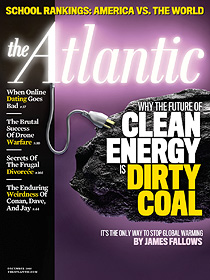
The Atlantic, December 2010

Several interesting pieces this month.  I’d mention three.

Kenneth Brower is the son of environmentalist David Brower and has for decades been close to physicist and all-around genius Freeman Dyson.  In the last few years, Dyson has become the most prominent of scientists who are unconvinced that human-caused global warming represents a significant threat.  Brower’s piece in this issue asks what went wrong with Dyson.  I can’t entirely suppress a suspicion that Brower is being less than fair to Dyson, but the article is fun to read nonetheless.

James Parker wonders what the deal is with all those late-night talk shows where there’s a host who comes out, delivers a monologue, then chats with celebrities who take turns sitting on a couch next to his desk while the house band plays and the studio audience cheers.  Isn’t that an awfully tired format?  Evidently not too tired for the tastes of the American viewing public, as many such shows now command millions of eyeballs nightly.

At the end of a column about internet dating sites, Alexis Madrigal says that “It’s when people deviate from what we predict they’ll do that they prove they are individuals, set apart from all others of the human type.”  I tend to disagree.  If others are to work with us, they must be able to predict our behavior well enough to know our next move.  If we are to accomplish anything new by working together, that predictability will have to be the result of a deliberate creative process.  Indeed, I would say that the greatest of all creative challenges is the creation of predictability.

No representation without taxation?

Years and years ago, I read this essay by British Libertarian J. C. Lester someplace online.  The credit here says 2001; either my memory is deceiving me or that date is in error, as I distinctly recall reading it on a computer I last used in 1997.  Anyway, it’s old.  Lester argues that people who receive more money from the state than they pay in taxes should not be allowed to vote:

Why should people who are not taxpayers be allowed to vote money away from those who are? If we must have state services, it should at least be for those who pay for them to vote for which services they want and how much they wish to pay. To allow those providing, or living off, the services to vote is like allowing a shopkeeper to vote on what you must buy from him, or a beggar to vote on what you must give him.

This would exclude state employees, people living on public benefit, and the destitute from voting.  And not only them:

So who does not pay taxes and so ought not to have an electoral vote? Judges, state-school teachers, all in local government, state policemen, all in the armed forces, all in prison, all in the NHS, all in the civil service, all employees of the BBC, all the unemployed, all in academia (except, perhaps, in the private University of Buckingham), some farmers, some solicitors, maybe some barristers, any employed in businesses that receive tax-subsidies in excess of their tax-payments, and MPs with insufficient taxed market-incomes to cover their salaries. I cannot list them all, but you see the size of the problem.

Indeed, the problem grows still further:

There are some who are on the periphery of net tax-receiving and whom it will not be possible to distinguish with certainty. These people receive most of their income from purchases by state institutions or state employees. The latter is especially hard to be sure of. For instance, those working for The Guardian and New Statesman & Society might just fit this category. But if it is too hard to prove then they might have to be given the benefit of the doubt. Though if the state sector shrinks, due to a new Taxpayer Democracy, then enterprises will decline to the extent that they necessarily depend on indirect state patronage.

I would say that this periphery is much larger even than Lester grants.  What is a tax?  Not only revenue that finds its way into government coffers, but any expenditure that we make solely because of government policy must be regarded as tax.  So, if the tax code says that we may either write a check for <i>x</i> amount to the state or give <i>y</i> amount to a particular charity, and we choose to give <i>y</i> because it is a smaller amount than <i>x</i>, we have not simply avoided tax- we have simply paid an alternative tax.  Those who receive more income from such an alternative tax would be as much disqualified from voting under Lester’s proposal as would those whom Lester identifies as state employees.

This group might be very large indeed.  Consider the USA.  Income American corporations receive is subject to a federal tax that averages a rate of 27%.  Yet the Internal Revenue Service collects very few dollars from the largest American corporations.  This is because the tax code provides many alternative ways of paying that tax.  Among the expenditures that count toward paying federal tax are payroll expenses, including not only hourly wages, but also salaries and various other forms of compensation, including health insurance premiums.  This fact goes a long way towards explaining why executives at American firms are paid so much more generously than are their counterparts in other countries.  Companies compete to hire high-powered executives, they don’t compete to see who can send the biggest check to Uncle Sam.  It also helps to explain why US health insurance costs spiral upward so much more rapidly than inflation.  The employers pay the insurance bills, but they don’t pay with their own money.

Under Lester’s system, then, if your income comes from the health insurance business, your right to vote might be challenged.  Likewise if you are a top corporate executive.  If your pay is higher than the norm for people like you in other countries with different tax regimes, and the difference between your pay and theirs is greater than the total amount you pay in taxes, then you are a net recipient of tax and would therefore expect to be disenfranchised under the Lester plan.

Lester bases his argument on the idea that people should act for the sake of their own interests.  If tax recipients no longer have the power to impose obligations on taxpayers, the resulting “Taxpayers’ Republic” will create the minimal state that he wishes to see.   Here Lester shows  that his goal is freedom from state bureaucracy.  Some time ago, I posted an idea here that, because the main characteristic of modern society is a high level of bureaucratization, to us moderns “freedom” must mean either freedom from bureaucracy, freedom as a product of bureaucracy, or freedom as a way of operating within a bureaucracy.  I call this little model “the three freedoms.”  Lester’s proposal might very well curb state bureaucracy, but it’s hard to see how it would contain the power of corporate bureaucracies generated and raised to a high level of efficiency by the market.

A very different argument, reaching a similar conclusion, recently gained a flurry of attention.  Pat Sajak, who for decades has hosted the US version of the popular TV game show Wheel of Fortune, suggested on his blog that public sector employees should not vote on matters that affect their departments.  While Sajak’s conclusion is reminiscent of Lester’s, he proceeds from almost exactly the opposite premise.  Sajak writes:

None of my family and friends is allowed to appear on Wheel of Fortune. Same goes for my kids’ teachers or the guys who rotate my tires. If there’s not a real conflict of interest, there is, at least, the appearance of one. On another level, Supreme Court Justice Elena Kagan has recused herself from nearly half the cases this session due to her time as solicitor general. In nearly all private and public endeavors, there are occasions in which it’s only fair and correct that a person or group be barred from participating because that party could directly and unevenly benefit from decisions made and policies adopted. So should state workers be able to vote in state elections on matters that would benefit them directly? The same question goes for federal workers in federal elections.

Sajak goes on to grant that other voters seek their own self-interest as well, but claims that the intensity of a public sector employee’s concern for his or her continued employment is likely to make his or her voting behavior qualitatively different than the behavior of a taxpayer who wants to reduce state spending.  That taxpayer will have other interests that s/he might balance, while the state employee will not be likely to take anything else into consideration if his or her livelihood is immediately at stake.

While Lester wants to create a space free from state bureaucracy in which people will be at liberty to pursue their own interests, Sajak wants to ensure that state bureaucracy functions as an impersonal, disinterested mechanism that produces freedom for the people outside it by guaranteeing that the people inside it merely follow the rules of the mechanism.  In terms of “the three freedoms,” Sajak wants the freedom that is a product of bureaucracy.

I would suggest that the “three freedoms” model might be useful in structuring a reply to both Lester and Sajak.  Perhaps an agenda to support freedom in a modern society requires us to address all three of these freedoms at once.  Sajak’s reform might enable the state to create greater freedom for its clients, thus promoting the freedom that bureaucracy produces.  Let us suppose that Lester’s reform would reduce bureaucratization of both the public and private sectors, thus promoting the freedom that can exist where bureaucracy is held at bay.  Clearly, however, either reform would label members of the state bureaucracy and of the other bureaucracies aligned with it as a servile class.  That labeling would surely make those bureaucracies less likely to be places where people could work in freedom, which in turn would make society at large a more servile place.

Unwinder

Thanks to Unwinder’s Tall Comics for mentioning us.

The idea of north, and every other direction

The winner of Eleuke’s annual prize for best ukulele video is the most Canadian thing I’ve ever seen.  I kept expecting footage of Sergeant Preston of the Yukon breaking up a hockey fight.


We see the people we look at, we look at the people we’ve seen

In the latest issue of The Nation, Alexander Cockburn argues that the reason Wisconsin’s Democratic US Senator Russ Feingold lost his seat in this month’s election was that too many voters associated him with the Obama administration and its habit of appeasing the Republican Party.  How can the senator regain his reputation?  Cockburn recommends that he challenge Mr O for reelection, presenting himself as an independent candidate in 2012.  Cockburn does not claim that US voters in general are looking for a populist candidate who will call Wall Street to account; rather he says that exit polls show that the public at large has no definite idea as to what it would like to see next.  But more respondents in those polls blamed Wall Street for the country’s economic woes than any other force, and Feingold’s record makes him a plausible champion of real reform.  Perhaps if someone like him made a case for curbing the power of the financial elite, public opinion would start to move in that direction.  Perhaps the existence of a populist candidate might give rise to a populist movement, which might in turn reshape the public’s perceptions of what is possible in US politics.

Barry Schwabsky’s  essay about painter Nancy Spero (1926-2009) is occasioned by a new book about her visual work, the reissue of her book on The Torture of Women, and an exhibition at the Centre Pompidou.  Schwabsky focuses at length on Spero’s decision to exclude male figures from her work.  Schwabsky points out that many critics who ceaselessly attacked Spero for her supposedly narrow range saw nothing narrow about the decision many of her contemporaries made to renounce representational art altogether. For Schwabsky, these critics missed the fact that Spero was, “after Matisse, the great painter of the dance.”  He enlarges on the comparison: “Matisse, speaking of his chapel in Vence, explained, “This lightness arouses feelings of release, of obstacles cleared, so that my chapel is not ‘Brothers, we must die.’ It is rather ‘Brothers, we must live!'” Spero’s late work embodies this same sense of release. “Sisters, we must live!” could be its motto.”   Even Spero’s protest, as in The Torture of Women, is never merely angry, never a counsel of despair; rather, she always affirms that life is still to be lived, “that judgment has yet to be rendered.”

Benjamin Barber looks at the US political scene and worries that Americans are losing their grip on reality.  More precisely, he fears that in our public life we no longer make much distinction between facts and opinions.  This development, Barber argues, is lethal to democracy:

The trouble is that when we merely feel and opine, persuaded that there is no possible way our opinion can be controverted or challenged, having an opinion is the same as being “right.” Being right quickly comes to trump being creditable and provable, and we lose the core democratic faculty of admitting that we might be wrong, and that our views must be judged by some criterion other than how deeply we hold them. Our polarized antidemocratic politics of personal prejudice is all about the certainty that we are right paired with the conviction that nothing can change our mind. Yet democracy is wholly contrary to such subjective certainty. To secure our liberty in a world of collectivity, we must remain endlessly sensitive to the possibility that we might be wrong. And hence to our reciprocal willingness to subject our opinions to corroboration—and to falsification. We teach evolution not because it is “true” in some absolute sense but because it is susceptible to falsification. Creationism is not, which is why evolution is science while creationism is subjective opinion—a fit candidate for belief but inappropriate to schooling.

Barber has spent a great deal of time replying to the so-called “Public Ignorance Objection” to direct democracy, arguing that if the public does not have the knowledge needed to govern itself, that is likely because it has had no occasion to gain that knowledge.  Let the people govern, and they will have an incentive to acquire not only the information that statecraft requires, but a set of habits that can translate that information into workable policy.  It’s a bit of a disappointment he didn’t have space to develop that theme here, but could only describe the problem.