The Wrong Man?

I continue my attempt to catch up on “Periodicals Notes” with this bit about the May issue of The Atlantic

The most widely discussed article in the issue was David Freed’s “The Wrong Man,” about Dr. Steven J. Hatfill.  When several envelopes containing anthrax were sent to American politicians and journalists in the fall of 2001, the FBI investigated Dr Hatfill.  The article makes it clear why; the anthrax in the envelopes came from Hatfill’s place of employment, the US Army Medical Research Institute of Infectious Diseases at Fort Detrick, Maryland.  Hatfill was in Britain when one of the letters was mailed from Britain; he was in Florida when another letter was mailed from Florida.  Most intriguingly, though Hatfill is an American he served in the Rhodesian army defending white minority rule in that African country in the 1970s.  The unit in which Hatfill served, the Selous Scouts, operated in the area where a major anthrax outbreak killed more than 10,000 members of the tribes that most fiercely opposed white rule.  Freed points out that “a majority of the soldiers in the Rhodesian army, and in Hatfill’s unit, were black”; he does not pause to acknowledge that a black citizen of Rhodesia might have had a different motivation for joining the Rhodesian army than would an American.  Freed also says that “many well-respected scientists” concluded that the outbreak had an innocent explanation; this conclusion becomes a bit dubious when we see that a member of the Selous Scouts had been in the US Army’s elite Green Berets shortly before the outbreak and would wind up working at the Army’s chief bioweapons facility some years later.  Freed asserts Hatfill’s innocence throughout the article, but succeeds in showing why the FBI originally suspected him and why some might suspect that the investigation may have been short-circuited to cover up high-level misdeeds in which he was involved.

Elsewhere in the issue, Jon Zobenica recommends two books as anitdotes to the myth that American soldiers were models of chivalry during World War Two, Robert Leckie’s Helmet for My Pillow and Eugene Sledge’s With the Old Breed.  Leckie and Sledge both served in the Pacific as Marines, and neither man’s memoir gives an inch to romanticism or propaganda.  These two books formed much of the basis for a recent TV drama about the war in the Pacific.  Some commentators have praised the show for its gritty realism; having read the books, though, Zobenica can report that the producers sanitized the characters based on Sledge and Leckie in ways that the men never sanitized their own records.
Funny Times, June 2010

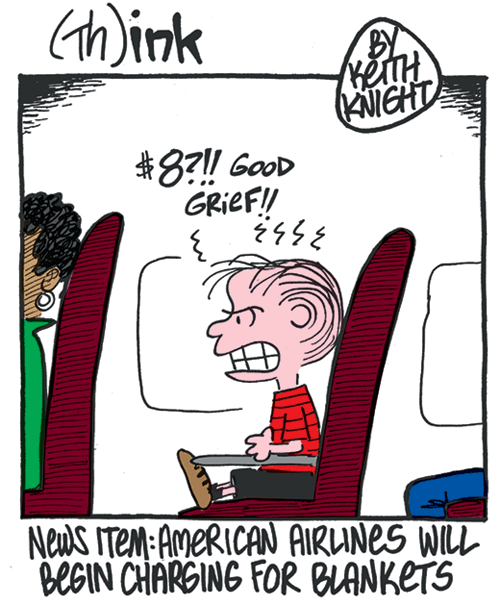
They haven’t posted the cover for this month’s Funny Times online yet, so I’ve put up this Keith Knight cartoon with a link to the magazine’s homepage. 

Jon Winokur’s “Curmudgeon” quotes Emile Capouya on the high school teacher’s mission: “A high school teacher, after all, is a person deputized by the rest of us to explain to the young what sort of world they are living in, and to defend, if possible, the part their elders are playing in it.”  That’s one of many reasons I rejoice in not being a high school teacher. 

Matt Bors wonders what people really mean when they say “teach the controversy.” 

Zippy the Pinhead wishes he could to travel back in time to the year 1885.  He changes his mind when a disembodied head with a neatly waxed mustache announces that in that year, “schoolchildren were routinely flogged, pigs ran loose in th’ streets, and heroin was sold over the counter as ‘cough medicine.'”  In related news, I now wish I could travel back in time to 1885.   

Click on the image to the left to see a genuinely funny installment of This Modern World from April.   

Lloyd Dangle’s Troubletown calls on the state of Virginia to “Let Confederate History Month be the festival of self-loathing it should be.”  I hold no brief for the Confederate States of America or for Virginia’s official commemoration of it, but I’m decidedly against all festivals of self-loathing.  For one thing, self-loathing usually seems to be a form of narcissism.  That same cartoon shows how that is.  Dangle depicts a bunch of yahoos waving Confederate flags and exclaiming “We used to own human slaves.”  Well, they didn’t, did they.  Perhaps their great-great-great-grandparents owned human slaves, but a great-great-great-grandparent is after all a very distant relative.  Beating yourself up over the misdeeds of someone so remote is merely a way of keeping attention focused on oneself rather than others.  If your ancestors created a system that continues to privilege you and to do injustice to groups of which you are not a member, staging a festival of self-loathing may be the very worst thing you can do.  Your privilege puts you in the spotlight, your self-loathing just keeps you there.

The Nation, 31 May 2010

The cover story is an article about the new UK government, a coalition between the Conservatives and the Liberal Democrats.  Like a column elsewhere in the issue, this article focuses on the differences in policy that have in the past separated the Conservative Party (aka “the Tories”) from the Liberal Democrats.  Also like that column, it leaves unmentioned what seems to me the most noteworthy similarity between these two parties: neither has any chance of winning a majority in the House of Commons in any future election.  The campaign just passed presented the Conservative Party with the most favorable circumstances imaginable.  They were the chief opposition to a Labour government that had been in power for 13 years; the economy was in recession; Britain was involved in an unpopular war in Afghanistan; and the prime minister was Gordon Brown, who at times seemed to be deliberately trying to make it impossible for voters to support him.  If, even with all those advantages combined, the Tories still failed to reach the 326 seat mark, then we can take it as settled once and for all that no possible conditions will ever allow them to form a government on their own. 

For their part, the Liberal Democrats have spent decades clamoring for Britain to adopt a system of proportional representation.  Though the pieces on the Tory-Liberal Democratic coalition in this issue focus on the supposedly incongruous nature of the coupling, it is clear that the adoption of such a system is now vital to the interest of the Conservative Party.  First-past-the-post electoral systems generally give rise to competition between two major parties.  These parties alternate in power.  If the UK retains its first-past-the-post system of parliamentary representation, it will be only a matter of time before it returns to a situation in which two major parties contend for the majority in the House of Commons.  The Conservative Party cannot contend for that majority; therefore, if the current system survives, the Tories will perish.  While the Tories can never again be a majority party, they might very well hold on to their status as one of the biggest minority parties.

Border Adjusted Value Added Tax

Ernest "Fritz" Hollings of South Carolina ran for president in 1984

Former US Senator Ernest Hollings wants the United States to replace its corporate income tax with a border adjusted value added tax.  He writes that he wants to see “the President and the Congress beginning to solve the deficit, debt, jobs, economy, and health cost problems by replacing the corporate tax with a 5% VAT- NOW!”  He may be onto something, but I think he’s also missing something.  Surely, a 5% border adjusted value added tax would send more revenue to Washington than the corporate income tax now does.  However, the reason the corporate income tax does not raise more revenue is that American corporations shelter their income by taking advantage of deductions.  End the tax, and you end those shelters.  Since employer-provided health insurance is one of those shelters, a 5% VAT would probably not “solve” the problem of access to health care in the USA.

The poisoned feast

A listening device

Like most publications produced on a tiny budget, Counterpunch is very uneven in quality.  In April, for example, they came out with an issue that was mostly taken up with a monologue that their reporter JoAnn Wypijewski heard from some man she met while covering an anti-Obama rally.  The monologue was an exposition of the man’s crude racism.  When Wypijewski demurs from one of his antiblack tirades, he tells her that he isn’t surprised to hear that from a white woman, that the white race is destroying itself and so it only makes sense that she would seek to survive by giving her allegiance to “a savage race.”  It went on and on in that vein.  The conversation ended with the man giving Wypiejewski’s business card back to her because her name includes a sequence of letters that spells “Jew.”  I suppose the point of giving so much space to this sort of garbage was to show that racism is alive and well in the USA and is an animating force on the political right.  The editors may have decided to include some portions for comic relief; I must admit there were moments when Mrs Acilius and I laughed out loud at the man’s idiocy.  Still, I can’t believe it is really necessary to give so much publicity to such foolish views.

The issue for 1-15 May is much better.  There’s an interview with Michael Pollan, who has become well known as a critic of the way Americans now produce and consume food.  The interview is excerpted from Kreisler’s new book Political Awakenings.  The part that most stuck with me was Pollan’s identification of the four tenets of what he calls “the ideology of Nutritionism.”  This ideology tells us, first, that “foods don’t matter, nutrients do”; second, that “you can divide the world into good and bad nutrients”; third, “if the important thing in food is a nutrient, and nutrients are invisible to normal people, you need experts to tell you how to eat”; fourth, “the whole point of eating is health.”  To follow these doctrines is to be estranged from “our sense of eating as a complex social, as well as biological, phenomenon, involving community and identity and pleasure.”  While a dish is defined as food because it is part of customs that bind people together, whether by eating in family groups or giving a meal to a guest or sharing a feast as a community, a chemical is defined a nutrient because of its role in the functioning of a single body.  While food can excel aesthetically, and like other aesthetic experiences can always offer us something new to learn, a nutrient can only be judged by preset standards derived from medicine.  While food is governed by cultural norms that have evolved over the millennia, nutrients are overseen by an infant science that has barely advanced beyond superstition.  While the production of food is a process that has traditionally nourished both humans and soil, the extraction of nutrients depletes soil and pollutes the human body.  I wonder if it would be helpful to go further than Pollan and to define food as a gift.  A gift we receive from a host, from nature, from God; a gift we pass on to those with whom we share important bonds.  Perhaps this sense of gift is the key to a truly healthy use of eating. 

The other story in the issue is also an excerpt from another publication, this time from the Russian magazine Smena.  Like Pollan’s interview, it tells of a corrupted gift, a poisoned feast.  Igor Atamanenko gives us the story of a gift the United States Ambassador to the Soviet Union received from Stalin in 1943.  It was a magnificently carved wooden piece depicting the Great Seal of the United States.  The ambassador hung the piece in his private office.  He and the next three to hold the post kept it there until 1952, periodically redecorating the office to highlight the extraordinary beauty of the carving.  As it turns out, the carving enclosed an electronic listening device that gave Soviet State Security access to all of the ambassador’s conversations.  The device was so sophisticated that when it was finally discovered, it took the Americans years to produce a working copy.  As it turns out, the inventor responsible for this extraordinarily advanced listening device was none other than Lev Sergeyevich Termen, known to music-lovers in the West as Léon Theremin, inventor of a musical instrument that is played without being touched.

Funny Times, May 2010

It’s always been my habit to go to ground during the summers, so it isn’t much of a surprise that I’ve fallen behind in my “Periodicals Notes.”  Not that anyone has complained, but I’ll be catching up a bit over the next few days.  First up is May’s Funny Times

There’s an installment of Lloyd Dangle’s Troubletown that I thought was hilarious when it first appeared back in February.  It’s about the political movement known as the “teabaggers,” Americans of a rightward bent who have been vocal about their opposition to the Obama administration.  Dangle is mystified that the teabaggers have been the object of so much publicity.  My favorite line from the comic is “600 people showed up for their convention.  That’s almost as many as the Sheboygan High School science fair!” 

Matt Bors has a good comic about privacy, I was reminded of it by this recent xkcd

Jon Winokur’s “Curmudgeon” compiles quotes about money, including this from Brigid Brophy: “Whenever people say, ‘We mustn’t be sentimental,’ you can take it they are about to do something cruel.  And if they add, ‘We must be realistic,’ they mean they are going to make money out of it.”  Not exactly laugh-out-loud funny, but she does have a point.  So did Mary Gordon, when she wrote: “The use of money is the purest act of faith; no anchorite who has followed a vision into the desert has acted on an idea as far-fetched as our belief that if we put a dollar in a machine we will be drinking a Diet Coke in a minute.”  Andrea Dworkin is a name you don’t expect to encounter in a humor column, but she’s here: “Money talks, but it speaks with a male voice.”  Given Dworkin’s personal history as a woman who was once forced into sex work to escape an abusive partner, I can’t imagine laughing at that line, but I can certainly take it seriously.

Some would say that laughter is the ultimate form of seriousness.  If so, Dave Maleckar’s “Hundred Word Rant” may have hit on a way to take sex work seriously.  Arguing that people who like to cook should not open restaurants, he concludes thus: “You probably like sex, too.  You may be very good at it.  That doesn’t mean you should start doing it for money.”

Yemen’s Salta

Salta is a dish that does not, to my knowledge, exist anywhere beyond Yemen.  (Though I’ve heard you can get it in Dearborn, Michigan, a town with a high concentration of Yemeni people.)

Salta is nothing but a fairly simple stew, containing vegetables and bits of meat.  It’s traditionally eaten, not with utensils, but by scooping it out with bits of bread.  It’s a specialty of San’a, the capital … but is available in other parts of the country.  Furthermore – and I have absolutely no idea why this is the case – it’s a traditional lunchtime food.  Salta joints seem only to be open around midday, at which time they are packed with hungry working men.

There are two factors that make salta distinctive.  The stew has a highly unique topping of blended vegetables and fenugreek.  And it is served at extremely high temperature in a stone bowl.

I recently prepared salta for myself.  I knew in advance it would be impossible to replicate the original – but it was close enough.  It was quite good.  Here’s what is looked like.

Discover Magazine, June 2010

I’d like to note two articles printed in the June issue of Discover magazine. One is a report by Douglas Fox on research into the hypothesis that the cause of schizophrenia is a childhood infection, as yet unspecified, that releases a retrovirus from human DNA and sends it to the brain, where it overstimulates neurons.  This hypothesis has been gaining credibility in recent years, and some tentative steps have been made to sketch out the sort of treatments for schizophrenia that might become possible if it is fully established. 

Another report is about the idea that “we have already found life on Mars.”  Some of the tests the Viking probes ran on Martian soil indicated chemical processes like those which represent life on earth; because the samples were so different from life-bearing soil with which science was familiar in the mid-1970s, these results were generally dismissed at the time.  Since then, extremophile organisms have been found that have led biologists to expand the range of conditions under which they can imagine life existing, and some biologists have therefore looked at the Viking results with new eyes.

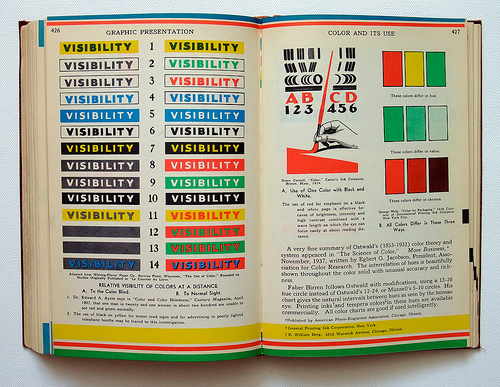
Graphic Presentation by Willard Cope Brinton

Reading the blog commonly known as “Gelman,”  we learned that Michael Stoll posted on Flickr a collection of images from a remarkably attractive 1939 book called Graphic Presentation, by Willard Cope Brinton.  Evidently hundreds of other bloggers have already found this collection and ripped images from it; why should we be any different?  As always, we’ve linked each picture to the place where we found it. 

Books of short stories by Tatsumi

Looks like they’re putting out material by Tatsumi on a chronological plan.  Each book below represents material from a stretch of 1 or 2 yrs.

I like the design for this series.  These are really pleasing hardcover books.  You might be able to check them out from a local library – but they’re worth buying outright ($19.95 each) if you believe you’ll be returning to them repeatedly.

These came out, respectively, in 2005, 2006, & 2008.  The last couple yrs, D&Q has put out other Tatsumi stuff – but not in the specific format \ design used for these three volumes.