Four links

While checking the links on our page of “General Interest Blogs and Miscellaneous” to make sure they were all still live, I noticed a few things I wanted to mention.


Via the Ancient World Bloggers Group, an article in MacLean‘s asks whether religious universities serve the public good. 

Chris Clarke explains why “Desert Solar is Not Renewable Energy

Duncan Mitchel claims that “The scale of the crimes involved in the case of US Presidents is far greater than even Popes.” 

Ross Cowan has posted a couple of things (here and here) about the phalanx in ancient Rome

Ron Aharoni

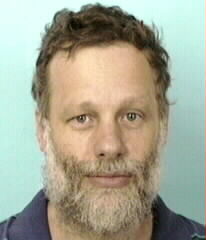
ron aharoniRon Aharoni is a mathematician at the Israeli Institute of Technology.  On his webpage, he explains that he’s writing a book about philosophy:

Philosophy is possibly the most enigmatic of human intellecutal endeavors. I am mainly interested in what it is, really. What are the philosophers really doing? Their own answer to this question is usually complimentary: they clarify concepts, they clean up the stables of human thinking. This has very little to do with reality – the mind-body problem, for example, or the problem of determinism-free will, are not about the clarification of concepts. There is some other secret to it, having to do with the very specific way that philosophers investigate concepts. They study their concepts without making the necessary separation between the concepts investigated and those used for the investigation. This is the topic of a book, in the process of writing, “The cat that is not there”.

The Cat That is Not There doesn’t seem to be in a very advanced stage; a Google search for  his name and “the cat that is not there” does not bring up any results.  But it sounds promising.  When I was in college, I had to read a lot of W. V. O. Quine, and something about Quine’s arguments drove me nuts.  I could never figure out he was doing that irritated me so intensely, whatever it was, it was way too subtle for me to identify.  Maybe Quine was committing the fallacy Aharoni describes, and failing to make “the necessary separation between the concepts investigated and those used for the investigation.”

The Periodic Table of Periodic Tables

Via haha.nu, a “Periodic Table of Periodic Tables.”  The more closely you look, the more clever it is.

How rumors get started, nowadays

Here is a fascinating account of how a group of people shut up in a room together managed, within 26 minutes, to start a rumor that made national news.

Pattern for Plunder

How Shirley Temple earned her ambassadorship

Lately I’ve been looking at Pattern for Plunder, a website that collects found images.  Most of the pictures are disturbing in some way.  A few sfw examples follow the jump.

(more…)

New post on Weirdomatic: Carnivorous Plants

FotB Alexandra has posted another of her well-curated photo galleries at Weirdomatic, this time focusing on plants that eat animals.

Bioethics as a profession

ALDaily named its link to this article about the profession of bioethics “How are these people experts?”  A quote:

Is it politically desirable for society to credit a designated group called “bioethicists” with expertise in resolving the most difficult moral questions? If so, what is it that gives ethicists a more legitimate claim to wisdom about right and wrong than the rest of us? The matter of ethical expertise — what it looks like, who can claim it — is a profound one. The place of bioethics in the academy, in the clinical realm, and in society turns on it. For most of us, the very idea of the “right” answer to a complex moral dilemma seems absurd on its face. After all, its derivation depends upon which moral theory one favors: deontological, consequentialist, natural law, situational, and so on.

By no means does this negate the possibility, let alone the importance, of serious moral reflection, but such analyses may be too lost in the foundational questions to be of much everyday use. And, of course, many bioethicists rely on their own philosophical biases. So, for example, when bioethicists condemn organ donor solicitation with the argument that it gives unfair advantage to some or violates human dignity, we must ask what makes them sufficiently sure of their view to impose it on others? Finding the “right” moral answer — assuming for a moment one exists — is not the business of applied ethics. So what can bioethics offer? What is its technical expertise?

[Hoover Policy Review]

Some stuff on our daily reads

Yesterday at Ukulele Hunt, Al Wood opened a contest to award the title of best internet ukulele video of 2009.  Each commenter is entitled to nominate five videos.  My five nominees are:  Ukulele Loki and the Gadabout Orchestra, “Prague:1998″; Poopy Lungstuffing, “Dolly Got a Haircut”; Ukulelezo, “When I Grow Up I’m Gonna Wear a Bikini”; Gensblue, “All That Ukulele Xmas”; and Ken Middleton, “Time After Time.”  I can’t resist embedding Poopy’s haunting original:

Meanwhile, Language Log featured a link to one of the funniest things I’ve ever seen on the web, “This is the title of a typical incendiary blog post” by Chris Clarke.  Each sentence starts with the words “This sentence” and describes what sort of sentence you would find in that position in a typical incendiary blog post.  Trust me, it’s funnier than that description makes it sound.

Eight days ago, Josh Fruhlinger, “The Comics Curmudgeon,” posted something that I’m still snickering about.  He gave us this “Herb and Jamaal” strip:


And added this comment:

Herb seems to have been possessed by an extremely mellow demon, which has compelled him to casually pull the Bible off the shelf and spit on it. The holy book responds to this assault by releasing thick clouds of acrid smoke. Who will win this low-stakes battle for Herb’s immortal soul?

Garry Kasparov on the role of computers in the future of chess

The former chess world champion summarizes the effect computers have had on high-level chess in the last couple of decades, and sketches some possible ways the game might move forward.  An excerpt:

In 2005, the online chess-playing site Playchess.com hosted what it called a “freestyle” chess tournament in which anyone could compete in teams with other players or computers. Normally, “anti-cheating” algorithms are employed by online sites to prevent, or at least discourage, players from cheating with computer assistance. (I wonder if these detection algorithms, which employ diagnostic analysis of moves and calculate probabilities, are any less “intelligent” than the playing programs they detect.)

Lured by the substantial prize money, several groups of strong grandmasters working with several computers at the same time entered the competition. At first, the results seemed predictable. The teams of human plus machine dominated even the strongest computers. The chess machine Hydra, which is a chess-specific supercomputer like Deep Blue, was no match for a strong human player using a relatively weak laptop. Human strategic guidance combined with the tactical acuity of a computer was overwhelming.

The surprise came at the conclusion of the event. The winner was revealed to be not a grandmaster with a state-of-the-art PC but a pair of amateur American chess players using three computers at the same time. Their skill at manipulating and “coaching” their computers to look very deeply into positions effectively counteracted the superior chess understanding of their grandmaster opponents and the greater computational power of other participants. Weak human + machine + better process was superior to a strong computer alone and, more remarkably, superior to a strong human + machine + inferior process.

(The New York Review of Books)

“Reporting from the mean streets of the cul-de-sac”

A spellbinding mini-memoir from our friend the PPRScribe.  My favorite moment: a neighbor, visiting the Scribe and her husband in their garage, goes on a bigoted rant about a Japanese guy who lives down the street.  Their reactions:

The Mister, who is less tactful than I am, got up and abruptly walked into the house. Leaving me to say, “__________.” (I leave that blank in the hopes that I come up with a sufficiently appropriate anti-racist come-back to insert later.)

There’s also a very nice photo with the post.