
Look for MLK at 1:31 in this video.
(I embedded the video previously, but not for MLK Day.)
Look for MLK at 1:31 in this video.
(I embedded the video previously, but not for MLK Day.)
Posted by acilius on January 18, 2010
https://losthunderlads.com/2010/01/18/martin-luther-king-had-a-mustache-therefore-zoe-likes-him/
A 35 second clip from a 1968 installment of the Tonight Show.
The guest host was Harry Belafonte, who talks about the interview here.
Posted by acilius on January 18, 2010
https://losthunderlads.com/2010/01/18/martin-luther-king-makes-a-funny/
No moving picture, but extremely moving words. A 1967 speech doesn’t have any business being so relevant to the events of 2010. The “demonic destruction tool” Dr King describes from about the 5 minute mark on is still operating quite smoothly.
Posted by acilius on January 18, 2010
https://losthunderlads.com/2010/01/18/why-i-am-opposed-to-the-war-in-vietnam-by-martin-luther-king-jr/
Posted by CMStewart on January 18, 2010
https://losthunderlads.com/2010/01/18/dolphins-are-people-too/
Posted by CMStewart on January 17, 2010
https://losthunderlads.com/2010/01/17/alternative-searching/
Since Al Wood started his extended Christmas break and put Ukulele Hunt on hiatus, some of us have been suffering withdrawal pains. As a tribute to his Saturday UkeTube selections and in anticipation of his return next week, here are few videos I’ve been listening to lately.
What Do I Gotta Do, by Jeremiah Camacho
Under the Covers, by Kate Sloan
Vangelis’ Missing, played by Ken Middleton
Tamacun, played by Brittni Paiva
Lilli Marleen, played by Bernd Dombrowski
The Cure’s “Friday I’m in Love,” performed by Najmah
Staten Island Slide, played by the Slavic Inferno
Lauren O’Connell’s Sweet Lament, performed by Neva Keuroglian
My Blue Heaven, played by L. Strachey (aka ReyalpEleluku)
“Deja Vu Date,” by Miss Zooey
“By the Sleepy Lagoon,” arranged for ukulele and performed by Martin Wheatley
Posted by acilius on January 16, 2010
https://losthunderlads.com/2010/01/16/some-recent-ukulele-videos-from-youtube/
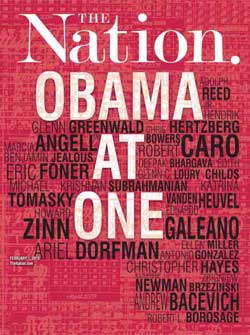 1 February: The first issue to go to press after the earthquake in Haiti includes some recommendations for those who would like to find a good relief organization to give money. The first organization I looked up when I heard about the quake was one I’d first read of in the pages of The Nation, MADRE. In her year-end lists of groups that deserve financial support and elsewhere, Nation columnist Katha Pollitt has made mention of this organization, which supports groups around the world. Most of MADRE’s partner groups are initiatives in poor countries, started and led by citizens of those countries, that prioritize the needs of women and girls. MADRE’s Haitian partner is Partners in Health, which runs a network of clinics called Zanmi Lasante; they’re on the list. The magazine’s website includes several more pleas for Haiti; see here and here.
In the same issue, Robin Einhorn attacks Gordon Wood’s recent book about the early federal period of the United States, arguing that Wood shows a “remarkably naive sense of politics” that allows him to keep the South at the margins of his story and free white male Northerners at the center of it. Even as he puts the focus on a rapidly industrializing region, Einhorn argues, Wood shows an uncritical admiration on for the agrarian politics of Thomas Jefferson and his party. Einhorn grants that Wood’s chapter on the politics of slavery is excellent, but says that confining the topic to a single chapter, quarantined from the rest of the book, is profoundly misleading. In the end, Einhorn declares that Wood has succeeded in thinking like Thomas Jefferson, but that this is no unmixed virtue:
If Jefferson had known nearly as much about his society as Wood does, Empire of Liberty is the book he would have written. It is no coincidence that the title is Jefferson’s, a phrase encapsulating his brand of velvet-gloved imperialism. Wood seems to know that there was an iron fist lurking inside, but he identifies with an audience that treasures the national fantasy of egalitarian triumph that Jefferson represents. Like Jefferson, Wood nods to the evil of slavery and the violence of westward expansion. Unlike Jefferson, he realizes that there was something undesirable about the way men treated women. But Wood’s focus remains squarely on the subculture of white men–especially in the North–who energetically pursued their liberty and happiness in the “republicanized” world of postrevolutionary America.
 25 January: Alexander Cockburn is disappointed with R. Crumb’s version of the Book of Genesis. In Cockburn’s view, Crumb does not thoroughly deflate monotheism, but produces a more or less reverent text. “If a conclusive disresepcting of Genesis was required, wouldn’t you think R. Crumb was the man for the job?… But the overall effect is more solemn than satirical.” Cockburn is also disappointed that Crumb depicts the characters of the book as recognizably Jewish (in fact stereotypically Jewish, “hairy” and “with big noses,”) missing an opportunity to make the point that “There never was a Jewish people, only a Jewish religion” (a line Cockburn quotes from Israeli journalist Tom Segev) and that Zionism is therefore an illegitimate enterprise. Indeed at one point Cockburn claims to have “wondered whether Crumb, a Catholic long ago, had converted to Zionism.”
I agree with Cockburn about a lot of things, but when he turns to Judaism and the Jews I sometimes suspect him of being a bit cracked. Not that I want to wave the flag for Zionism, but it doesn’t seem especially reasonable to expect a graphic novel, even when that graphic novel is R. Crumb’s adaptation of Genesis, to achieve everything he demanded of it.
 11 January: A piece about the Polaroid camera and the pictures it took includes this:
Polaroid’s “now” having been driven into the past, it has become ripe for nostalgia. Found Magazine, launched in 2001, was well ahead of the Polaroid nostalgia wave and spun off a whole book of Found Polaroids in 2006, when the end of the road was already in sight. But for its author, Jason Bitner, the medium had always been “instant nostalgia–framed and faded, a picture that already looked decades old.”
The same issue includes an essay about Thelonious Monk that ends with this anecdote:
Monk liked to wear a formidable ring bearing his name when he played, an encumbrance that no pianist in his right mind would want to burden a hand with. While he was flashing his ring for the world to see, from his own perspective he saw something else. “KNOW” said the ring, more or less, to the audience. “MONK” was the reply when he saw it himself.
.
Posted by acilius on January 14, 2010
https://losthunderlads.com/2010/01/14/the-nation-magazines-first-issues-of-2010/
Posted by CMStewart on January 13, 2010
https://losthunderlads.com/2010/01/13/y-chromosome-struggles-to-adapt/
Posted by CMStewart on January 12, 2010
https://losthunderlads.com/2010/01/12/planimals-exist/
Thanks to “Hairball of Hope,” a regular commenter at Alison Bechdel’s “Dykes to Watch Out For” blog, for calling my attention to the “Tank Chair,” an all-terrain wheelchair.

Posted by acilius on January 11, 2010
https://losthunderlads.com/2010/01/11/the-tank-chair/



 acilius
 believer1
 lefalcon
 losthunderlads
 vthunderlad
 Panther Red
