
Enjoy these “mind-blowing” images: frozen water, configured into a baton of incalculable power ..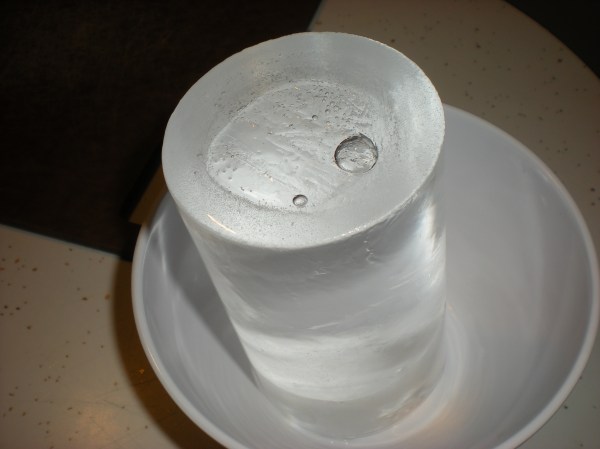

All posts for the month October, 2009
Let your mind be blown !!
Posted by lefalcon on October 8, 2009
https://losthunderlads.com/2009/10/08/let-your-mind-be-blown/
Neoliberalism as water balloon
Here’s a video that is intended to make a political point.
Posted by acilius on October 8, 2009
https://losthunderlads.com/2009/10/08/neoliberalism-as-water-balloon/
David R. Eustace
Click on the pic for more paintings by David R. Eustace. He is not the same person as the famous photographer David Eustace.

Ukulele Two Step, by David Eustace
Posted by acilius on October 8, 2009
https://losthunderlads.com/2009/10/08/david-r-eustace/
But why is she winking at me?
Via haha.nu:

Posted by acilius on October 7, 2009
https://losthunderlads.com/2009/10/07/but-why-is-she-winking-at-me/
A useful flash app
Do you wonder whether your computer’s mouse is worn out? Do you wonder whether the color is set correctly on your computer’s monitor? Do you wonder whether you might be partially colorblind? Do you wonder whether you have a tendency to Obsessive-Compulsive Disorder? Here is a flash app that can answer all four of those questions in one minute.
Posted by acilius on October 7, 2009
https://losthunderlads.com/2009/10/07/a-useful-flash-app/
The Proust Questionnaire
Thanks to our friend Al Wood for mentioning “The Proust Questionnaire” on Ukulele Hunt. The questionnaire looks like a good conversation-starter. Or perhaps a good conversation-preventer. Either way, it might come in handy.
Posted by acilius on October 7, 2009
https://losthunderlads.com/2009/10/07/the-proust-questionnaire/
How many people lived in Rome in the first century BC?

Sulla: Mr Zero Population Growth
During the first century BC, Rome experienced a series of civil wars. Dynasts like Marius, Sulla, Caesar, Antony, and Octavian led armies that slaughtered foreigners and Romans alike. Romans responded to these wars by hoarding their wealth. They hoarded some of this wealth by burying coins. Not all of the first-century Romans who buried coins had a chance to dig their coins up again. Some of the coins they buried have come to light only in recent centuries. Scholars study these newly recovered coins to learn about life in ancient times.
Historian Walter Scheidel and biologist Peter Turchin have looked at some of these recently uncovered first-century BC hoards of coins in Rome. Using analytic techniques developed by biologists, Scheidel and Turchin have concluded that the population of Rome in those days was considerably smaller than has often been estimated. The civil wars evidently took so heavy a toll on the Romans that the city’s population by the end of the first century was not likely more than half of the number some previous historians have estimated.
Posted by acilius on October 6, 2009
https://losthunderlads.com/2009/10/06/how-many-people-lived-in-rome-in-the-first-century-bc/
Buick’s target demographic
Via our friend Duncan Mitchel‘s blog:
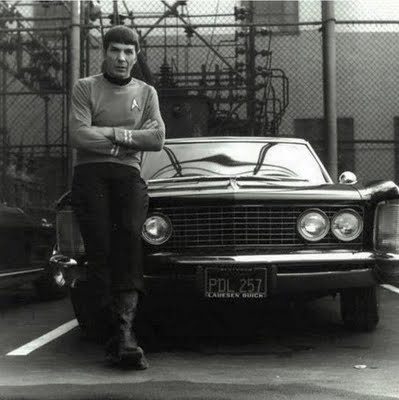
Posted by acilius on October 6, 2009
https://losthunderlads.com/2009/10/06/buicks-target-demographic/
Juan Cole is Making Sense
Juan Cole looks at the generally accepted facts about Iran’s nuclear program and argues that there is one hypothesis that covers them all. Iran, Cole argues, is not seeking to build a nuclear weapon, as hawks in the US and Israel claim; nor is it simply maintaining long-established civilian facilities, as others have said. Instead, it is trying to achieve “nuclear latency.” That is to say, the Iranians do not want actually to build a nuclear weapon at any particular time; what they want is the ability to build a nuclear weapon on short notice. Japan, South Korea, Brazil, and several European countries have nuclear latency, and it has served their security interests quite well.
Posted by acilius on October 6, 2009
https://losthunderlads.com/2009/10/06/juan-cole-is-making-sense/
USA: CRAZYWORLD! — Episode 3
This time, we’re exploring the personal costs tied to intensive AM listening. A harrowed waif stands poised at the precipice of madness, but receives the consoling tones of a caring “life coach” or similar figure. A lesson in hard realities. Questions to ponder: Does the young waif actually in fact swear off AM listening? Is that his own hand switching on the radio? And if so, when does this take place? The same day, as he savors a “last hurrah” of sorts? The very next day, as his resolve crumbles like dry tinder against the lush prospect of a tortuous Rush Limbaugh tirade against “cap-and-trade”?

Posted by lefalcon on October 3, 2009
https://losthunderlads.com/2009/10/03/usa-crazyworld-episode-3/
Who writes this?
 acilius
 believer1
 lefalcon
 losthunderlads
 vthunderlad
 Panther Red