Misheard lyrics

On Monday, Language Log posted about this video:

Today, cymast and I had an exchange in the comments on one of her posts about something similar. 

So, here are three links. 

A very ambitious collection, where visitors vote to rank mishearings by comic value and submitters include stories to show that they did sincerely mishear the lyrics, that they are not making up parodies; another collection, almost equally ambitious in the number of mishearings recorded and keys by which they are indexed, but without the same means to filter out parodies; and an explanation of why misheard lyrics are known as “Mondegreens,” from snopes.

Astounding Evidence (??)

embryo1


I have no particular agenda here other than to offer this link for your consideration.  Judge the evidence upon its merits:  http://www.islam-guide.com/frm-ch1-1-a.htm

Camus’s The Stranger

letranger


I just read _The Stranger_.  It’s a pretty engaging book.  But I keep wondering:  what the heck was Camus thinking when he wrote this thing?  I cannot understand what the main character’s problem is.  Camus himself claimed the novel’s protagonist, Meursault, “refused to play the game.”  I take this to mean that Meursault did not accept some of his society’s basic values, such as belief in God and Christianity.  At the same time, he is also apparently incapable of familial or romantic love, or of experiencing any emotional reaction to having killed someone.  These “shortcomings” are not the product of some ideological stance against societal indoctrination; they are indications of a severely stunted human personality.  He does boil potatoes.  I suppose I will continue to wonder about this book for some time.

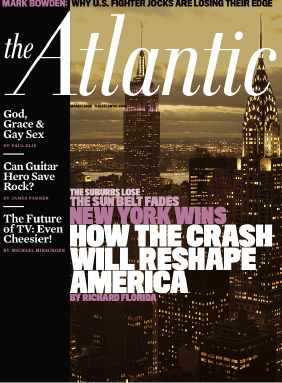
The Atlantic Monthly, March 2009

atlantic-march-2009A profile of Rowan Williams, the archbishop of Canterbury, focuses on this gifted theologian’s attempts to lead the Anglican communion in its effort to make up its mind about homosexuality.  Williams himself has many friends who are gay and took a consistently liberal line on gay issues before 2002, when he became the nominal leader of Christianity’s third most popular tradition.  In 1989 Williams gave a speech to the Lesbian and Gay Christian Movement called “The Body’s Grace,” in which he argued that a Christian understanding of grace requires us to understand that persons need to be seen in particular ways.  Sexual relationships provide one of these ways of being seen that are key to the development of the human person.  Christians must therefore find value, not only in persons who are inclined to engage in  homosexual acts, but in those acts and the relationships of which they are part.  The essay is, from one point of view, quite conservative- Williams claims that the kind of being seen that deserves this value is a kind that must be developed over time and that only one person may do the seeing.  He thus sets his face against sexual liberationists who would resist the imposition of couplehood as the one appropriate form of human sexuality, and aligns himself with those who would merely extend that imposition to same sex relationships.  Compared to other Christian leaders, of course, Williams does not seem conservative at all.  Even the view that same-sexers should be allowed to imitate opposite-sex couples and to assimilate their behavior to norms that have traditionally been imposed on them is daringly progressive in the world where the Archbishop of Canterbury moves.   

Since most of the Anglican communion’s 80,000,000 members live in African countries where homosexuality is the object of extreme cultural disapproval, it has been quite difficult for Williams to hold to his liberal, assimilationist stand while at the same time meeting the first requirement of his job and keeping the communion united. 

Atlantic editor James Bennet recalls his meeting with recently assassinated Hamas leader Nizar Rayyan.  A theologian of a very different stripe from that of Rowan Williams, Rayyan’s “bigoted worldview, and his rich historical imagination, gave him a kind of serenity.”  This serenity was nothing daunted when Rayyan sent his own son on a suicide mission against an Israeli settlement and planned to send another on a similar mission.

Those of us who call for the abolition of the US presidency (what with today being Presidents’ Day and all) will thank the Atlantic for its note of “Politicians: Be Killed or Survive,” a study finding that the only political figures who face a significant risk of assassination are those who operate in systems where power is so highly centralized that assassinating one person will effect significant change in the policies of the state.

Brian Mockenhaupt reports on an effort to persuade US combat veterans that it’s okay to seek help for psychological injuries by showing them performances of Sophocles’ plays about wounded warriors, Ajax and Philoctetes.

The American Conservative, 9 February 2009

dorothealangeConsidering the state of America’s economic system today, it’s hardly surprising that this issue focuses chiefly on economics.

Adam Fergusson provides a synopsis of his long out of print book When Money Dies, an elegantly written study of the cultural and psychological effects of hyperinflation on the middle classes in Germany during the 1920s.  An introductory note mentions that Amazon lists a copy of the book for $2,500.  Gripping as the synopsis is, it isn’t hard to see why someone would be reluctant to part with a copy of the book for less.  On the other hand, the high price may represent a fear that Weimar-style hyperinflation will soon strike here, a fear that Fergusson’s prose, vivid as that of any nightmare-inducing tale of terror, will certainly feed.

George Selgin, professor of economics at the University of West Virginia, argues that while deflation resulting from a collapse in demand is a very bad thing, there is also a good kind of deflation.  This good deflation results from an increase in supply.  Indeed, Selgin points out, prices in gold-standard countries fell and average of 2% annually from 1873-1896, years during which output in those same countries increased at almost 3%.  This good deflation is perfectly natural- “technology was improving, so goods cost less to produce.  Why shouldn’t prices reflect that reality?”  In fact, Selgin argues, supply-driven deflation “never exceeds an economy’s rate of productivity growth, and that rate itself sets a lower bound to equilbrium real rates of interest.”  So, supply-driven deflation is not a destabilizing phenomenon, but a stabilizing one. 

Another article notes the rise in popular opposition to central banking since Representative Ron Paul made the abolition of the Federal Reserve a central plank of his 2008 presidential bid.  A number of high profile financial commentators, such as potential US Senate candidate Peter Schiff, have taken up the “End the Fed” banner.

Counterpunch, 16-31 January 2009

free-tradeFrom Paul Craig Roberts, part two of a three-part survey of economics.  In Part One, published issue-before-last, Roberts had defended supply-side economics as the insight that reducing marginal tax rates increases the amount of goods available in the economy at every price range.  In this original sense, Roberts asserted, supply-side had “nothing to do with trickle-down economics or the claim that tax cuts pay for themselves.”  Roberts claimed that when inflation declined after the Reagan tax cuts of the 80s, the old Keynesian theory that loosening fiscal policy would raise prices was definitively refuted and supply-side just as definitively established.  This article was essentially a synopsis of Roberts’ 1984 book The Supply-Side Revolution

In this issue, Roberts argues that the doctrine of comparative advantage, for 200 years the cornerstone of the intellectual defense of free trade, does not apply to today’s world.  Roberts says that comparative advantage, as originally laid out by David Ricardo and elaborated ever since, rests on two basic presuppositions.  First, that the differing geographical, demographic, and climatic characteristics of countries would mean that in each country there would be different opportunity costs associated with choosing to make one product rather than another.  Second, that “the natural disinclination which every man has to quit the country of his birth and connections” meant that capital and, to a lesser extent, labor would remain fixed within national boundaries. 

Today, Roberts declares, both of these presuppositions are exploded.  In our world, “most combinations of inputs that produce outputs are knowledge-based.  The relative price ratios are the same in every country.  Therefore, as opportunity costs do not differ across national boundaries, there is no basis for comparative advantage.”  The second presupposition is even more thoroughly discredited.  Not only do owners of capital routinely migrate from country to country, but in the era of multinational corporations and electronic communications owners of capital need not follow their investments abroad to supervise their operations. 

Roberts cites many scholarly publications that challenge the doctrine of comparative advantage.  Among them: Global Trade and Conflicting National Interests, by Ralph E. Gomory and William J. Baumol; The Predator State, by James K. Galbraith; Robert E. Prasch’s January 1996 article in The Review of Political Economy,  “Reassessing the Theory of Comparative Advantage“; and, from 1888, R. W. Thompson’s History of Protective Tariff Laws


http://www.counterpunch.org/

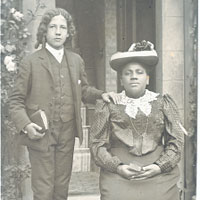
A picture of Lawrence Dennis as a boy

Here’s a picture of Lawrence Dennis and his aunt as they were when they toured England in 1910.  In those days he was billed as “the boy evangelist.”  Before long Dennis would be sent from his boyhood home in Atlanta to elite schools in the North, schools where he began passing for white.  After graduating from Harvard, Dennis would serve as a US Army officer in World War I, a diplomatic agent in Central America in the 1920s, and a banker on Wall Street in the days before the Great Crash.  In a series of books published in the 1930s, he would argue that the USA was destined to become a fascist state in which dissent would be greeted with criminal prosecution.  For predicting the end of free speech in America, he would be arrested and tried for sedition in 1944.  I guess that showed him. 

lawrencedennis-as-a-boy1

Song for a Future Generation- the B-52s

More substance than you might expect

This afternoon NPR had a segment with two of the people behind SMITH Magazine.  They were talking about “Six Word Memoirs on Love and Heartbreak,”  the new book that has come from SMITH’s “six word memoir” feature.  The inspiration was a piece by Hemingway, as sad as it was brief: “For Sale: Baby shoes, never worn.”   Not all of theirs are that sad, I hasten to assure you.  Some of the more memorable:

Tried men, tried women, like cats. 

Confess in anguish to imaginary gods.

My Mom warned me about musicians.

Found love when apartment caught fire.

Years passed.  I never let go. 

Hates Valentine’s Day, loves me instead.

Yes, dear.  You’re right.  I’m sorry.

Here’s a promotional video for the book.

The Periodic Table

I suppose we’re all familiar with this image:

periodic_table-familiar

But perhaps not with this one:

periodic-table-spiral-colors

What about this one?

periodic-table-circular

Or this one?

periodic-table-crookes

All of these and many, many more can be found here.  Tom Lehrer sings “The Periodic Table” here.