Among the nostalgists

When I was a kid in the 1970s, I would often hear my older brothers talking with each other and with my parents about Vietnam and Watergate. I would ask them to explain what those words meant, which presented them with quite a challenge when I was three or four years old. I never gave up, though, and by the time I’d figured them out I was not only hooked on those topics but on history in general, including the political history of the USA in the decades following the Second World War. I grew up to become a classical scholar, but when I’m not professionally engaged with ancient Greek and Latin literature my mind still wanders to those matters.

I’ve been spending a bit of my free time talking about such things on Twitter lately, especially in threads growing out of posts made by commentator Richard Brookhiser. The other day, for example, Mr Brookhiser brought up an interlocutor of his who speculated that right-wing Congressman John Ashbrook’s 1972 primary challenge to Richard Nixon’s reelection campaign was an attempt to clear the field for Ronald Reagan to replace Nixon as the Republican nominee. In response, I pointed out that Reagan already faced a formidable rival for conservative support in Vice President Spiro Agnew, and that if Ashbrook had somehow knocked Nixon out of the race he would have established himself as a substantial figure in his own right, another obstacle to any attempt Reagan might have made to launch a bid of his own.

The national attention given to yesterday’s election for mayor of New York reminded me of another 1960s-1970s figure who captured my attention when I was a child, John V. Lindsay. When I was about nine years old, I was watching the old Batman show when the character of Mayor Linseed appeared. My mother was with me, and she laughed out loud. She said that the actual mayor of New York in those days was named Lindsay. “Linseed” didn’t strike me as clever enough wordplay to account for her laughter, and she said that indeed it was not why she was laughing. What struck her as funny was that while the actual Mayor Lindsay was a ridiculously handsome man, whose good looks sometimes got in the way of his political career, the makers of Batman had cast a plain-faced character actor as his fictional counterpart. Evidently they were afraid that even in their fictional universe, it would be too much to ask people to believe that the mayor of such a big city could look like a movie star. I’ve also mentioned John Lindsay on Twitter quite a few times in recent months.

What has really kept Mayor Lindsay front of mind for me lately is not so much the comparisons I’ve seen between him and Mayor-elect Mamdani, but another item I’m checking off the list of things I was curious about when I was a kid. In those days, people ten or twenty years older than me would occasionally mention the TV show Dark Shadows, a daytime soap opera that added a vampire to its cast and became a big hit. I couldn’t imagine that- to me, soaps were the dullest things imaginable, windows into the lowest cavern of Hell, the circle of ice where absolutely nothing happens. I wasn’t a great horror fan, but I knew that vampires got people moving and couldn’t imagine how one would fit into a genre that seemed to cultivate tedium for its own sake.

I stumbled on Dark Shadows when the Sci Fi Channel was running it in the 90s, and was intrigued. I didn’t have the time to keep up with it for very long, though. So when during the COVID-19 lockdowns my wife and I found that the entire series was available for free to watch on demand, I suggested we take a look. We wound up watching the whole thing in a little more than a year. In the 2022, I realized that the calendar was the same as it was in 1966. I decided to watch each episode on the 56th anniversary of its original broadcast. So I watched episode #1 on Monday, 27 June 2022. My plan was to post any thoughts I might have in the comment sections of blogs about the show, as I had done in 2020 and 2021.

I quickly found that, while some blogs were still keeping their comboxes open, no community like the one I had participated in at Danny Horn’s Dark Shadows Every Day could be found in any of them. So if I were going to write up my thoughts about the show in the way I wanted to do, I would have to post them on a blog of my own. I decided to stick with my idea about the calendar, and have each post go live on the anniversary of the episode it reviews. At first I assumed no one would read the site, and gave it a name no one would be likely to find. But people did start reading and responding to it, so I changed its name to Dark Shadows Commentary. That’s where the bulk of my online writing as “Acilius” has been since then, which is one of the reasons this site has been so quiet. Since John Lindsay was Mayor of New York the entire time Dark Shadows was being produced in that city, it’s no wonder he keeps popping into my head.
Tweets of the Week: 24 April 2024

I saw this sequence and thought it was time to log off Twitter, that I had seen the day’s best post:

Then, minutes later, this spectacular banger showed up:

Here’s a memorable line from a great scholar and fine poet:

Avery Edison says what we’ve all been thinking:

Vinney Szopa contemplates what we’ve lost:

Samuel Biagetti sympathizes with a kind of poster that has been prominent lately:

Pinboard brings common sense to bear on some ideas about sending people into outer space:

dril pretends he isn’t already on Twitter:

Sheena Liam does nifty things with embroidery:

I promote a side project of mine:

Tweets of the Week: 5 August 2023

Even when you know that Helga Stentzel did this on purpose, it is as striking as if it had occurred naturally:

Bradley Birzer says something about World War Two:

Sir Geechie may be the Afro-Fogey, but he would have you know that he is also a wild man:

I read these four Luwian words aloud and found that, quite without intending to do so, I was singing them. I found it through Shadi Bartsch, and she says she had the same experience:

A. Z. Foreman starts a thread that includes some gems.

Abby Denton has a great idea for a novel:

Ken Layne tells us that the theme song to Pee-Wee’s Playhouse was sung by Cyndi Lauper. I’d always assumed it was Mae Questel, the original voice of Betty Boop and Olive Oyl, who was indeed still working when the song was recorded. Instead, it was an outstanding imitation of and tribute to Questel.

Andrea More gives voice to the real victims:


William Gerrard (alias “Bill Gerrard”) has insight into the motives of historical figures:

Frank Whitehouse lays out some facts about something Elon Musk is doing that doesn’t even have the saving grace of making him a laughingstock:

And a few of my own-

My Warren G. Harding-themed tweets never get the love they deserve, not even this one I put up on the centenary of his death:

I told Twitter something I tell my students:

Tweets of the Week: 12 March 23

2. “Crazyism” in philosophy:

3. Sam Haselby on the good cop/ bad cop routine that underlies the pseudo-leftism of America’s elites:

Most people are familiar with the bad cop / good cop routine from cinema or television. America’s elite neoliberal institutions rely on it too, recognize and promote both professional types.

Think of it this way: the dogmatic neoclassical economists (in Larry Summers’s words if there is more inequality it is because people are getting more what they deserve) are the bad cops of elite neoliberalism. They frame you and beat you up, so to speak. But then their…

…colleagues come into the holding cell and say, look I want to abolish the police, return the land to the indigenous, and provide reparations. None of this is going to happen. They are the good cops of elite neoliberalism. The legitimacy and power of the system relies on both.

Another way to think of it is the bad cops have helped secure material resources of historic abundance, the good cops come in and provide the moral resources which to try to balance out the bad cop’s depredations have to be pushed to a grandiosity, a meta-historical scale.

Originally tweeted by Sam Haselby (@samhaselby) on March 17, 2023.

4. Orson Welles moaning “Mwahhh, the French”:

5. Fr Reginald Foster was a better teacher than he pretended to be:

6. Tom Holland on Saint Paul:

Here’s @holland_tom on St Paul: “You are kind of hearing him thinking aloud as he wrestles with the implications of the fact that Christ suffered this. And everything that he’s writing is an attempt to say – how this could be?

“It’s upended his expectations of God’s plan so radically that he can never arrive at, I think, a stable sense of exactly what it means. Although Paul absolutely recognizes that the fact that Jesus was crucified lies at the heart of everything that Jesus’ mission is

“and therefore how he relates to God’s plan, what is happening, the very character of the world, the very character of God, the very nature of God’s relationship to humanity – Everything has been upended by this.

“So the cross is absolutely at the heart of everything that Paul’s writing about. But at the same time, there is kind of an embarrassment about it because it is the most shocking thing imaginable, which is kind of the point.”

Originally tweeted by Susannah Black Roberts, Niece Appreciator (@suzania) on March 18, 2023.

7. Carolina Eyck plays the “Queen of the Night” aria:

8. Adult reading as a reward for adulthood:

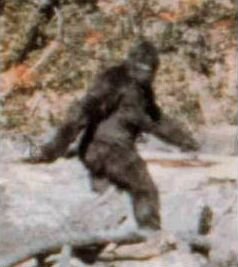
Ought we to believe in Sasquatch?

Whether Sasquatch exist or not, it would be morally wrong for us to believe that they do. Last month, I posted a thread on Twitter explaining why.

I suppose everyone living in the USA or Canada has heard of the Sasquatch; others may not be aware that there is a more-or-less ancient body of legends that a race of hairy anthropoids live in the woods of the Pacific Northwest. “Sasquatch” is apparently derived from a Salish word for these anthropoids. Because of their rumored size, and perhaps because of stories about mysterious footprints found in areas they are said to frequent, the Sasquatch are also known as “Bigfoot.”

Here’s a link to the article that prompted the thread, and here’s the thread itself.

Let’s take the idea of Sasquatch at face value for a moment. One of these propositions must be true:
A. Sasquatch do not exist.
B. Sasquatch do exist.
What are the implications of these propositions?

If A, and if we take it as axiomatic that we ought not to believe in the existence of non-existent beings, it follows that we ought not to believe in the Sasquatch.

If B, then there is a species of megafauna that has eluded human attention throughout the millennia that it has existed in areas adjoining dense human populations. This would require extraordinary intelligence, organizational ability, and self-discipline.

Indeed, a species with these capabilities would certainly be capable of waging warfare against humans to defend the habitat of which humans continually deprive them. Yet there is no reason to believe that any Sasquatch has ever harmed a human.

Therefore, if Sasquatch exist, it must be the case that they have dedicated themselves above all to preventing humans from knowing that they do.

Considering that they have done nothing to harm us, and we have done a great deal to harm them, it would be the least we could do to honor their wishes by not believing in them.

That the debate about Sasquatch is not conducted in these terms strikes me as proof positive that those who participate in it do not take the idea of their existence at face value, but are acting out the sorts of dramas that the book and review linked above describe.

Originally tweeted by Acilius (@losthunderlads) on October 10, 2020.

The first documentary film about the Sasquatch I ever saw was a 1977 episode of In Search Of, a TV series narrated by Leonard Nimoy and presenting outré explanations of various legendary topics. Extraterrestrial contact was a favorite hypothesis.

I would say that this show is in a way the ideal introduction to the topic. Not only does it display the overheated mental atmosphere that often accompanies debates about whether the Sasquatch exist, but it also exposes some excellent reasons why any Sasquatch who do exist would be wise to conceal themselves from humans. Most dramatic of these is a moment about 17 minutes in, when Professor Grover Krantz of Washington State University explains his opinion that it doesn’t matter if his research drives the Sasquatch to extinction. So long as their existence is unknown to science, Krantz declares, they may as well be extinct now. I, for one, would not like to be noticed by a species with enormous destructive capacity, prominent members of which are incapable of seeing any value in lives unconnected with their own.

Full circle

I just logged onto Twitter and saw these two images, one on top of the other:

https://twitter.com/BoingBoing/status/604132766343643136

In the Twitter stream, I saw the top half of the first image above the lower three quarters of the second image, forming a single circle.  Somewhat like this:

CGJPjNOWEAIzd0n

CGK24APXEAAQKW0

Perhaps one of the young Jesus’ questions was “What is rickrolling?”  I’ve heard the term for years, have no idea what it means, and can’t imagine caring enough about it to click on the link and find out why I should be against it.  Anyway, an interesting accidental image.

Three cheers for Liza Cowan

This morning I looked at Twitter and saw this from Liza Cowan

I mention such a wide variety of people on this site that I laughed out loud when I saw this.  Perhaps Catharine MacKinnon, Pope Benedict, Susie Bright, the Ukulele Orchestra of Great Britain, and Leonard Nimoy (to mention five names that have occurred here more than once) are all together in some darkened room plotting iniquity at this moment, but I find it hard to imagine.  So I wrote in reply:

Liza explained:

Apparently Liza’s nemeses had Googled her name and Pam Isherwood‘s together and found our old page of “Artists and Art Blogs.”   They are both mentioned there, because of course they are- they’re both very distinguished artists, and you’re in for a treat if you go to their sites.  But the inquisitors took the presence of their names on the same list as evidence that Pam is Liza’s “follower.”  Looking over the list, Liza seems to have a pretty impressive set of followers, including Harvey Kurtzman, the Hubble Space Telescope, and the Queen of England.  

This controversy stems from Liza’s view of transgenderism.  As I understand it, her view is related to that of the late Shulamith Firestone, who held that the relation between men and women is very much like the relation that Marxism describes between bourgeois and proletariat in the later stages of capitalism.  Women form a worldwide class of the oppressed, men a worldwide class of oppressors.  Femininity, on this view, is a scar left by abuse, masculinity a weapon wielded by the privileged.  Liza’s opposition holds that gender is a more playful thing, that it is a set of roles we play, some by choice, some under duress, and that by playing the game our own way we can subvert the oppression that certainly does characterize gender relations by and large.  

I am not qualified to have an opinion about this issue.  Maybe Liza is right, maybe the Politically Correct Thought Police who are calling her names are right, maybe the truth is something else altogether.  What I do know is that Liza is an exciting artist, a rigorous thinker, and a good friend.  So if someone is out to ban or silence or smear people associated with Liza Cowan, I hereby volunteer to be banned, silenced, and smeared.   As I put it this afternoon:

And:


“Language Related Efforts to Help Out in Haiti”

A post at Language Log.

Cicero would have been great on Twitter

 That’s what Forbes magazine says, anyway.