Ambrose Bierce and The Man Without Illusions

Several weeks ago, The Nation ran a review-essay about Ambrose Bierce.  A few days before happening on this piece, I’d my old Dover Thrift Edition collection of Bierce’s Civil War stories, a paperback I’d bought for a dollar in 1996 and had been meaning to read ever since.  I was interested in the reviewer’s remarks about one of those stories in particular:

In another powerful story, “The Affair at Coulter’s Notch,” Bierce writes of a face-off between two batteries of well-fortified Confederate cannons, twelve in total, and a single Union cannon crew led by Captain Coulter. Coulter’s crew is forced into an open notch and ordered to engage in a firefight just because a general in the field wants to see if the stories of Coulter’s bravery are true. Though Coulter hesitates, he follows the order. He and his crew wheel one cannon out to the notch and commence firing. Soon the twelve Confederate cannons respond and the two sides are lost in the thunderous explosions and enormous clouds of artillery smoke. Each time one of Coulter’s cannons is destroyed, his crew wheels a new one up to the notch so the fight can continue. Eventually the Union officers ride up to the notch to check on Coulter and his men:

Within that defile, barely broad enough for a single gun, were piled the wrecks of no fewer than four. They had noted the silencing of only the last one disabled—there had been a lack of men to replace it quickly with another. The debris lay on both sides of the road; the men had managed to keep an open way between, through which the fifth piece was now firing. The men?—they looked like demons of the pit! All were hatless, all stripped to the waist, their reeking skins black with blotches of powder and spattered with gouts of blood. They worked like madmen, with rammer and cartridge, lever and lanyard. They set their swollen shoulders and bleeding hands against the wheels at each recoil and heaved the heavy gun back to its place. There were no commands; in that awful environment of whooping shot, exploding shells, shrieking fragments of iron, and flying splinters of wood, none could have been heard. Officers, if officers there were, were indistinguishable; all worked together—each while he lasted—governed by the eye. When the gun was sponged, it was loaded; when loaded, aimed and fired. The colonel observed something new to his military experience—something horrible and unnatural: the gun was bleeding at the mouth! In temporary default of water, the man sponging had dipped his sponge into a pool of comrade’s blood.

The cannon drooling blood is certainly a memorable image, and as I read the story I was sure it would be the detail that stayed with me.  By the end, however, even that horror has been put into the shade.  At first we think that Captain Coulter’s commanding officer sent him to that desperately exposed position and ordered him to shell the house opposite simply because he “wants to see if the stories of Coulter’s bravery are true.”  Then one officer tells another that Coulter was a southerner who had left his family behind Confederate lines to join the Union army.  He goes on to report a rumor that the commander had led an occupying force that patroled the area where Coulter’s family was.  This rumor held that the commander had made advances to Coulter’s wife.  She rebuffed him, and the officer wonders if that was why the commander put Coulter in such danger.  By the end of the story, even this grotesque idea is shown to be short of the full horror of the situation. 

The Nation‘s reviewer quotes Bierce’s definition of “realism” from The Devil’s Dictionary as “The art of depicting nature as it is seen by toads.”  This quote is at the center of a little disquisition on Bierce’s use of improbable events in his fiction.  The last two paragraphs of the review sum this disquisition up:

Bierce often resorted to horror, whether grisly war stories or even supernatural tales, but he didn’t do this to avoid writing about reality; he used the genre to confront the truths of his day—the monstrosity of battle, the terror of extinction.

Read Bierce and try not to think of soldiers fighting in Iraq and Afghanistan. Read Bierce and consider the ways “probability” can be a poor test; sometimes realism just fails. Every era needs a genre through which it understands itself. We are living in the age of the uncanny once again. Time to testify.

This point is very close to something that came to my mind while I was reading that collection of Bierce’s Civil War stories.  The stories are full of wildly improbable events; random shots fired at distant enemies can be relied upon to kill the gunners’ fathers, brothers, wives.  Bierce presents these freak occurrences not to undercut the sense of his stories’ reality, but to emphasize their truthfulness.   

What truth does Bierce want us to think fills his stories?  I think it is the same truth that was publicized almost two decades ago, when a hit movie was advertised with an image of a Marine colonel shouting “You can’t handle the truth!”  Even though the movie passed through theaters in 1992,  a Google search for “You can’t handle the truth” restricted to results that went up this week draws over 16,000 hits.  I wonder if the resonance of that line and the power of Bierce’s stories don’t combine to show that there is an idea at large in American culture of truth as something necessarily violent, of war as the ultimate truth.  If so, the colonel in the movie and the highly decorated Civil War veteran Bierce would both figure as men with a privileged access to truth, as warriors who had seen the heart of battle. 

(more…)

Left-wing conservatism

I’ve long been curious about the phrase “left-wing conservative.”   It’s a label that’s been applied to Christopher Lasch, for example.  And Jacques Delors once declared that “We have to struggle against the conservatives from all sides, not only the right-wingers, but also the left-wing conservatives.”  Though I’ve never gotten around to any of Christopher Lasch’s writings, I’ve always been under the impression that they were well worth reading.  And of course, any enemy of Jacques Delors is a friend of mine.  So one of my goals in life is to get a clear understanding of what the phrase “left-wing conservatism” might mean and to live up to that idea. 

In the 1 March issue of The Nation, Rebecca Solnit makes some general remarks that might serve as a definition of of left-wing conservatism.  Writing of the traditional Mardi Gras celebrations in New Orleans, Solnit grants that for some participants those celebrations might reinforce the privileged positions they enjoy in the existing social order.  But even the conservative aspects of Mardi Gras don’t keep it from being something leftists should embrace.  Considering the ways that the African-American “Indians” and other groups use Mardi Gras to assert power against the local elites, Solnit writes:

The Mardi Gras Indians head out on their own without announced routes on Mardi Gras and a few other days every year, but making the costumes and maintaining the communities lasts all year. This is probably the very essence of Mardi Gras and all Carnival as I understand it: maintaining community.

Now, I believe that community is a subversive force. To understand what I mean by subversive, let’s go back to the defeatists. They, like much of our society, speak a language in which everything but a pie-in-the-sky kind of victory is defeat, in which everything that isn’t black is white, in which if you haven’t won, you’ve surely lost. If you asked them, they’d say we live in a capitalist society. In fact, we live in an officially capitalist society, but what prevents that force from destroying all of us is the social aid and pleasure we all participate in: parents don’t charge their children for raising them; friends do things for each other, starting with listening without invoicing for billable hours; nurses and mechanics and everyone in between does a better job than money can pay for for beautiful reasons all their own; people volunteer to do something as specific as read to a blind person or as general as change the world. Our supposedly capitalist society is seething with anticapitalist energy, affection and joy, which is why most of us have survived the official bleakness. In other words, that’s not all there is to our system. Our society is more than and other than capitalist in a lot of ways.

To say that Carnival reconciles us to the status quo is to say that it affirms the world as it is. Now, for people in Rex, their Mardi Gras probably reinforces their world, but for those in some of the other krewes and rites, the same is true, and the reinforcement of the survival of the mutual aid societies that emerged after slavery is not reaffirmation of capitalism, domination, etc. It reinforces, in other words, their ongoing survival of capitalism and racism. Carnival also reinforces joy and ownership of public space and a kind of confidence in coexisting with a wide array of strangers. New Orleans itself is the place where, unlike the rest of the United States, slaves were not so cut off from chances to gather and chances to maintain their traditions. Jazz and jazz funerals, second-line parades and more derive in many ways from this subversive remnant of a non-European tradition. They didn’t bow down. This is something to celebrate, and it is what is celebrated by some of the people in the streets.

To me, these paragraphs make sense of the revolutionary rhetoric and destabilizing policies that have long characterized the American Right.   For Marx and Engels, the wild churning of capitalism was proof that the system would eventually shake itself apart, generating a proletarian uprising and ushering in communism.  For Newt Gingrich and Mitt Romney, that same wild churning is the proof that capitalism is destined to reign forever and ever. 

And Gingrich and Romney may well be right.  A labor market in which the highest rewards are reserved for people who are willing to move frequently and move across continents will tend to produce a large population of atomized individuals, unconnected to any community of equals, dependent on their employers not only for their income, but also for their identity.  The flux and churn of hypercapitalism dissolve every relationship not based on monetary exchange, smashing every social refuge in which working people might look for shelter.  Isolated from each other, those who do not own capital are helpless to resist those who do. 

Solnit’s words about tradition and community imply a defense, not only of Mardi Gras and of Carnival, but also of narrative.  A tradition allows us to feel connected to people at other times and in other places because we are all part of the same story; a community takes people who share this sense of connectedness and puts them to work together.  Hypercapitalism drains narrative from life.  Narrative concepts like tradition, community, meaning, endings, seem artificial to people whose lives are largely bounded by markets and machines.  Markets fluctuate, and may in time dissolve.  Machines operate, and may eventually stop.  However, neither system reaches a conclusion.   The forces that drive them into action at one moment are the same forces that stop them at another moment.  To the extent that my life is bounded by markets and machines, therefore, narrative seems to me like an artificial convention imposed on experience.  But how do we know that history is not in some real sense a grand narrative, that our lives are not in some real sense narratives nested inside it?  I can’t see why one of these views should bear a heavier burden of proof than the other.     

Perhaps “left-wing conservatism” is not an oxymoron, but a tautology.  If we are to resist the power elite, whether to overthrow them or simply to put limits to the power they wield over the rest of us, we cannot do so as solitary individuals, but only as communities.  Communities need cultivating and defending.  It takes multiple generations to cultivate and defend a community; so, community is an inherently conservative value.  If leftism means opposition to the power elite, it therefore is an inherently conservative project. 

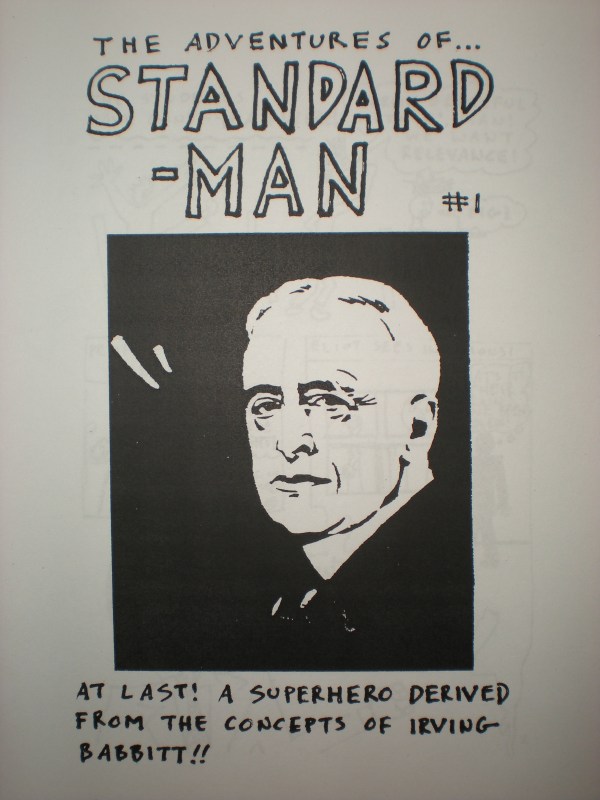
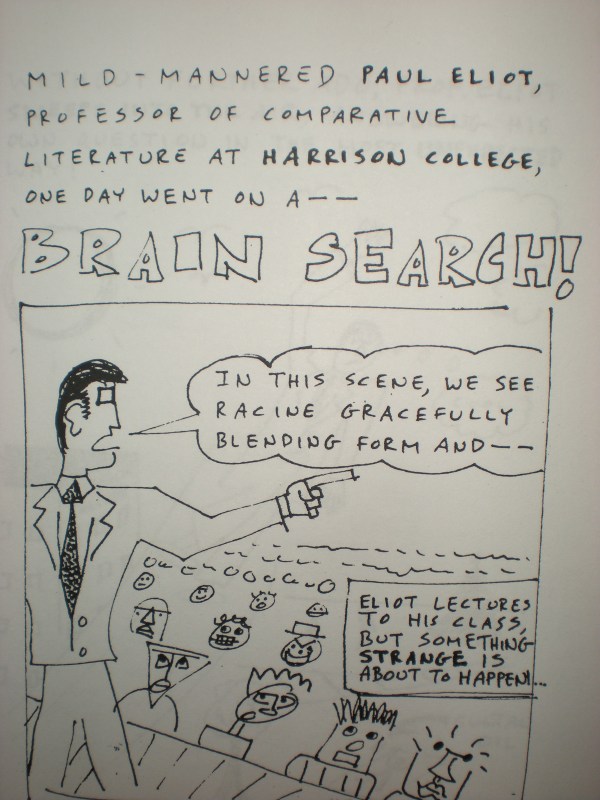
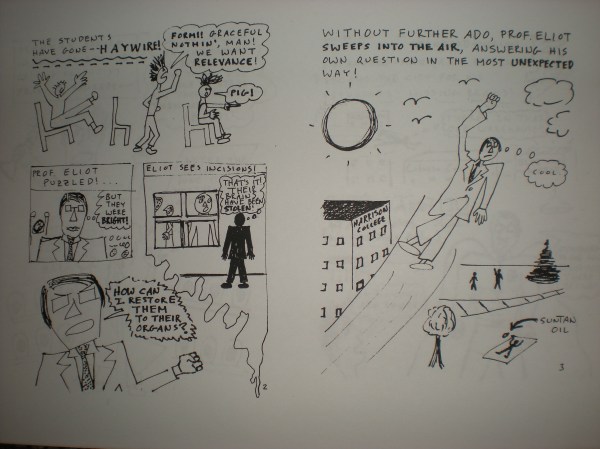
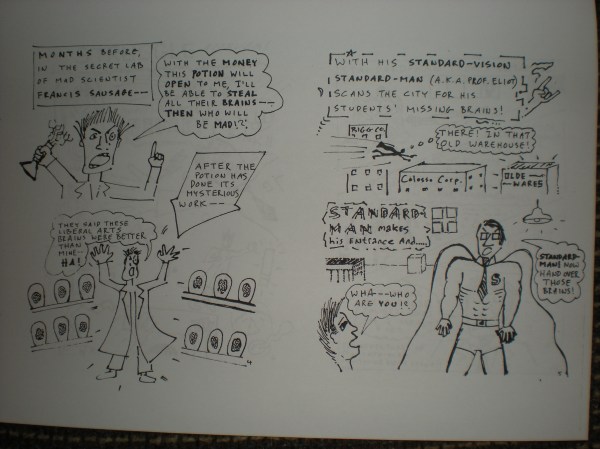
One conservative thinker who would have reacted with horror if he had ever been described as a leftist was Irving Babbitt (1865-1933.)  Babbitt taught French at Harvard from 1894 until his death.  His name is often mentioned these days by American academics of a traditionalist conservative bent.  Babbitt and his friend Paul Elmer More were  the founders and guiding lights of the “New Humanism,” a school of thought that made a splash in 1930 when it protested against the attempt of another, quite different, group of American thinkers to appropriate the same label. 

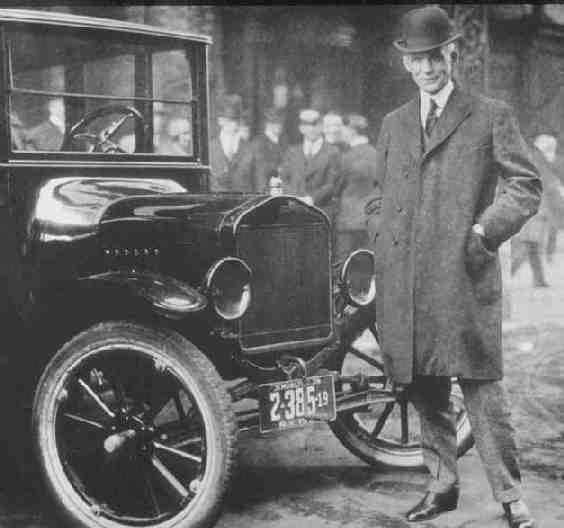
Babbitt and More identified themselves as fiercely right-wing.  Babbitt’s political testament, his 1924 book Democracy and Leadership, was widely criticised as being all leadership and no democracy; More, as editor of The Nation, responded to the Ludlow massacre by proclaiming that “To the civilized man, the rights of property are more important than the right to life” (in an essay collected in Aristocracy and Justice, page 136.)   Yet I would argue that the emphasis Babbitt and More place on tradition, gentility, transcendental belief, and historical continuity puts them in need of a thoroughgoing critique of capitalism.  These things simply cannot coexist with the demands of the modern market economy.  Tradition counts for nothing against the new new thing; self-restraint and well-curated taste count for nothing against the tides of fashion; transcendental belief counts for nothing against the need to appeal to youthful demographics; historical continuity counts for nothing against the need to impress the shareholders today.  Babbitt acknowledged as much on several occasions.  For example, in Democracy and Leadership Babbitt quoted Henry Ford’s remark that the prohibition of alcohol was a necessary consequence of mass production, that “Liquor had to go out when the Model T came in.”  Babbitt’s responded was that Americans had become so craven a people that they would degrade the Constitution for the sake of mere things. 

Another article in this issue brought Babbitt and More to my mind.  That was William Deresiewicz’ essay about Tolstoy.  Deresiewicz uses a construction that Babbitt and More labored to avoid, what might be called the “Academic We.”  There is of course the Royal “We“, first-person plural pronouns monarchs use to refer to themselves when they are speaking in their official capacity.  And there is the Editorial “We,”  which editorialists use when expressing the official position of their publications.  In a case of the Academic “We,” a college professor uses first person plural pronouns when characterizing the current state of knowledge or opinion among some unspecified group of people.    Deresiewicz’ essay includes a splendid example.  Tolstoy’s later writings are:

Not a body of work the contemporary reader is apt to find congenial. Leave aside the religiosity. We have learned to distrust the story with a message, any message. We disdain the writer who comes to us bearing ideas or ideologies. We don’t like a moralizer, don’t want to be preached at, don’t believe in answers, in endings. We put our faith in ambiguity, complexity, irresolution, doubt. Life isn’t that simple, we think. It doesn’t happen that way. But that is exactly what Tolstoy believes.

The Academic “We,” even when I hear myself using it, always leaves me with a desire to quote Oscar Brown, Junior’s song about the Lone Ranger and Tonto.  “What do you mean ‘we,’ white man?”  Who is this “contemporary reader” who has learned all these attitudes?  Deresiewicz’ description fits my habitual impulses fairly well, I admit.  But that may just be because living among markets and machines has inclined me to disbelieve in narrative.  Perhaps there are “answers” in the world.  Perhaps there are “endings” to be reached. 

(more…)

A Blast From The Past

I’m trying to figure out when the heck this thing was made. It’s definitely old. And seems, incidentally, to have worn well with the passage of time.


DSCN1692aDSCN1693aDSCN1696aDSCN1694aDSCN1695a

Ash Wednesday

No juniper tree

No juniper tree

T. S. Eliot was a student of Irving Babbitt’s at Harvard.  Afterward, Eliot often claimed to be a disciple of Babbitt’s.  “Once to have been a student of Babbitt’s was to remain always in that position,” Eliot wrote.  Eliot sent letters to Babbitt under the salutation “Dear Master.”  Babbitt never answered any of these letters.  Babbitt never made it clear whether he was repelled by “Dear Master” or he disliked Eliot for some other reason. 

Be that as it may, in 1989-1990 I spent a good deal of my time reading books by Babbitt and his circle of followers.  Since Eliot was the most famous of those who wished for admission to that circle, part of that time I studied Eliot.  My favorite of his poems is “Ash Wednesday.”  Today is Ash Wednesday.  So:

I

Because I do not hope to turn again
Because I do not hope
Because I do not hope to turn
Desiring this man’s gift and that man’s scope
I no longer strive to strive towards such things
(Why should the agèd eagle stretch its wings?)
Why should I mourn
The vanished power of the usual reign?
(more…)

The Irving Babbitt Project

As we near the end of 2008, I remember that this year marked the 100th anniversary of the publication of Irving Babbitt’s seminal polemic, Literature and the American College

A few years ago, the National Humanities Institute launched “The Irving Babbitt Project.”  Their website hasn’t been updated in a while, but it continues to host several interesting articles.

The Nation, 20 Oct 2008

This issue features three items I think I might someday want to look up. 

China scholar Orville Schell writes that the Confucian and Legalist traditions of classical Chinese thought may offer guidance to coming generations of Chinese leaders.  About 16 years ago I read a translation of selected works by Han Fei, the leading light of the Legalist tradition; all my knowledge of that tradition comes from that one book.  So I was astounded by Schell’s characterization of the Legalist thought as “an amoral conception of statecraft.”  That certainly wasn’t the impression Burton Watson wanted me to have.   It’s lucky for me I never had a chance at that time to show off my one scrap of knowledge about Chinese political thought by casually describing myself as an adherent of the school of Han Fei Tzu.  Anyway, Schell’s idea that classical Chinese thought might help China find its way forward in the century to come reminds me of Wu Mi and Liang Shiqiu, Chinese students of Irving Babbitt whose work is discussed here.  Having studied under Babbitt at Harvard, they returned to China in the 1930s and there defended Babbitt’s view that a healthy society must be informed by a dialogue between the dead and the living, between the wisdom of the past as preserved in revered texts and the critical spirit of the present as cultivated by literary education.  In the upheavals of those years, not too many people seemed interested in such an urbane and polite doctrine.  Maybe Schell is onto something, though, and Wu Mi, Liang Shiqiu, and other Chinese Babbitt-ites (like the famous Lin Yutang) will be respected figures in China’s future national memory. 

(more…)

Aulus Gellius Online

I’m sure you’re all as fascinated by the second-century miscellanist Aulus Gellius as I am.  Who isn’t?  Here’s his book, the Attic Nights, online, in Latin with some of the English from the Loeb translation.

http://penelope.uchicago.edu/Thayer/E/Roman/Texts/Gellius/home.html

Here’s Gellius referenced in Irving Babbitt’s Literature and The American College.

http://books.google.com/books?hl=en&lr=&id=RfQTAAAAIAAJ&oi=fnd&pg=PA1&dq=aulus+gellius+i-babbitt&ots=cqiPp6VQKP&sig=NI-thKMCKk7xaNQqMX3hjfIAgYI

Here’s the frontispiece from an early edition of the Attic Nights.

Irving Babbitt, Casino Master

The International Herald Tribune
April 4, 2006 Tuesday
IN OUR PAGES: 100, 75 AND 50 YEARS AGO;
1931: Gambling At Harvard


SECTION: NEWS; Pg. 2

LENGTH: 113 words

BOSTON: Harvard students have invented a new lottery which has resulted in an epidemic of gambling fever sweeping the campus according to the ”Harvard Crimson.”

This journal today [April 3] confirms persistent reports that classes in ”comparative literature” conducted by Professor Irving Babbitt have evolved a betting pool based on the number of writers mentioned during one of his lectures. One hundred chances are sold at 10 cents each, and three tally-keepers count the writers. The man holding the right number wins the lottery minus 10 percent, which goes to the inventors. They have found that 47 constitutes the average number of authors mentioned by Professor Babbitt.