
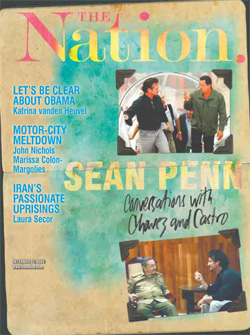
 Highlights of this issue include a review of Passionate Uprisings: Iran’s Sexual Revolution, a study of sexual behavior among well-to-do young heterosexual Tehranis by Iranian-American anthropologist Pardis Mahdavi. In the course of extensive field work, Professor Mahdavi discovered that worries older Iranians routinely express about risky sexual behavior among the young are quite well-founded, at least as regards the population she studied. Group sex seems to be common. Evidently repressive laws against premarital sex, enforced ignorance of birth control and STDs, and an intensely patriarchal family structure don’t guarantee universal chastity after all. Who knew? The reviewer, Laura Secor, wishes for further studies that would systematically compare the experiences of Iranians of different social classes, sexual identities, and geographical locations. With that kind of research, we might be able to figure out what if anything this risky behavior means for Iranian politics. Of course, a study like that would be unlikely to take place in today’s Iran. To illustrate the difficulty, Secor begins her review by quoting Mahdavi’s meeting with an Iranian sex ed teacher who could not understand why her students were reluctant to tell her about their sex lives. The woman was wearing a double hijab that gave her such an imposingly traditional appearance that even Professor Mahdavi became self-conscious.
William Greider points out that New York Federal Reserve chief Timothy Geithner, President-elect Obama’s pick to be the new treasury secretary, was the negotiator who worked out many of the worst parts of the Wall Street bailout; Greider frets that Mr O may go down in history as the man responsible for the economic meltdown if he doesn’t withdraw Geithner’s name and rethink his approach to the crisis.


 I’ve never objected to corny jokes, and
  acilius
 believer1
 lefalcon
 losthunderlads
 vthunderlad
 Panther Red
