Last month, Hester Goodman of The Ukulele Orchestra of Great Britain posted videoclips on her YouTube channel promoting a couple of non-ukulele based projects she has worked on in the last few years. Here’s one for “The Film Noir Show“; here’s one for “The Mary Poppins Experience.” Each project mixes cabaret with elements of street theater, including guerrilla communication‘s refusal to notify the audience that what it is witnessing is a performance. Notice the parts of “The Mary Poppins Experience,” about 2:09 and 2:55 into the video, where she’s on the steps of Saint Paul’s Cathedral and the crowd is looking around uneasily, as if they hope a police officer will come soon. “The Mary Poppins Experience” is extremely funny; “The Film Noir Show” may be as well, though it’s harder to judge by the video promotion. It certainly is striking, at any rate.
All posts by acilius
Some Projects by Hester Goodman
Posted by acilius on October 13, 2009
https://losthunderlads.com/2009/10/13/some-projects-by-hester-goodman/
How to remember the future
Stuart Klawans reviews Alain Resnais’ Wild Grass, in which the 87 year old master filmmaker returns once more to his great theme of memory and desire. Resnais excels at depicting characters who cannot quite tell the difference between the past and the future. In this film, two middle-aged Parisians think about flirting with each other. Confused as to which of their feelings are hopes for the future and which are regrets for the past, they struggle to see each other as they are and their relationship as it might be. Successful lovemaking, apparently, requires us to find a way to distinguish between the future and the past.
Many have said that the purpose of philosophy is to teach us how to die. This line always reminds me of what John Silber said in 1990 when he was running for governor of Massachusetts and a voter asked him what the public schools should teach children: “Teach them that they are going to die.” Silber was not elected, needless to say. A review essay considers the idea of philosophy as a preparation for a good death. There are some interesting quotes and paraphrases along the way. For example, Freud contended that such teaching is pointless, because we cannot imagine our own death. Thinking of Resnais’ films, we might add to Freud’s argument an appendix that although it may be certain that our future will end with death, there is nothing like it in our past. We cannot envision death, because we cannot remember it. Nor can we accept it as long as our hopes for the future pervade our minds. To accept death, we would have to break from both the past and the future, and feel only the present instant as real. Elizabeth Kubler-Ross saw this, and at times preached a Buddhist-inspired doctrine urging us to emulate death in life by emptying ourselves of ego, and to see only the present, unaffected by memories or regrets, hopes or fears. But she could not follow this through; as she neared death herself, Kubler-Ross clung to Hollywood-inspired fantasies of indefinitely long life. Dying, like lovemaking, requires us to distinguish between the future and the past.
Posted by acilius on October 12, 2009
https://losthunderlads.com/2009/10/12/the-nation-26-october-2009/
Neoliberalism as water balloon
Here’s a video that is intended to make a political point.
Posted by acilius on October 8, 2009
https://losthunderlads.com/2009/10/08/neoliberalism-as-water-balloon/
David R. Eustace
Click on the pic for more paintings by David R. Eustace. He is not the same person as the famous photographer David Eustace.
Posted by acilius on October 8, 2009
https://losthunderlads.com/2009/10/08/david-r-eustace/
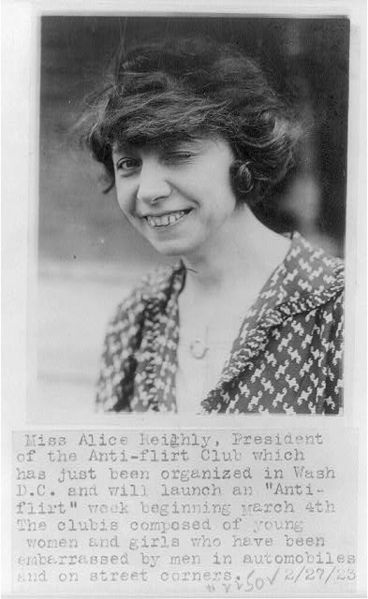
But why is she winking at me?
Via haha.nu:
Posted by acilius on October 7, 2009
https://losthunderlads.com/2009/10/07/but-why-is-she-winking-at-me/
A useful flash app
Do you wonder whether your computer’s mouse is worn out? Do you wonder whether the color is set correctly on your computer’s monitor? Do you wonder whether you might be partially colorblind? Do you wonder whether you have a tendency to Obsessive-Compulsive Disorder? Here is a flash app that can answer all four of those questions in one minute.
Posted by acilius on October 7, 2009
https://losthunderlads.com/2009/10/07/a-useful-flash-app/
The Proust Questionnaire
Thanks to our friend Al Wood for mentioning “The Proust Questionnaire” on Ukulele Hunt. The questionnaire looks like a good conversation-starter. Or perhaps a good conversation-preventer. Either way, it might come in handy.
Posted by acilius on October 7, 2009
https://losthunderlads.com/2009/10/07/the-proust-questionnaire/
How many people lived in Rome in the first century BC?
During the first century BC, Rome experienced a series of civil wars. Dynasts like Marius, Sulla, Caesar, Antony, and Octavian led armies that slaughtered foreigners and Romans alike. Romans responded to these wars by hoarding their wealth. They hoarded some of this wealth by burying coins. Not all of the first-century Romans who buried coins had a chance to dig their coins up again. Some of the coins they buried have come to light only in recent centuries. Scholars study these newly recovered coins to learn about life in ancient times.
Historian Walter Scheidel and biologist Peter Turchin have looked at some of these recently uncovered first-century BC hoards of coins in Rome. Using analytic techniques developed by biologists, Scheidel and Turchin have concluded that the population of Rome in those days was considerably smaller than has often been estimated. The civil wars evidently took so heavy a toll on the Romans that the city’s population by the end of the first century was not likely more than half of the number some previous historians have estimated.
Posted by acilius on October 6, 2009
https://losthunderlads.com/2009/10/06/how-many-people-lived-in-rome-in-the-first-century-bc/
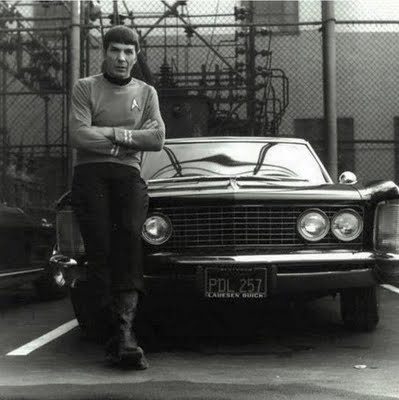
Buick’s target demographic
Via our friend Duncan Mitchel‘s blog:
Posted by acilius on October 6, 2009
https://losthunderlads.com/2009/10/06/buicks-target-demographic/