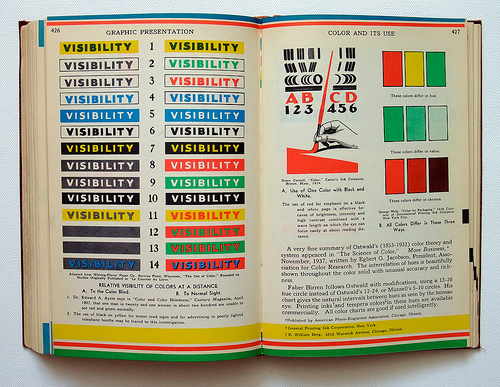
Reading the blog commonly known as “Gelman,” we learned that Michael Stoll posted on Flickr a collection of images from a remarkably attractive 1939 book called Graphic Presentation, by Willard Cope Brinton. Evidently hundreds of other bloggers have already found this collection and ripped images from it; why should we be any different? As always, we’ve linked each picture to the place where we found it.
All posts by acilius
Graphic Presentation by Willard Cope Brinton
Posted by acilius on May 15, 2010
https://losthunderlads.com/2010/05/15/graphic-presentation-by-willard-cope-brinton/
Reason, madness, and the like
Adam Phillips reviews Gary Greenberg’s Manufacturing Depression, along the way quoting some memorable remarks and making intriguing remarks of his own. He mentions Alfred Adler’s practice of beginning a course of psychoanalysis by asking a patient, “What would you do if you were cured?” Adler would listen to the patient’s response, then say, “Well, go and do it.” Phillips points out that this practice suggests that mental illness is simply an obstacle to achieving goals that themselves need no explanation, simply a form of inefficiency. If to you this sounds like Max Weber’s description of rationality as an instrument that moderns use to achieve goals which they cannot subject to rational criticism, you’ll appreciate this quote from Weber: “Science presupposes that what is produced by scientific work should be important in the sense of being ‘worth knowing.’ And it is obvious that all our problems lie here, for this presupposition cannot be proved by scientific means.” Phillips tells us that Greenberg sees mental illness quite differently than Adler did; in the course of his explanation of Greenberg’s view, he mentions D. W. Winnicott’s definition of madness as “the need to be believed.”
Phillips identifies Greenberg’s main interest as the way psychology and psychiatry have described depression and the economic interest this particular description serves. Phillips summarizes Greenberg’s arguments on this point and contrasts them with the radical anti-psychiatry of earlier decades, but he himself seems more interested in deep questions about the philosophy of science. For example, he writes:
Scientists sometimes want us to believe that the evidence speaks for itself, but evidence is never self-evident; people often disagree both about what counts as evidence and what evidence is evidence of. It is as though, now, the cult of evidence—of “evidence-based research”—is the only alternative to the cults of religion. But the sciences, like the arts, like religions, are forms of interpretation, of people making something out of their experience. And our ideas about health, mental or otherwise, are just another way of talking about what a good life is for us, what we can make of it and what we can’t.
The blurb for this review on the issue’s table of contents reads “Science can be disproved only by its own criteria; when it comes to mental illness, its own criteria are often insufficient.” Which is a strange thing to say- if the criteria of science are insufficient to disprove theories about mental illness, then how can those theories be called scientific? Be that as it may, the blurb is clearly not a fair summary of what Phillips is saying, or of the views he attributes to Greenberg.
Posted by acilius on May 9, 2010
https://losthunderlads.com/2010/05/09/reason-madness-and-the-like/
Pictograms taking care of business
The other day, Ingrid Piller’s “Language on the Move” blog showed a number of signs that are posted in restrooms in Australia. The purpose of these signs is to explain, without text, how to use a Western toilet. This is a harder task than those of us who are accustomed to such devices might assume. The international symbols for “Men,” “Women,” and “Wheelchair Accessible” that often mark public restrooms appear on these signs in a variety of non-self-explanatory positions.
I’ve always been intrigued by these international symbols, or pictograms. I’m not the only one. Here‘s a “Flickr Hive Mind” thing of images of the “Wheelchair Accessible” pictogram. For example, here‘s the wheelchair pictogram carrying a flower; here is the same pictogram some distance from a family group; here are two of them, apparently in an embrace; here are two about to go their separate ways, though still facing the same direction. Also on Flickr, we can see a sign that appears to invite women accompanied by tiny people using wheelchairs, and one that appears to invite men accompanied by tiny people using wheelchairs.
I’ve found the same pictogram having still other adventures. For example, here‘s the accessibility symbol shouting through a megaphone:
Here‘s the international symbol for falling out of your wheelchair:
If it bothers you that the accessibility pictogram is unisex, you might like to see this on the Paris Metro:
The other pictograms are livelier than you might think, as well.
Here‘s an argument against unisex restrooms:
Here, Mr & Mrs Pictogram put on some clothes. If this is a fair representation of their fashion sense, I can see why we are usually shown only their silhouettes:
This picture has a similar esthetic to the one above, but makes its statement more bluntly:
Perhaps these “branded” women could benefit from the sort of sisterhood illustrated in this image.
Here‘s a crowd of men’s symbols:
I wonder which direction they’re facing.
This fellow seems to be in trouble:
Perhaps he’d envy this kinsman of his:
This one seems to be having a better time:

Here, a mosaic of international symbols makes up a giant face:
This is the international symbol for Muslim prayer room. I think it needs work. The woman’s headscarf looks like a device that’s keeping her head taped to her shoulders:
Posted by acilius on May 8, 2010
https://losthunderlads.com/2010/05/08/pictograms-taking-care-of-business/
Chronicles, May 2010
Lots of fragments of interest in the latest issue of this ultra-conservative publication.
Editor Thomas Fleming writes a monthly column named “Perspective.” This name strikes me as hilarious, since of all the virtues Dr. Fleming* might claim, perspective is most definitely not one. This month’s entry is a temper tantrum stretching across two pages, most of it reading like something an angry 15 year old would write while threatening to drop out of high school. For example, he denounces as “worthless drones” a class of people including professionals “in counseling and sociology.” He also attacks “the madman Rousseau,” “the bilge written by these people” (“these people” being “child-savers” and “WASP do-gooders” like Horatio Alger and Jane Addams,) and pop star Shakira, “who has some strange aversion to being fully clad.” Moreover, he informs us that today, “the only possible justification for public education is that it is guaranteed to stunt the mental growth of children and corrupt their character.” Nor does he fail to include a remark, as cryptic as it is unpleasant, about “the degraded morality of urban African-Americans.” However, the last three paragraphs are worth quoting in extenso:
Human happiness is not a one-size-fits-all garment, and it is xenophobic to suppose that it is. This is what liberal philosophers are so fond of gabbling about- that the purpose of a liberal state is to make it possible for individuals to pursue their own life plans. Why does it always turn out that it has to be the life plan drawn up by a liberal philosopher, whether a leftist like Professor Rawls or a quondam libertarian like Professor Nozick? Why can’t they just mind their own business and leave other people to mind theirs?
If we can once realize that it is best to leave Haiti and Somalia alone, then we might begin to understand that we should also leave other people’s families alone. What is the alternative? If government officials and social workers have to tell parents when and where and how their children go to school, what sort of food they eat and TV they watch, what sort of sex education they receive, then not only those lawmakers and social workers but also the voters who give them power have to assume full responsibility for the outcomes.
We have to quit letting them- and ourselves- off the hook with the comforting language of unintended consequences. If I were to fire off a few rounds into a daycare center, I might have had no intention of killing any particular child, but when a child is dead, I am held responsible. But when government programs ruin the lives of millions of children, no on, it seems, is to be held accountable. It is American governments and their employees, the voters who put the legislators in office and the taxpayers who pay the bills- it is we, in other words, who are responsible.
The angry would-be dropout is detectable here as well, most obviously in the quality of imagination that reaches for a hypothetical and finds a massacre at a daycare center. Still, there’s much in it that’s worth pondering, as well.
The name of Dr Fleming’s column might be unintentionally funny. It isn’t the only department of Chronicles with a name that raises a smile. Chilton Williamson’s column is named “What’s Wrong with the World.” That sounds like a bit of a self-deprecating joke, as though Williamson were acknowledging that he might sound like a crank. This month’s installment begins with a remark Michael Foot made in 1983, the year the British Labour Party went into a general election under Foot’s leadership:
We are not here in this world to find elegant solutions, pregnant with initiative, or to serve the ways and modes of profitable progress. No, we are here to provide for all those who are weaker and hungrier, more battered and more crippled than ourselves. That is our only certain good and great purpose on earth…
This quote headed the obituary of Foot in the New York Times. Williamson remarks that “One can- almost- hear the voice of Christ speaking those words, but He did not speak them, and they are not true, either in the political or the theological context.” In his theological mode, Williamson declares that charity, “even bureaucratic charity, is both a human obligation and a divine injunction, but man has many other things to be about in his Father’s house, some of them having value and validity equal to those on the agenda of the British Labour Party.” A literal application of Foot’s words would represent “the end of civilization, and civilization is a moral duty of mankind.”
I would like to add two objections of my own to Foot’s remarks. In the first place, there is not always another person available who is “weaker and hungrier, more battered and more crippled than ourselves.” Each of us is likely to be, at least occasionally, the weakest, hungriest, most battered, most disabled person whom we can reach. What good and great purpose can we have then? Does our life then become valuable only as a stage on which others can play the role of benefactor? The great-hearted Mr Foot can hardly have welcomed that conclusion, but what other implication could his remarks have, if we took them seriously?
Moreover, we are not at any time guaranteed to be in a position to provide for anyone else. If providing for “those who are weaker and hungrier, more battered and more crippled than ourselves” is indeed “our only certain good and great purpose on earth,” then I suppose we would have to reform society so that each of us would be guaranteed the opportunity to do this on a regular basis. What keeps us from having these opportunities? Well, many things, many of them bad. People are cut off from each other, isolated, by inequality, fear, and other evils which we would of course hope to eliminate. But some of the people who are “weaker and hungrier, more battered and more crippled than ourselves” do not want our help. Some want to make their own way, and would heartily second Dr Fleming’s imprecations against counselors and social workers. Others are being supported by their families, or by particular friends and neighbors. Perhaps that support might strike us as meager, we might see an opportunity to improve on it. If we offered that improvement, we might meet with a firm refusal. The relationship the person has with his or her caregivers might be more important than the extra resources some charitable person, group, or institution could offer. If we were to take Foot’s words at face value and press their logical implications as far as they go, on what basis could we defend a needy person’s decision to refuse help from a stranger or a bureaucracy? If the “only certain good and great purpose” we have on earth is to provide for the needy, then what purpose could the needy have that would outweigh our intention to provide for them?
Again, I’m sure Michael Foot would not have rejoiced in forcing help on people who did not want it, or have thought for a moment that the most vulnerable person in a group was less capable of “good and great purpose” than the most privileged person. I’m not like Peter Hitchens’ more embarrassing brother, who was capable of writing a book arguing that because Mother Theresa had devoted herself to helping the poor, she was the “Ghoul of Calcutta” who would have lost her purpose in life if poverty were to vanish. What I’m saying , and what I take Williamson to be saying, is that Foot uttered a half-truth that could only get in his way as he tried to develop policy for a truly humane and compassionate society.
George McCartney liked the movie Hurt Locker; lots of people wrote him letters to explain why they didn’t. He responds to them with great great affability and some point. McCartney mentions that one character in the movie is named William James. McCartney claims that this name “playfully invokes America’s father of pragmatism, the psychologist who claimed that we should believe whatever is useful to believe.” This characterization of James’ view is unfair in much the same way that calling Mother Theresa the “Ghoul of Calcutta” is unfair. James did develop a concept of “prudential justification,” which he illustrated by saying that it is reasonable for a person who has to jump over a chasm to believe that s/he will succeed in making the jump, since any other belief would doom him or her. And of course he argued that we should evaluate ideas by their relevance to practical life. Taken together, these ideas raise the question of why we should not “believe whatever it is useful to believe”; James may have failed to answer this question. If so, he might have implied that we should believe whatever it is useful to believe, but he would no more have claimed this than Michael Foot would have claimed that we should disregard the wishes of weak, hungry, battered, disabled people whom it would gratify us to help.
*In 1973, Fleming earned a Ph. D. in Classics at the University of North Carolina at Chapel Hill.
Posted by acilius on May 5, 2010
https://losthunderlads.com/2010/05/05/chronicles-may-2010/
Someone is impersonating our favorite band
The Ukulele Orchestra of Great Britain informed their mailing list today that “another organisation, claiming to have been playing in the UK and Europe since 1998, and to being “the cult sensation from London” is being promoted in Germany and Austria.” This other group uses the name “United Kingdom Ukulele Orchestra,” is led by someone named Peter Moss, publicizes itself with quotes from nonexistent newspapers, uses photos of the actual UOGB in its promotions, and has taken money from people who thought they were buying tickets to UOGB shows. Caveat emptor, as the Latin teacher in me says.
Posted by acilius on May 5, 2010
https://losthunderlads.com/2010/05/05/someone-is-impersonating-our-favorite-band/
The Nation, 17 May 2010
A phrase I like to use is “moral reasoning.” What I mean by this is that there should be ways of thinking about moral questions that make it possible for people who disagree with each other to come together in conversation. In a society where people often find themselves poles apart about pressing issues of the day, merely agreeing to disagree is not always an option. And in a pluralistic society, approaches to morality that leave people with nothing to do but issue commands or strike poses won’t get us very far. Real conversation might. In some cases conversation makes it possible to find agreement, and in others it makes it possible to find peace amid disagreement. Of course, it’s far from certain that moral reasoning of the sort I would like to see become a universal habit is even possible, but I don’t think it’s been shown to be impossible. In fact, I suspect that I have engaged in it myself from time to time.
Historian Tony Judt doesn’t use the phrase “moral reasoning,” but he’s been thinking about the question. Here’s something he says in an interview from this issue of The Nation:
In my second marriage I was married to someone who was a very active American feminist and very anti the antiabortionists. I would find myself listening to her angrily say that abortion is a good thing and these people are crazed fascists and so on, and I’d think, This conversation is taking the wrong turn. What you have here are two powerfully held moral positions, incompatible socially, backed by different perspectives. But it’s not a question of one of them being immoral and the other being moral. What we need to learn to do is conduct substantive moral conversations as though they were part of public policy… Then you could learn to think of difficult moral issues as part of social policy rather than just screaming at each other from either side of a moral barrier. Then we could reintroduce what look like religious kinds of conversations into national social policy debates.
From Katha Pollitt’s column: “In the topsy-turvy world of the Christian right, any restrictions on their collective sectarian power [are] a denial of individual rights.” Pollitt frames her argument in legal terms, but one might say that she has identified a breakdown in moral reasoning. Americans who want to see a separation of church and state and those who want the state to subsidize some forms of religious expression can’t really talk about what they most care about when they talk with each other.
Stuart Klawans went to the Film Society of Lincoln Center‘s festival of Lebanese movies about the Civil War. I’ll list a few of these I want to remember for potential future viewing: Our Imprudent Wars (documentary, 1995); A Perfect Day (2005); Falafel (2006); and My Heart Beats Only for Her (2008.) He also mentions a couple of non-Lebanese movies, notably Bahman Ghobadi’s portrait of Tehran’s underground music scene, No One Knows About Persian Cats (2009.)
Posted by acilius on April 30, 2010
https://losthunderlads.com/2010/04/30/the-nation-17-may-2010/
World Values Survey, II
In response to the Believer’s post below, I’ve added the World Values Survey to our page of “Reference” links.
Posted by acilius on April 30, 2010
https://losthunderlads.com/2010/04/30/world-values-survey-ii/
The American Conservative, June 2010
I’m a strange sort of American, one of a handful who has reached middle age without ever having read To Kill a Mockingbird or seen the movie based on it. Evidently Bill Kauffman also avoided the novel in high school, but has since read it repeatedly and “seen the movie 20 times.” He makes a fine case for both. Apostle of “placefulness” that he is, Kauffman defends the book against the charge that it is “the Southern novel for people who hate the South” by saying that Alabaman Harper Lee is one of a long line of American writers who have shown that “the harshest criticisms of any place come from those who truly love and belong to it.” Kauffman puts her in the company of “Gore Vidal, Edmund Wilson, William Appleman Williams, Sinclair Lewis, and Edward Abbey.” He quotes his favorite line from the novel, noble defense attorney Atticus Finch’s injunction to his daughter to “remember this, no matter how bitter things get, they’re still our friends and this is still our home.”
Lest we forget that the magazine is a populist right-wing journal called The American Conservative, Kauffman uses the word “liberal” to mean “self-important hypocritical scold,” as when he writes of that the movie’s “occasional cringe-inducing moments of liberal fantasy- as when the black citizenry, packing the segregated courtroom balcony, stands as one when Atticus passes by- I chalk up, perhaps unfairly, to the vanity of Gregory Peck… Peck’s sanctimony works very well in the film, however; it infuses, rather than embalms, Atticus Finch.”
My own favorite specimen of the fantasy life of 1960s US liberalism is Star Trek, and Kauffman works a mention of that series into his column. Praising child actor John Megna, he tells us that Megna would later “chant ‘bonk bonk on the head’ in a famous Star Trek episode.” I would only point out that the episode in question, “Miri,” is really much better than the line “bonk bonk on the head!” might suggest. Kauffman’s devotion to the importance of place may inhibit his appreciation of a TV show about people wandering around the galaxy in a spaceship, and his aversion to self-important hypocritical scolds may also get in the way of his enjoyment of Star Trek.
Attorney Chase Madar scrutinizes the legal thought of Harold H. Koh, former dean of the Yale Law School, chief legal advisor to the US Department of State, and very likely to be an Associate Justice of the US Supreme Court before many more years have passed. Mr Koh is a renowned expert on international law, which in Madar’s words is supposed to be “much more civilized than mere national law.” In a recent address to the American Society for International Law, Mr Koh defended the USA’s use of Unmanned Aerial Vehicles, or “drones,” in Afghanistan, Pakistan, Yemen, and other countries where people might be found whom the Obama administration would like to kill. The same speech praises in glowing terms the administration’s policy of detaining suspected terrorists without trial at Guantanamo Bay, Bagram Air Force Base, and other locations around the world. In Madar’s words, “Koh’s lecture- warmly applauded by the conventioneers- demonstrates once again the amazing elasticity of international law when it comes to the prerogatives of great powers.” Madar’s article is titled “How Liberals Kill”; again, the sense of “liberal” here seems to be self-important hypocritical scold.
A review of Garry Wills’ new book about official secrecy and the US national security state includes a line that reminds me of one of my favorite phrases, C. Wright Mills’ “crackpot realism.” “Insiders to the world of secrecy loved the idea that they had access to special high-quality knowledge, but as often as not they were victims of wishful thinking, gulled by confidence tricksters and fake experts.” Ushered into an exclusive world of secrets and power, people often do become intoxicated by their situation and overly impressed by each other. As a result of this intoxication, people who might under other circumstances be relied on to show excellent judgment may very well make unbelievably foolish decisions. Mills developed the concept of crackpot realism in a book called The Causes of World War Three; that title shows just how far he thought the foolishness of such groups could take us.
Posted by acilius on April 29, 2010
https://losthunderlads.com/2010/04/29/the-american-conservative-june-2010/
Interesting things on political blogs
The other day, I looked through the sites we link on our “General Interest and Miscellaneous” page, and recommended a few things from them. Now I do the same with our “Political Blogs” page.
Something I missed when it went up in February, an interview about feminism and disability with artist Sunuara Taylor. (Feministing)
An Afghan politician whom the New York Times identifies as a “reformer” says that “We need U.S. support. If they don’t support us for one day, we cannot survive to the next day.” (The Angry Arab)
Elite groups in the USA have made a habit of explaining high levels of immigration by claiming that there are some dirty, dangerous jobs Americans just won’t do. (The Anti-Gnostic)
Via Bitch PhD, “People of color are not a story of suffering… or resistance.” (Restructure!)
Via Digby’s Hullaballoo, an account of Arizonans who support legislation giving more power to the police because they are afraid the police will come after them if they don’t.
Why the Taliban is likely to win the war in Afghanistan. (Juan Cole)
How big are the biggest American banks, really? (Matthew Yglesias)
Via Secular Right, a review by British philosopher John Gray of a book by British philosopher A. C. Grayling. Secularist Grayling sets out to argue against religion, equally secularist Gray points out that what Grayling is in fact arguing against is religion conceived of as simply a belief system, a view that has now been obsolete for centuries.
Posted by acilius on April 26, 2010
https://losthunderlads.com/2010/04/26/interesting-things-on-political-blogs/
Liza Cowan remembers Dorothy Height
In two posts this week on her outstanding arts blog See Saw (here and here), fotb Liza Cowan remembers Dorothy Height, who was both a national treasure and a friend of Liza’s mother.
Posted by acilius on April 23, 2010
https://losthunderlads.com/2010/04/23/liza-cowan-remembers-dorothy-height/