Chronicles, March 2009

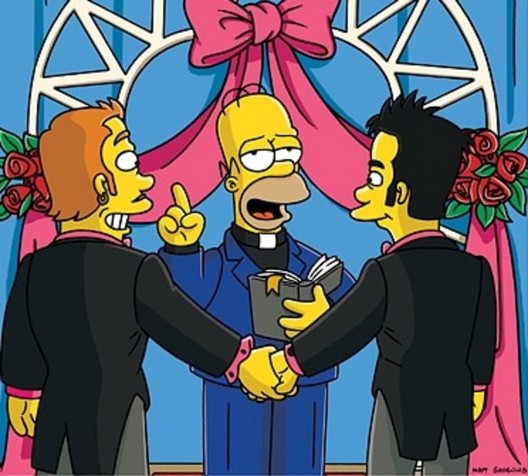
same-sex-weddingI first became aware of the political question of same-sex marriage in 1980.  I was in fifth grade and we were supposed to conduct debates in class about issues of the day.  I was assigned to the group opposing this proposition: “The Equal Rights Amendment should be passed.”  Researching for my part in the debate, I found an argument that the plain wording of the proposed amendment (“Equality of rights under the law shall not be denied or abridged by the United States or by any State on account of sex”) would grant men the right to marry other men and women the right to marry other women.  This was in the context of an article opposing the amendment. 

At first I was excited to find this claim.  Up to that point all that I had been able to find were dry legal arguments that would never capture the attention of my classmates.  Here at last was a point that would grab the imaginations of everyone in the room and hold them for as long as I needed. 

But as I thought it over, I realized that there was an obvious question that would stump me if anyone asked it.  Why shouldn’t same sex couples be free to marry?  The only argument in the article was that same sex couples couldn’t reproduce.  My immediate response to that was to think of my grandmother.  When my grandfather died, she was in her fifties, most assuredly past childbearing.  Yet she remarried, and no one thought to object.  So why was the sterility of same sex couples a reason why they should not be allowed to marry? 

In the decades since, I’ve kept an eye on the debate.  I’ve found some very sensible arguments supporting the right of same sex couples to marry, and some intriguing arguments to the effect that no one should marry.  But what I have not found are many substantive arguments in favor of reserving marriage for heterosexual couples.  This is quite surprising.  One would assume that by now someone would have come up with a worthwhile argument  in favor of the status quo

In this issue of Chronicles, Thomas Fleming explains why he is opposed to same sex marriage.  (more…)
The Atlantic Monthly, March 2009

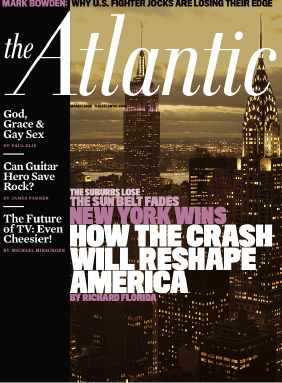
atlantic-march-2009A profile of Rowan Williams, the archbishop of Canterbury, focuses on this gifted theologian’s attempts to lead the Anglican communion in its effort to make up its mind about homosexuality.  Williams himself has many friends who are gay and took a consistently liberal line on gay issues before 2002, when he became the nominal leader of Christianity’s third most popular tradition.  In 1989 Williams gave a speech to the Lesbian and Gay Christian Movement called “The Body’s Grace,” in which he argued that a Christian understanding of grace requires us to understand that persons need to be seen in particular ways.  Sexual relationships provide one of these ways of being seen that are key to the development of the human person.  Christians must therefore find value, not only in persons who are inclined to engage in  homosexual acts, but in those acts and the relationships of which they are part.  The essay is, from one point of view, quite conservative- Williams claims that the kind of being seen that deserves this value is a kind that must be developed over time and that only one person may do the seeing.  He thus sets his face against sexual liberationists who would resist the imposition of couplehood as the one appropriate form of human sexuality, and aligns himself with those who would merely extend that imposition to same sex relationships.  Compared to other Christian leaders, of course, Williams does not seem conservative at all.  Even the view that same-sexers should be allowed to imitate opposite-sex couples and to assimilate their behavior to norms that have traditionally been imposed on them is daringly progressive in the world where the Archbishop of Canterbury moves.   

Since most of the Anglican communion’s 80,000,000 members live in African countries where homosexuality is the object of extreme cultural disapproval, it has been quite difficult for Williams to hold to his liberal, assimilationist stand while at the same time meeting the first requirement of his job and keeping the communion united. 

Atlantic editor James Bennet recalls his meeting with recently assassinated Hamas leader Nizar Rayyan.  A theologian of a very different stripe from that of Rowan Williams, Rayyan’s “bigoted worldview, and his rich historical imagination, gave him a kind of serenity.”  This serenity was nothing daunted when Rayyan sent his own son on a suicide mission against an Israeli settlement and planned to send another on a similar mission.

Those of us who call for the abolition of the US presidency (what with today being Presidents’ Day and all) will thank the Atlantic for its note of “Politicians: Be Killed or Survive,” a study finding that the only political figures who face a significant risk of assassination are those who operate in systems where power is so highly centralized that assassinating one person will effect significant change in the policies of the state.

Brian Mockenhaupt reports on an effort to persuade US combat veterans that it’s okay to seek help for psychological injuries by showing them performances of Sophocles’ plays about wounded warriors, Ajax and Philoctetes.

The Nation, 8 December 2008

The Fall Books Issue“- it seems a bit late this year… but worth the wait.

Torie Osborn wonders how California could have passed anti-same sex marriage Proposition 8.  Her view is that No on 8 forces neglected Los Angeles County, despite decades of experience showing that antigay measures win or lose based on the margins in that county.  She also has some harsh words for the Obama campaign for allowing voters to believe (mistakenly!) that Mr O backed Proposition 8. 

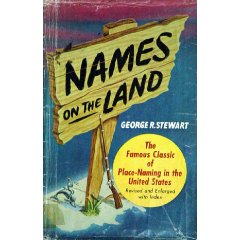
Christine Smallwood reviews a new edition of George R. Stewart’s 1945 book Names on the Land.  A collection of anecdotes about how various places in the USA got their names, this highly regarded work inspires Smallwood’s unreserved praise.  She goes on at some length about Stewart’s other works, including environmental fiction like Earth Abides, “the first American postapocalyptic thriller,” and Ordeal by Hunger, a novelization of the Donner Party.  She tells us that Names on the Land was Stewart’s own favorite of his books.  It raises no less a question than “what is America?,” Smallwood says.  And answers that question: “Not the leader of the Free World and not the scourge of the world, but a history of settlement.”  This answer would hardly have been extraordinary in 1945.  The book does sound interesting.   The cover of the first edition illustrates Smallwood’s review, and is reproduced below.

0189b2c008a04d1d62183010__aa240__l

(more…)

The American Conservative, 17 November 2008

In a used book store years ago, I bought some old issues, circa 1965, of National Review.  They weren’t all that interesting on their own merits.  What stuck in my mind about them was the sadness that ran through them.  Each article seemed to be a form of mourning for a kind of politics that was no longer possible, for a kind of country that no longer existed.

That’s very much the feeling I got from this issue of The American Conservative.  The cover features a checklist of G. W. Bush’s “Missions Accomplished”: “Start a war (or two); Shred Constitution; Crash economy” etc, etc.  Inside is a five article retrospective on the horrors of the Bush-Cheney administration (including articles by our old friends Alexander Cockburn and Allen Carlson.)  As Bush and company prepare to leave office, these articles take on a strangely distant sound.

Michael Brendan Daugherty looks at the results of California’s Proposition 8 and concludes that it is likely to be the last victory that he and his fellow opponents of same-sex marriage will be likely to celebrate.  Pointing out that Proposition 8 and similar measures have passed only because so many voters aged over 65 backed them, Daugherty claims that “Absent an incredible shift in attitudes, same sex marriage will soon command majority support.”

David Gordon gives a favorable review to James Kalb’s The Tyranny of Liberalism.  Apparently Kalb defines “liberalism” as “the rejection of moral authorities that transcend human purposes,” and from this definition lays great mischief at the feet of the liberal tradition.  I’ve read several interesting articles by Kalb, for example in the journal Telos, and have gone to his blog in hopes of finding more like those articles.  But I must say I’ve been disappointed.  His editors must add a lot of value to his work- the blog usually includes several overly abstract defenses of the Roman Catholic faith that Kalb has adopted, interspersed with current affairs commentary from what it might be charitable to call an anti-Zionist perspective.

I’m getting to be quite fond of their backpage columnist, Bill Kauffman.  This time around Kauffman remembers novelist John Gardner, who like him lived in Batavia, New York.  After describing the lengths to which he and his fellow Batavians have gone to keep the memory of Gardner and his works alive, Kauffman interjects, “You know what?  Gardner is not even among my hundred favorite American novelists.  But he is ours.  That is enough.”  When I was a teenager, I read Gardner’s The Art of Fiction.  I remember that it was pleasant to read, that’s all I do remember of it.

Common drinking facilities and common decency

Sexuality in the arts posts a review of Bob Dylan and Barry Feinstein’s Hollywood Foto-Rhetoric that also serves as a response to California’s vote to ban same-sex marriage.  It includes some images of drinking fountains and bars.

The American Conservative, 19 May 08

This issue‘s highlights include:

Bill Kauffman praises Students for a Democratic Society Founder Carl Oglesby as a leader of “a humane, decentralist, thoroughly American New Left that regarded socialism as ‘a way to bury social problems under a federal bureaucracy,'” in Oglesby’s words.  Called upon to name the corrupt system that needed to be smashed in order to create a democratic society, Oglesby chose the name “corporate liberalism.”  In Oglesby, Kauffman finds a fellow admirer of the localist, traditionalist, anti-statist Old Right, one who saw virtues in the contemporary libertarian right but who warned those of that tendency that they might well “remain hypnotically charmed by the authoritarian imperialists whose only love is Power, the subhuman brownshirted power of the jingo state militant, the state rampant, the iron state possessed of its own clanking glory.”  Kauffman goes on to argue that another 60’s leader matched Oglesby in his understanding of the importance of rootedness and community, and that leader was George Wallace.  “If you can get beyond Wallace’s reprehensible race-baiting… certain of his policies overlapped with the humane Left.”  “If you can get beyond Wallace’s reprehensible race-baiting” you will have gone further than any of his supporters ever did.  The Guvnah’s whole national career consisted of race-baiting.  Still, anybody William F. Buckley saw fit to attack as a “country and western Marxist” must have had something going for him.  Kauffman does not mention one highly pertinent fact about Oglesby’s standing as a critic of corporate liberalism and bureaucratization, a fact which emerged in an interview Kauffman himself conducted with Oglesby this year.  Oglesby endorsed the presidential campaign of H. R. Clinton, an avatar of corporate liberalism if ever there was one.

Michael Brendan Dougherty reports on the formation of J Street, a lobbying organization that intends to give a voice to American Jews who do not support the hawkish policies of groups like AIPAC, the Conference of Presidents of Major American Jewish Organizations, etc.  Dougherty devotes some space to the prominent Israelis who have declared their support for J Street and its program.

Margaret Liu McConnell argues against institutionalizing same-sex marriage on the grounds that a same-sex couple can become parents to a child only if one or both of that child’s biological parents relinquishes his or her parental role.  She doesn’t argue that same-sexers should be prohibited from adopting children or from using donated genetic material.  Her last sentence: “To those who ask how reserving marriage for one man and one woman is any different from yesterday’s vile prohibition against interracial marriage, the answer is evident in the faces of the… children of mixed-race couples, belonging to and loved by both parents, relinquished by neither.”  Liu McConnell’s argument doesn’t convince me, but it is the first conservative argument against gay marriage I’ve ever seen that actually has any substance at all.  I did see a radical argument against it 10-15 years ago in a law review, but I haven’t been able to track the article down.