Kenan Malik on Blasphemy and Free Speech.

One excellent point after another from the mighty Kenan Malik.

Kenan Malik's avatarPandaemonium

I gave a talk called ‘Beyond the sacred’, on the changing character of ideas of the sacred and of blasphemy, at a conference on blasphemy organised this weekend by the Centre for Inquiry at London’s Conway Hall on Saturday. Here is a transcript.


To talk about blasphemy is also to talk about the idea of the sacred.  To see something as blasphemous is to see it in some way as violating a sacred space. In recent years, both the notion of blasphemy and that of the sacred have transformed. What I want to explore here is the nature of that transformation, and what it means for free speech.

View original post 3,820 more words

Requiescat in pace?

Peter Hitchens is one of my favorite right-wing political bloggers.  His brother Christopher has also been mentioned here from time to time.  Today, Peter Hitchens had the sad duty to write a post about his brother’s death.  It’s an eloquent statement of a personal grief made public by the fame that each brother had attained in his life.  I recommend it highly.

Peter Hitchens is a defender of a very conservative brand of Anglicanism; his brother was a celebrated atheist spokesman.  I myself am not a believer, but I am deeply interested in the ways in which widely accepted religious doctrines can shape the thinking even of people who consciously reject them.

So, I often think about how we respond to death.  It is convenient to be able to say to a bereaved person, “My prayers are with you”; if you share a common belief in an afterlife, it may be comforting to invoke that belief also.  Yet it doesn’t make a great deal of sense to treat Christian language about death as if it were an attempt to comfort the grieving, since a great deal of the discomfort that a resident of a Christian land faces upon the death of a loved one stems from Christian doctrines and practices.  If we affirm a doctrine of immortality, then we can never quite let go of the idea that we should be on contact with those whom we love, for we can never quite accept the idea that they have ceased to exist.  If our loved ones are out there someplace, in some form, then it is an ever-renewed pain that we cannot see them or hear them or touch them.

Alexander Schmemann was a Russian Orthodox priest who emigrated to the USA during the Soviet era.  Father Schmemann became one of the founders of the Orthodox Church in America.  In his book For the Life of the World, Schmemann considered the fact that Christianity does not make it easier for the bereaved to accept the death of a loved one, but harder.  This, he argued, was not a failing of Christianity, but one of its virtues.  Here is a quote from that argument:

“Secularism is a religion because it has a faith, it has its own eschatology and its own ethics. And it ‘works’ and it ‘helps.’ Quite frankly, if ‘help’ were the criterion, one would have to admit that life-centered secularism helps actually more than religion. To compete with it, religion has to present itself as ‘adjustment to life,’ ‘counseling,’ ‘enrichment,’ it has to be publicized in subways and buses as a valuable addition to ‘your friendly bank’ and all other ‘friendly dealers’: try it, it helps! And the religious success of secularism is so great that it leads some Christian theologians to ‘give up’ the very category of ‘transcendence,’ or in much simpler words, the very idea of ‘God.’ This is the price we must pay if we want to be ‘understood’ and ‘accepted’ by modern man, proclaim the Gnostics of the twentieth century.

But it is here that we reach the heart of the matter. For Christianity, help is not the criterion. Truth is the criterion. The purpose of Christianity is not to help people by reconciling them with death, but to reveal the Truth about life and death in order that people may be saved by this Truth. Salvation, however, is not only not identical with help, but is, in fact, opposed to it. Christianity quarrels with religion and secularism not because they offer ‘insufficient help,’ but precisely because they ‘suffice,’ because they ‘satisfy’ the needs of men. If the purpose of Christianity were to take away from man the fear of death, to reconcile him with death, there would be no need for Christianity, for other religions have done this, indeed, better than Christianity. And secularism is about to produce men who will gladly and corporately die—and not just live—for the triumph of the Cause, whatever it may be.

Christianity is not reconciliation with death. It is the revelation of death, and it reveals death because it is the revelation of Life. Christ is this Life. And only if Christ is Life is death what Christianity proclaims it to be, namely the enemy to be destroyed, and not a ‘mystery’ to be explained. Religion and secularism, by explaining death, give it a ‘status,’ a rationale, make it ‘normal.’ Only Christianity proclaims it to be abnormal and, therefore, truly horrible. At the grave of Lazarus Christ wept, and when His own hour to die approached, ‘he began to be sore amazed and very heavy.’ In the light of Christ, this world, this life are lost and are beyond mere ‘help,’ not because there is fear of death in them, but because they have accepted and normalized death. To accept God’s world as a cosmic cemetery which is to be abolished and replaced by an ‘other word’ which looks like a cemetery (‘eternal rest’) and to call this religion, to live in a cosmic cemetery and to ‘dispose’ every day of thousands of corpses and to get excited about a ‘just society’ and to be happy!—this is the fall of man. It is not the immorality or the crimes of man that reveal him as a fallen being; it is his ‘positive ideal’—religious or secular—and his satisfaction with this ideal. This fall, however, can be truly revealed only by Christ, because only in Christ is the fullness of life revealed to us, and death, therefore, becomes ‘awful,’ the very fall from life, the enemy. It is this world (and not any ‘other world’), it is this life (and not some ‘other life’) that were given to man to be a sacrament of the divine presence, given as communion with God, and it is only through this world, this life, by ‘transforming’ them into communion with God that man was to be. The horror of death is, therefore, not in its being the ‘end’ and not in physical destruction. By being separation from the world and life, it is separation from God. The dead cannot glorify God. It is, in other words, when Christ reveals Life to us that we can hear the Christian message about death as the enemy of God. It is when Life weeps at the grave of the friend, when it contemplates the horror of death, that the victory over death begins.”

— Alexander Schmemann, For the Life of the World: Sacraments and Orthodoxy  (Saint Vladimir’s Seminary Press, 1973)pages 94ff

Some interesting titles from Lexington Books

Lexington Books is an imprint of Rowman and Littlefield.  They send me some of their catalogues, including their catalog of books in religious studies.  The latest one showed up in my mailbox yesterday.  I’m not planning to order anything from it, but several titles in it caught my attention for a moment or two.  Among them:

Medieval America: Cultural Influences of Christianity in Law and Public Policy, by Andrew M. Koch and Paul H. Gates. The authors argue that “promoting and maintaining a free, open, and tolerant society requires the necessary limitation of religious influence in the domains of law and policy.”  That seems to go beyond the usual US doctrine of separation of church and state, and to head in the direction of the French tradition of laïcité.

Theology and the Soul of the Liberal State, edited by Leonard V. Kaplan and Charles L. Cohen.  In opposition to the apparent gravamen of Medieval America’s argument, this book’s essays hold “that the liberal state cannot keep theology out of public discourse and may even benefit from its intervention.”

The Weimar Moment: Liberalism, Political Theology, and Law, edited by Leonard V. Kaplan and Rudy Koshar.  I’ve long been intrigued by Carl Schmitt, who lived under the Weimar Republic and developed the theory of “political theology” (putting it crudely, political theology is the proposition that all political ideas are simply theological ideas in disguise.)  Judging by its title, it would appear that this book is likely to discuss Schmitt.  I can’t be sure, since the description currently posted on the publisher’s website linked above is gibberish, and there don’t seem to be any reviews yet.  The book hasn’t been printed yet, so that situation isn’t surprising.

Theology and Public Philosophy: Four Conversations, edited by Kenneth L. Grasso and Cecilia Rodriguez Castillo.  They’ve attracted some very distinguished contributors; the catalogue lists “Charles Taylor; Fred Dallmayr; William Schweiker; Nicholas Wolterstorff; J. Budziszewski; Jeanne Heffernan Schindler; Joshua Mitchell; Robin Lovin; Charles Mathewes; Jonathan Chaplin; Michael L. Budde; Jean Porter; Eloise A. Buker; Christopher Beem; Peter Berkowitz and Jean Bethke Elshtain.”  To keep a conversation going, the editors avoid the explosive topics that usually bring theological commitments to the surface in political debate, and give the book a structure that is designed to ensure a variety of viewpoints: “Each of the book’s four sections consists of an original essay by an eminent scholar focusing on a specific aspect of the problem that is the volume’s focus followed by three responses that directly engage its argument or explore the broader problematic it addresses. The volume thus takes the form of a dialogue in which the analyses of four eminent scholars are each engaged by three interlocutors.”

What Democrats Talk About When They Talk About God: Religious Communication in Democratic Party Politics, edited by David Weiss.  It wasn’t all that long ago that American politicians generally avoided religious references in their public statements.  Nowadays they all seem to be auditioning for a pulpit.  So it might be interesting to analyze the use of religious language, public and private, by members of the USA’s two major parties.

Radical Religion: Contemporary Perspectives on Religion and the Left, edited by Benjamin J. Pauli.  The online catalogue summarizes it thus: “The political Left has had a turbulent relationship with religion, from outright hostility to attempts to meld religious faith with progressivism. Confronted with contemporary social ills, the progressive Left continues to disagree about the role that religion should play, whether in understanding social challenges and solutions, or stimulating social critique and reform. Radical Religion presents valuable insights, from both religious and secular perspectives, for progressives today as they struggle to formulate a coherent agenda and effective strategies for social change. This book presents arguments from a diverse group of scholars, and offers a snapshot of contemporary, progressive thinking about religion.”

The Rise and Fall of Triumph: The History of a Radical Roman Catholic Magazine, 1966-1976, by Mark D. Popowski.  I’m interested in movements that are conservative in some senses and radical in others.  Readers of this site will have noticed that I pay a great deal of attention to the antiwar right and the anticapitalist right, for example.  And I love magazines.  So this book sounds like it would be right up my alley: “Triumph’s editors formed the magazine to defend the faith against what they perceived as the imprudent and secular excesses of Vatican II reformers, but especially against what they viewed as an increasing barbarous and anti-Christian American society. Yet Triumph was not a defensive magazine; rather, it was audaciously triumphalist—proclaiming the Roman Catholic faith as the solution to America’s ills. The magazine sought to convert Americans to Roman Catholicism and to construct a confessional state, which subjected its power to the moral authority of the Roman Catholic Church.”   So, the magazine tried to sustain a premodern perspective, which at least left its contributors free to oppose militarism, hyper-capitalism, nationalism, and other delusions specific to our age of bigness.

Marriage and Metaphor: Constructions of Gender in Rabbinic Literature, by Gail Labovitz.  Dr Labovitz is a married woman and an ordained rabbi who does not shy away from elements of the rabbinic tradition that make it awkward for a person such as herself to exist.  “Labovitz shows how rabbis use the concepts of property and ownership to discuss the roles of a husband and wife, thereby modeling marriage after a business transaction-one in which the wife is seen as an acquisition owned by and subject to the husband. This ownership metaphor is clearly present in all strata of rabbinic literature and the book explores how it continues to guide rabbinic thinking, serve as a tool for legal reasoning, and produce new linguistic applications. With a close and careful reading of rabbinic texts, Labovitz applies metaphor theory and feminist linguistics to demonstrate the ways in which rabbis regularly use information from the realm of property and commercial transactions to structure their understanding of marriage and gender relations.”  I’m always suspicious of religious types who find that their ancient traditions and sacred texts, if interpreted correctly, agree with their own favorite ideas.  Conversely, when a lady rabbi says that the rabbinical tradition is full of strictures against lady rabbis, I’m put at ease.

Charles Sanders Peirce and a Religious Metaphysics of Nature, by Leon Niemoczynski.  The catalog says that “Niemoczynski points to Peirce’s phenomenological and metaphysical understanding of possibility-the concept of ‘Firstness’-as especially critical to understanding how the divine might be meaningfully encountered in religious experience.”  I’d never thought of Peirce as either a metaphysician or as a thinker who would be in any way attractive to religious believers, but apparently I was wrong.

Nietzsche and Zen: Self-Overcoming Without a Self, by Andre van der Braak.  One of my principal intellectual influences is Irving Babbitt, who was among other things a student of Buddhism.  When Babbitt looked at Buddhism, he saw a corrective to the excesses of late Romanticism.  When he looked at Nietzsche, Babbitt saw an exemplar of those excesses.  So I’d be interested to see a study of the overlap between Nietzsche’s thought and Buddhism.

Buddhism and Postmodernity: Zen, Huayan, and the Possibility of Buddhist Postmodern Ethics, by Jin Y. Park.  “Buddhism and Postmodernity is a response to some of the questions that have emerged in the process of Buddhism’s encounters with modernity and the West. Jin Y. Park broadly outlines these questions as follows: first, why are the interpretations and evaluations of Buddhism so different in Europe (in the nineteenth century), in the United States (in the twentieth century), and in traditional Asia; second, why does Zen Buddhism, which offers a radically egalitarian vision, maintain a strongly authoritarian leadership; and third, what ethical paradigm can be drawn from the Buddhist-postmodern form of philosophy?”  While these questions may not seem to have much in common, Professor Park evidently proposes a model which enables her to address all three at the same time.

The Political Problem of Religious Pluralism: And Why Philosophers Can’t Solve It, by Thaddeus J. Kozinski.  Apparently the author holds that for the philosopher, the only good pluralism is a self-extinguishing pluralism.  “Drawing on a diverse number of sources, Kozinski addresses the flaws in each philosopher’s views and shows that the only philosophically defensible end of any overlapping consensus political order must be the eradication of the ideological pluralism that makes it necessary. In other words, a pluralistic society should have as its primary political aim to create the political conditions for the communal discovery and political establishment of that unifying tradition within which political justice can most effectively be obtained.”  I suppose every ideology and political system extinguishes itself sooner or later, so to evaluate pluralism in terms of its ability to give rise to unity isn’t particularly unfair.

God and Money: A Theology of Money in a Globalizing World, by Nimi Wariboko.  The print catalogue quotes a blurb in which Peter J. Paris of the Princeton Theological Seminary tells us that in this book, “the author helps his readers see money not as a material thing alone but as a social relation.  This is an altogether new perspective, not only describing the moral dimension of money itself but inspiring readers to discern the ethical issues implicit in the global monetary system.”  That sounds like a tremendous contribution to the understanding of economic life.  On the other hand, Rowman and Littlefield’s online catalogue summarizes the book this way: “Making a case for a denationalized global currency as an alternative to the dollar, euro, and yen as the world vehicular and reserve currencies, God and Money explores the significance and theological-ethical implications of money as a social relation in the light of the dynamic relations of the triune God. Wariboko deftly analyzes the dynamics at work in the global monetary system and argues that the monarchical-currency structure of the dollar, euro, and yen may be moving toward a trinitarian structure of a democratic world currency.”  Which sounds idiotic.  According to the book’s acknowledgements, Professor Paris worked closely with Professor Wariboko while he was writing it, so it is likely that he has a firmer grasp of its contents than does the editorial assistant who had to crank out the description in the catalogue, but still, it gives pause.

Biblical Bethsaida: A Study of the First Century CE in the Galilee, by Carl E. Savage.  “Using archaeological data from Bethsaida itself, Savage investigates the material practices of Bethsaida’s ancient inhabitants, describing these practices as significant indicators of their sense of place both ideologically and geographically. He evaluates the historical plausibility of various social reconstructions for the region, and finds that the image that emerges of first-century Bethsaida is one similar to those of other Jewish communities in the Galilee.” I’m slightly curious about the interaction between Jews and non-Jews in the communities where Christianity first arose, so I look at archaeological accounts of the first century Galilee from time to time.

Something about the prices struck me as rather odd.  Most of the books cost about $60 in hardback, while volumes that are of interest to more than one academic discipline cost about $100.  That’s a fairly typical range of prices from a publisher aiming at university libraries.  The odd thing is the price of the ebook editions.  For most of those, they charge the hardback price minus one cent.   So, Medieval America is $60 hardback, $59.99 as an ebook.  The Rise and Fall of Triumph is $75 hardback, $74.99 as an ebook.  The Weimar Moment is $100 hardback, $99.99 as an ebook.  That reminds me ofone of David Letterman‘s Top Ten Lists from many years ago, “Top Ten OtherFailed McDonald’s Promotions.”  On the list was “Get 500 Quarter Pounders for the price of 499!”

“Sit down before fact as a little child, be prepared to give up every preconceived notion, follow humbly wherever and to whatever abysses nature leads, or you shall learn nothing”

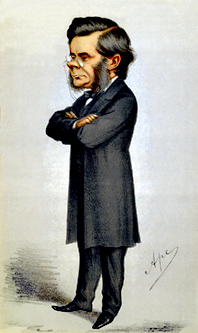
T. H. Huxley in 1860

The title of this post is a quote from Thomas Henry Huxley.  I came across it a few months ago, when I was reading an old paperback I found in a used book store.  The book was Voices from the Sky, by Arthur C. Clarke (Mayflower Press, 1969.)  The cheap, high-acid paper hadn’t aged well in the decades since the book was printed; the pages crumbled in my hands as I read.  All I kept from it is the top half of page 155, a bit from an essay titled “Science and Spirituality.”  On the previous page, Clarke had mentioned the widespread impression that science and religion are irreconcilable.  To which he says:

It is a great tragedy that such an impression has ever arisen, for nothing could be further from the truth.  ‘Truth’ is the key word; for what does science mean except truth?  And of all human activities, the quest for truth is the most noble, the most disinterested, the most spiritual.

It is also the one most likely to inculcate humility.  Said T. H. Huxley a century ago: ‘Sit down before fact as a little child, be prepared to give up every preconceived notion, follow humbly wherever abysses nature leads, or you shall learn nothing.’

Science has now led, in our generation, to the ultimate abyss- that of space.  Questions to which philosophers and mystics have given conflicting answers for millennia will soon be answered, as our rocket-borne instruments range ever further from Earth.

Several things about these paragraphs arrested my attention.  Clarke usually called himself an atheist, and it was to describe his own opinions that Huxley coined the word “agnostic.”  So it is rather odd to see one of them invoke the other in defense of religious values.  Moreover, it seems a bit naive to assert that space is “the ultimate abyss.”  Ultimate in size space may be, unless of course there are parallel universes, in which case the space in which we live may be only fraction of an infinitely larger abyss.  But for all we know, the mysteries of space may yet pale in significance and complexity next to those of the subatomic world, or of some other field of study.  The final sentence is, if anything, even more naive.  Surely the most interesting thing about science is not its ability to answer familiar questions, but its ability to raise unfamiliar questions.  Philosophers and mystics have not given conflicting answers for millennia to, for example, the question of whether Venus ever had plate tectonics.  Without scientific inquiry, not only would we not have the concept of plate tectonics, we wouldn’t even know that Venus had a surface.  Once scientific inquiry has reached a certain point, our habits of mind and our whole view of nature change in ways too subtle to notice and too numerous to count.  In truth, the essay showed many signs of hasty composition; it was far from Clarke’s best, and I was surprised to see it published in a collection.

I tracked the Huxley quote down.  It comes from a letter Huxley wrote to the Reverend Charles Kingsley on 23 September 1860.  The letter appears on pages 217-221 of Life and Letters of Thomas Henry Huxley, edited by Leonard Huxley (London: MacMillan and Company, 1900); the sentence Clarke quotes appears on page 219 of that book.  Kingsley had sent Professor and Mrs Huxley a letter of condolence on the death of their young son, in which he alluded to the doctrine of the immortality of the soul.  Huxley’s response is worth reading in full, though I will quote only a few selections.  Kingsley had mentioned various arguments that are supposed to bolster the doctrine of the immortality of the soul.  Huxley’s response makes it clear what these arguments were:

I feel that it is due to you to speak as frankly as you have done to me. An old and worthy friend of mine tried some three or four years ago to bring us together—because, as he said, you were the only man who would do me any good. Your letter leads me to think he was right, though not perhaps in the sense he attached to his own words.

Thus Huxley sets the gracious tone of the letter, and makes it clear that he disagrees with Kingsley.  Next:

To begin with the great doctrine you discuss. I neither deny nor affirm the immortality of man. I see no reason for believing in it, but, on the other hand, I have no means of disproving it.

Certainly a classic statement from the first self-described agnostic!

Pray understand that I have no a priori objections to the doctrine. No man who has to deal daily and hourly with nature can trouble himself about a priori difficulties. Give me such evidence as would justify me in believing anything else, and I will believe that. Why should I not? It is not half so wonderful as the conservation of force, or the indestructibility of matter. Whoso clearly appreciates all that is implied in the falling of a stone can have no difficulty about any doctrine simply on account of its marvellousness. But the longer I live, the more obvious it is to me that the most sacred act of a man’s life is to say and to feel, “I believe such and such to be true.” All the greatest rewards and all the heaviest penalties of existence cling about that act. The universe is one and the same throughout; and if the condition of my success in unravelling some little difficulty of anatomy or physiology is that I shall rigorously refuse to put faith in that which does not rest on sufficient evidence, I cannot believe that the great mysteries of existence will be laid open to me on other terms. It is no use to talk to me of analogies and probabilities. I know what I mean when I say I believe in the law of the inverse squares, and I will not rest my life and my hopes upon weaker convictions. I dare not if I would.

So does Huxley present himself as a scientist, and as a stout defender of the methods of science.  I am surprised at his statement that “the longer I live, the more obvious it is to me that the most sacred act of a man’s life is to say and feel, ‘I believe such and such to be true.’  All the greatest rewards and all the heaviest penalties of existence cling about that act.”  When Huxley wrote that sentence, he was 35 years old.  I’m older than that now, and the longer I live the more obvious it is to me that to say and to feel “I believe such and such to be true” is usually a waste of time, and quite often the mark of a jackass. Maybe that’s just because I spend a lot of time on the web, or maybe not.

Huxley then sets out to show how a thoroughly scientific mind approaches Kingsley’s views:

Measured by this standard, what becomes of the doctrine of immortality?You rest in your strong conviction of your personal existence, and in the instinct of the persistence of that existence which is so strong in you as in most men.

To me this is as nothing. That my personality is the surest thing I know—may be true. But the attempt to conceive what it is leads me into mere verbal subtleties. I have champed up all that chaff about the ego and the non-ego, about noumena and phenomena, and all the rest of it, too often not to know that in attempting even to think of these questions, the human intellect flounders at once out of its depth.

It must be twenty years since, a boy, I read Hamilton’s essay on the unconditioned, and from that time to this, ontological speculation has been a folly to me. When Mansel took up Hamilton’s argument on the side of orthodoxy (!) I said he reminded me of nothing so much as the man who is sawing off the sign on which he is sitting, in Hogarth’s picture. But this by the way.

I cannot conceive of my personality as a thing apart from the phenomena of my life. When I try to form such a conception I discover that, as Coleridge would have said, I only hypostatise a word, and it alters nothing if, with Fichte, I suppose the universe to be nothing but a manifestation of my personality. I am neither more nor less eternal than I was before.

Nor does the infinite difference between myself and the animals alter the case. I do not know whether the animals persist after they disappear or not. I do not even know whether the infinite difference between us and them may not be compensated by their persistence and my cessation after apparent death, just as the humble bulb of an annual lives, while the glorious flowers it has put forth die away.

Surely it must be plain that an ingenious man could speculate without end on both sides, and find analogies for all his dreams. Nor does it help me to tell me that the aspirations of mankind— that my own highest aspirations even — lead me towards the doctrine of immortality. I doubt the fact, to begin with, but if it be so even, what is this but in grand words asking me to believe a thing because I like it.

Science has taught to me the opposite lesson. She warns me to be careful how I adopt a view which jumps with my pre-conceptions, and to require stronger evidence for such belief than for one to which I was previously hostile.

My business is to teach my aspirations to conform themselves to fact, not to try and make facts harmonise with my aspirations.

Science seems to me to teach in the highest and strongest manner the great truth which is embodied in the Christian conception of entire surrender to the will of God. Sit down before fact as a little child, be prepared to give up every preconceived notion, follow humbly wherever and to whatever abysses nature leads, or you shall learn nothing. I have only begun to learn content and peace of mind since I have resolved at all risks to do this.

This rather resolves the paradox of the atheist Clarke invoking the agnostic Huxley in defense of religion.  Huxley is responding graciously to his friend’s sincere attempt to comfort him in a moment of extreme affliction.  In that endeavor, he assures Kingsley that he seeks to cultivate the same virtues Kingsley hopes his religion will engender, and simultaneously makes it clear that he does not accept Kingsley’s religion.  Clarke was known for a similar combination of friendliness and forthrightness in his dealings with believers, and I surmise that in this letter he may have found a kindred spirit.

Huxley mentions arguments in favor of the immortality of the soul that Kingsley had not made, notably the idea “that such a system is indispensable to practical morality.”  Huxley’s objection to this argument is emotionally powerful and scientifically astute:

As I stood behind the coffin of my little son the other day, with my mind bent on anything but disputation, the officiating minister read, as a part of his duty, the words, “If the dead rise not again, let us eat and drink, for to-morrow we die.” I cannot tell you how inexpressibly they shocked me. Paul had neither wife nor child, or he must have known that his alternative involved a blasphemy against all that was best and noblest in human nature. I could have laughed with scorn. What! because I am face to face with irreparable loss, because I have given back to the source from whence it came, the cause of a great happiness, still retaining through all my life the blessings which have sprung and will spring from that cause, I am to renounce my manhood, and, howling, grovel in bestiality? Why, the very apes know better, and if you shoot their young, the poor brutes grieve their grief out and do not immediately seek distraction in a gorge.

The words that shocked Huxley came from I Corinthians chapter 15, verse 32.  Here is the passage Huxley probably heard, taken from the funeral service in the Church of England’s 1662 Book of Common Prayer.  It comprises verses 20 through 58 of that chapter:

Now is Christ risen from the dead, and become the first-fruits of them that slept. For since by man came death, by man came also the resurrection of the dead. For as in Adam all die, even so in Christ shall all be made alive. But every man in his own order: Christ the firstfruits; afterward they that are Christ’s, at his coming. Then cometh the end, when he shall have delivered up the kingdom to God, even the Father; when he shall have put down all rule, and all authority, and power. For he must reign, till he hath put all enemies under his feet. The last enemy that shall be destroyed is death. For he hath put all things under his feet. But when he saith, all things are put under him, it is manifest that he is excepted, which did put all things under him. And when all things shall be subdued unto him, then shall the Son also himself be subject unto him that put all things under him, that God may be all in all. Else what shall they do which are baptized for the dead, if the dead rise not at all? Why are they then baptized for the dead? and why stand we in jeopardy every hour? I protest by your rejoicing, which I have in Christ Jesus our Lord, I die daily. If after the manner of men I have fought with beasts at Ephesus, what advantageth it me, if the dead rise not? Let us eat and drink, for to-morrow we die. Be not deceived: evil communications corrupt good manners. Awake to righteousness, and sin not: for some have not the knowledge of God. I speak this to your shame. But some man will say, How are the dead raised up? and with what body do they come? Thou fool, that which thou sowest is not quickened, except it die. And that which thou sowest, thou sowest not that body that shall be, but bare grain, it may chance of wheat, or of some other grain: But God giveth it a body, as it hath pleased him, and to every seed his own body. All flesh is not the same flesh; but there is one kind of flesh of men, another flesh of beasts, another of fishes, and another of birds. There are also celestial bodies, and bodies terrestrial; but the glory of the celestial is one, and the glory of the terrestrial is another. There is one glory of the sun, and another glory of the moon, and another glory of the stars; for one star differeth from another star in glory. So also is the resurrection of the dead: It is sown in corruption; it is raised in incorruption: It is sown in dishonour; it is raised in glory: It is sown in weakness; it is raised in power: It is sown a natural body; it is raised a spiritual body. There is a natural body, and there is a spiritual body. And so it is written, The first man Adam was made a living soul; the last Adam was made a quickening spirit. Howbeit, that was not first which is spiritual, but that which is natural; and afterward that which is spiritual. The first man is of the earth, earthy: the second man is the Lord from heaven. As is the earthy, such are they that are earthy: and as is the heavenly, such are they also that are heavenly. And as we have borne the image of the earthy, we shall also bear the image of the heavenly. Now this I say, brethren, that flesh and blood cannot inherit the kingdom of God; neither doth corruption inherit incorruption. Behold, I shew you a mystery: We shall not all sleep, but we shall all be changed, in a moment, in the twinkling of an eye, at the last trump, (for the trumpet shall sound,) and the dead shall be raised incorruptible, and we shall be changed. For this corruptible must put on incorruption, and this mortal must put on immortality. So when this corruptible shall have put on incorruption, and this mortal shall have put on immortality; then shall be brought to pass the saying that is written, Death is swallowed up in victory. 0 death, where is thy sting? 0 grave, where is thy victory? The sting of death is sin, and the strength of sin is the law. But thanks be to God, which giveth us the victory through our Lord Jesus Christ. Therefore, my beloved brethren, be ye stedfast, unmoveable, always abounding in the work of the Lord, forasmuch as ye know that your labour is not in vain in the Lord.

Is Paul suggesting in this passage that those who disbelieve in the immortality of the soul will skip the funerals of their loved ones in order to visit the nearest all-you-can-eat buffet, and thus committing “a blasphemy against all that was best and noblest in human nature”?  I think not.  He does not mention funerals, or the first shock of mourning; he does not deny that it is natural for us, as animals, to grieve out our grief when death has put someone we love forever out of our reach.  He talks about baptism, and martyrdom, and day after day spent under the shadow of persecution.  The reward for all of this trouble is to be found in an immense drama that began with Adam and Eve and that will continue until the end of time, a drama in which everyone, alive and dead has a role to play.  If this drama is not really in production, if our efforts do not really connect us the living with the dead who went before s and their efforts will not connect the living to us after we die, why bother with the whole thing?  Better to embrace laziness and live the easiest possible life than to sustain so demanding an enterprise.  Such laziness might not preclude a period of howling grief fit to impress any ape, though it would set a limit to the ways in which a person is likely to change his or her habits in the aftermath of that period.

Of course, when Huxley heard the passage above he was standing at the open grave into which his young son’s coffin had just been lowered.  It would be unreasonable to think ill of a person subject to such extreme stress for taking a few words out of their context and putting an unwarranted construction on them, especially when the priest speaking them represented a group that was alien to Huxley’s beliefs and hostile to him personally.  I do wonder, though, why it was just that construction that came to Huxley’s mind.  Obviously, I don’t know.  But I think I do know what Irving Babbitt would have thought about it.   Babbitt (1865-1933) was a professor of French and Comparative Literature at Harvard whose works have had a great influence on me.  The poet and critic T. S. Eliot took some classes from Babbitt, and after Babbitt’s death wrote that “To have been once a pupil of Babbitt’s was to remain always in that position”; even for someone like myself, born decades after Babbitt’s death and familiar with him only through his books, Babbitt’s influence is permanent.

Irving Babbitt might have read Paul much as he read the Buddha.  In the course of the denunciation of the elective system then being introduced to American higher education that runs through his book Literature and the American College (Boston and New York: Houghton Mifflin,1908,)  Babbitt wrote:

A popular philosopher has said that every man is as lazy as he dares to be. If he had said that nine men in ten are as lazy as they dare to be, he would have come near hitting a great truth. Theelective system has often been regarded as a protest against the doctrine of original depravity. This doctrine at best rests on rather metaphysical 1 foundations, and is hard to verify practically. The Buddhists are perhaps nearer the facts as we know them in putting at the very basis of their belief the doctrine, not of the original depravity, but of the original laziness, of human nature. (page 53)

with this clarification:

The greatest of vices according to Buddha is the lazy yielding to the impulses of temperament (pamada); the greatest virtue (appamada) is the opposite of this, the awakening from the sloth and lethargy of the senses, the constant exercise of the active will. The last words of the dying Buddha to his disciples were an exhortation to practice this virtue unremittingly (page 53 note 1)

In the introduction to his translation of the Dhammapada,*  Babbitt enlarges on this discussion, drawing a contrast between appamada and karma.  Both words mean “work,” but Babbitt claims that in the Dhammapada and the other early Buddhist scriptures written in the Pâli language karma carries the sense of an effort sustained over a long period, several lifetimes in fact, that culminates in a kind of knowledge that can be acquired in no other way.  Babbitt made a habit of attributing his favorite ethical ideas simultaneously to all the great sages of the ancient world, east and west; nothing would have appealed to him more than declaring a familiar passage in Paul to be identical in content to the doctrines of the Buddha.

Babbitt used the Buddha and the other sages as an arsenal of sticks with which to beat his intellectual arch-nemesis, Jean-Jacques Rousseau.  For Babbitt, Rousseau was the patriarch of the Romantic movement, and the essence of the Romantic movement was an embrace of mere whim.  Indeed, the sentences I quoted from Literature and the American College introduce one of  his innumerable denunciations of Rousseau, in that case denouncing him for confusing “work,” which the Buddha understood as a virtue that quiets the spirit, with mere activity and busy-ness, which the Buddha regarded as a vice in which we escape from our true obligations.  For the Rousseau of Babbitt’s imagination, violent displays of emotion were events of great significance, while projects requiring long years of steady labor and harsh self-discipline were trivialities.

I suspect that Babbitt would have seen a child of the Romantic movement in Huxley’s reaction.  Rousseauism primed Huxley to conceive of his bereavement, not in terms of a scheme like Paul’s that subordinates the whole of life to an immense drama in which the living and the dead all have roles to play, but in terms of the intense emotional experiences in the early stages of mourning.  Presented with Paul’s statement that without a belief in the Resurrection, this drama would not make sense, Huxley then heard that without such a belief his intense emotional experiences would not make sense.  Observing the indications of the same experiences in the apes, Huxley concluded that either Paul was mistaken, or the apes were believers in the Resurrection.  Babbitt could be quite harsh in his judgments of spokesman for Romanticism; in Huxley’s remarks, he might well have seen a man unable to distinguish between, on the one hand, “the lazy yielding to temperament” that the howling ape represents and the commitment to a life on the grand scale that Paul’s letter and the Buddha’s sayings describe.

Babbitt was no more religious than Huxley or Clarke, as a matter of fact.  But some of his associates and followers were.  If Huxley were writing to one of them, perhaps he would have criticized Paul from another angle, and with another ethological example drawn from elsewhere in the animal kingdom.  There are nonhuman animals who subordinate their immediate needs and pleasures to long-term goals and the  good of a group, whether penguins going months without food to incubate their young, social insects devote their whole lives to the acquittal of a single set of tasks within the hive or swarm of which they are part, etc etc.  Granted, humans have brain functions that do not exist in those other animals, and so we respond to incentives differently than they do.  So a latter-day defender of the idea that a belief in personal immortality is indispensable to practical morality among humans might argue that only an explicit narrative connecting generation to generation can enable us to do what comes naturally to our distant cousins elsewhere in the animal kingdom.  And of course a latter-day Huxley could ask for evidence supporting this psychological claim.

Huxley was no Buddhist or Christian.  One sentence quoted above suggests that his ethical views were a form of Neo-Stoicism.  That sentence is “My business is to teach my aspirations to conform themselves to fact, not to try and make facts harmonise with my aspirations.”  This is a rather neat summary of the Stoic aspiration to peace of mind through an acceptance of the world as it is.  I find further evidence of Stoicism in other passages.  A long paragraph between the two portions that I quoted above argues that in fact, the virtuous are likelier than the wicked to prosper in this world, a view often associated with Stoicism.  In that paragraph, Huxley also argues that we should put the physical laws of nature on a par with moral laws, and not regard those who suffer in consequence of “physical sins” as instances of wronged innocents.  That certainly fits into most Stoic models of “the natural law.”  And following the description of his son’s funeral, we find this remarkable passage.  I will let it stand as the last word:

Kicked into the world a boy without guide or training, or with worse than none, I confess to my shame that few men have drunk deeper of all kinds of sin than I. Happily, my course was arrested in time—before I had earned absolute destruction—and for long years I have been slowly and painfully climbing, with many a fall, towards better things. And when I look back, what do I find to have been the agents of my redemption? The hope of immortality or of future reward? I can honestly say that for these fourteen years such a consideration has not entered my head. No, I can tell you exactly what has been at work. Sartor Resartus led me to know that a deep sense of religion was compatible with the entire absence of theology. Secondly, science and her methods gave me a resting-place independent of authority and tradition. Thirdly, love opened up to me a view of the sanctity of human nature, and impressed me with a deep sense of responsibility.

If at this moment I am not a worn-out, debauched, useless carcass of a man, if it has been or will be my late to advance the cause of science, if I feel that I have a shadow of a claim on the love of those about me, if in the supreme moment when I looked down into my boy’s grave my sorrow was full of submission and without bitterness, it is because these agencies have worked upon me, and not because I have ever cared whether my poor personality shall remain distinct for ever from the All from whence it came and whither it goes.

And thus, my dear Kingsley, you will understand what my position is. I may be quite wrong, and in that case I know I shall have to pay the penalty for being wrong. But I can only say with Luther, “Gott helfe mir, Ich kann nichts anders.”

I know right well that 99 out of 100 of my fellows would call me atheist, infidel, and all the other usual hard names. As our laws stand, if the lowest thief steals my coat, my evidence (my opinions being known) would not be received against him.

But I cannot help it. One thing people shall not call me with justice and that is—a liar. As you say of yourself, I too feel that I lack courage; but if ever the occasion arises when I am bound to speak, I will not shame my boy.

*originally published by Oxford in 1936, reissued by New Directions in 1965; this bit is on pages 91-93

Marcel Duchamp, Calvinist

Tonight, Mrs Acilius and I were watching TV.  The program was a documentary called Paris: The Luminous Years. In a video clip from the 1960s, Marcel Duchamp said every visual artwork was a collection of shapes and colors.  The essence of art lay in the artist’s choice of these shapes and colors.  One set of shapes and colors was as eligible for this choice as another, and the actual production of the artwork was purely incidental.  Once the artist had made his or her choice of shapes and colors, the “art” is complete.

Mrs Acilius (who posts on WordPress as “Believer1“) said something about this.  “I think art is freedom.  When I paint a plate, I know that I’m painting it with fingers that have cerebral palsy.  So I have to start by accepting the fact that the picture I have in my mind is not going to be the same as the picture on the plate.”  We talked about this.  I asked her if she was saying that art wasn’t just something that happened in the artist’s mind, or just the finished product, but was to be found in the process, in the difference between what she was trying to do and what wound up happening.  She confirmed that she was saying that.

A plate by Mrs Acilius

I told Mrs Acilius that the difference between her and Duchamp reminded me of the difference between Calvinism and sacramentalism in Christian theology.  Duchamp’s idea that art is art simply because the artist has decided so, and that the events that take place in the physical world subsequent to that choice have no bearing on its status sounds rather like the Calvinist idea that the Elect are the Elect simply because God has decided so, and that events that take place in the physical world subsequent to his free election have no bearing on their status.  Her idea, by contrast, sounds like a form of Christianity that regards salvation as inseparable from particular forms of matter and particular events in time.

The Mrs is a Quaker; unlike the classical believer in the Orthodox, Catholic, or Anglican versions of Christianity, Quakers typically reject ritual.  They do, however, embrace sacraments.  Quakers do not practice baptism by water, not because they think it puts too much of God in the physical world, but because it puts too little of Him there.  Believing that the soul can encounter the Holy Spirit under any circumstances, they see the whole world as the scene of baptism.  Likewise, in their meetings for worship they do not have a ritual sharing of wine and bread, not because they lack communion, but because in their shared silences they make their fellowship a communion, and their whole persons an altar on which it is consecrated.  They do not make lists of sacraments, such as the traditional seven sacraments of Western Christianity, not because they deny that God interacts with humanity through matter, but because they believe that He interacts with us in more ways than we can count or foresee.  So when the Mrs puts an emphasis on the unpredictability of the artistic process, she is using categories familiar from the theology of her religious tradition.

The Nation, 7 November 2011

In this issue, Mark Oppenheimer (of Bloggenheimer fame)  recommends two books and a magazine article about the Church of Scientology.    The books are Janet Reitman‘s Inside Scientology and Hugh Urban‘s The Church of Scientology.  The magazine article is Lawrence Wright‘s profile of ex-Scientologist Paul Haggis.  Mr Oppenheimer writes that even “liberals for whom ‘tolerance’ is a sacrament” look for ways to ban religious practices that diverge substantially from social norms.  The interest of the review is Mr Oppenheimer’s own queasiness as he considers a relatively new and aggressively evangelical religion.  Time and again he squirms about, first praising religious diversity in general, then expressing his disapproval of Scientology in particular.  For example: “[E]mbracing the free market of religion requires that we be discerning buyers. We can be grateful that America is the country where Scientology may flourish, but we need not be grateful for Scientology.”  And:

Scientology may be one of those native religions that at first seems bizarre but adapts, grows and eventually thrives in our country’s fecund, undepleted spiritual soil.

Would that be a good thing? In many ways, no. It would mean more people reading L. Ron Hubbard’s tedious books when they could be reading real literature. It would mean more people suspending critical judgment, ignoring the factual record and insisting that Hubbard was a great warrior, adventurer, intellectual and teacher. It would mean more dollars misspent on auditing, instead of on good psychotherapy, badly needed prescription drugs or some really helpful classes at a community college.

On the other hand, if Scientology is still around in fifty years, some lucky Americans will discover in its practices the right cure for what ails them. For whatever reasons, either auditing or Hubbard’s “study tech” or Scientology communication classes will give them what public school—or a Freudian analyst or Judaism or Christianity or the Quaker meeting or the local Masonic lodge—could not. Scientology will give them a community. It will give them a way of life. Yet I remain worried about Scientology, worried enough that I can say this: I hope, fifty years from now, it’s not my children or grandchildren who turn to the church. But I also believe that freedom of religion is necessary. Without it, freedom of speech is a hollow guarantee.

Scientology may not last, but there will always be something like it. Reitman’s and Urban’s books are gifts to all religious people, especially Scientologists. They pay Scientology’s hierarchy the simple courtesy of holding them to adult standards of truthfulness and ethical behavior, and they confront Scientology lay people with some hard truths about their church. They also make the case—Urban’s book, explicitly so—that government and religion do not mix, and that perhaps it would be better, less entangling, to tax religious organizations. Reitman and Urban offer religions the respect they deserve in the form of the scrutiny they require. The Constitution, guarantor of free press as well as free religion, offers nothing less.

Mr Oppenheimer’s piece includes some interesting remarks about US tax policy.   To quote:

Most fascinating is Urban’s argument that Scientology has been instrumental in shaping how the US government defines religion. Beginning in 1967, when its tax-exempt status was revoked, the church fought a lengthy battle to have its exemption restored, infiltrating the Internal Revenue Service and harassing agents; in 1993 the IRS caved, offering Scientology a full tax exemption, sweetheart terms on back taxes and an unusual promise of secrecy (the deal was eventually leaked to the Wall Street Journal). Urban seems disheartened that Scientology bullied its way to victory—in Reitman’s book, IRS commissioner Fred Goldberg Jr. emerges as either a coward or a fall guy—but Urban powerfully makes the point that the IRS should not be in the position of deciding what is and is not a religion.

“The United States does not register religious groups and has no official hierarchy of religious organizations,” Urban writes. “And yet, federal income tax law does provide exemption for religious organizations, and, therefore, there must be some means to determine whether a group claiming to be religious is ‘genuine’ for purposes of tax-exempt status.” Supporters of religious tax exemption argue that it promotes religious charitable giving and prevents entanglement of government and religion. But if the government is going to grant religions special treatment, somebody has to approve that treatment, and it has turned out to be the tax man.

In 1977 the IRS promulgated a thirteen-point list of criteria for religious exemption (a recognized creed and form of worship, a formal code of doctrine and discipline, a literature of its own, etc.). It is probably no coincidence, Urban argues, that these guidelines were written “during the height of Scientology’s efforts to reemphasize its religious profile,” to complete its transformation from a philosophy, or self-help group, or whatever, into a religion. The IRS surely would have clarified its rules about religion over time, but it seems clear that the conflict with Scientology forced its hand. Urban writes, “As such, the complex legal and extralegal battles between the church and the IRS have been central to the shifting definition of religion itself.”

It would not be startling if, years from now, Scientology’s main legacy was its substantial contribution—if it can be called that—to tax law.

Professor Urban comment on a paradox which may be inescapable in a society that values religious freedom.  If “the power to tax is the power to destroy,” as Chief Justice of the United States John Marshall wrote in the Supreme Court’s ruling in McCulloch vs Maryland (1819,) then one would think that religious freedom requires special limitations on the government’s ability to tax religious groups.  Yet such limitations imply an official definition of “religious group,” which in turn implies an official ecclesiology. The “thirteen-point list of criteria” Mr Oppenheimer mentions is not the only test the Internal Revenue Service uses to determine tax-exempt status for religious groups, and that’s just as well.  Criteria such as “a distinct creed and form of worship,” a “definite ecclesiastical government,” “a formal code of doctrine and/or discipline,” and “schools or courses for preparation of its ministers” would all tend to rule out, for example, many of the Quaker groups that played such an important role in the USA in the eighteenth and nineteenth centuries.  Quaker ecclesiology in those days (and still, at least officially, for many Quakers today) regarded creeds, hierarchies, catechisms, seminaries, and ordained clergy as just so many idols and abominations, affronts to the Almighty.  If they had allowed themselves to be carried away by testosterone, such Quakers might have looked at the thirteen points of the IRS list and declared them to be a definition of a godless group.  Of course, if it were left up to people of that leading to replace the IRS list with their own definition of “religion,” I’m sure the result would be very nearly useless for purposes of deciding who should and who should not pay what tax.  “[I]f the government is going to grant religions special treatment, somebody has to approve that treatment, and it has turned out to be the tax man.”  Who else could it be, if not the IRS?  Congress would never dare pass a law defining what constitutes a religious organization, and without official definitions any person or group could claim the religious exemption.

In the same issue, Katha Pollitt’s column documents clueless remarks about Occupy Wall Street that media eminences made in the early days of the movement and contrasts them with relatively well-informed expressions of sympathy that similar people have made in recent days.  My favorite bit was this: “The more people join the movement, the clearer the message becomes. Former [New York] Times executive editor Bill Keller still doesn’t get it—“Bored by the soggy sleep-ins and warmed-over anarchism of Occupy Wall Street?” is how he began his October 16 column. (But then it took him till this summer to acknowledge that he’d been wrong to support the Iraq War, so maybe eight years from now he’ll apologize for snarking at OWS too.)”

Friends Journal, September 2011

The September 2011 issue of Friends Journal includes a couple of brief pieces I wanted to note.

Geoffrey Kaiser writes of “Three Kinds of Singing in Meeting.”  Kaiser tells of an old document he found when he was visiting Quaker meetings in New England in 1980.  This document was an official statement that a monthly meeting* issued in 1675.  It classified singing in meeting for worship** into three categories: “Serious Sighing,” “Sensible Groaning,” and “Reverent Singing.”

Erik Lehtinen, at the time of writing an Episcopalian deacon, explains in “True Confessions of a Closet Quaker” that he has for some time been sneaking out of his church to attend a Friends*** meeting, and that he has decided to leave the Episcopal church and to join the Quakers.  Lehtinen writes that “Many seekers probably start by reading and being inspired by The Journal of George Fox.****”  Seekers who are graduates of an Anglican seminary may start that way, but I very much doubt that Fox’s journals, written as they were in haste, in the seventeenth century, and by a man whose ideas are challenging to moderns in many ways, are in fact very attractive to a significant percentage of any other population.  Still, it is useful to read Lehtinen’s description of Fox as “a fellow Anglican.”  Fox spent his youth in the Church of England, and never quite admitted that he had left that communion.

*”Monthly meeting” is a Quakerese expression that other Christian traditions might translate as “parish” or “local church”

**”Meeting for worship” is also Quakerese; one might say, “worship service”

***”Friends” is Quakerese for “Quakers.”  It’s a term that Quakers themselves find confusing, or claim to find confusing; they sometimes make a show of saying “friends- big ‘F’ and little ‘f,'” to highlight the fact that Friends can have friends who aren’t Friends.

****George Fox was the founder of Quakerism.  There are people who think that lines like “Friends can have friends who aren’t Friends” are hilarious; such people have also been known to look for opportunities to make puns about foxes.  So if you are thinking of joining with the Quakers, don’t say I didn’t warn you.

The Nice Creed

In the June issue of Chronicles magazine, Philip Jenkins wrote a very interesting piece about the Revised Common Lectionary.  A lectionary is a table of holy writings that are prescribed to be read in church or temple on particular days; the Revised Common Lectionary is the product of a collaboration among many of the largest Christian denominations in the United States and Canada. Throughout the English-speaking world, Roman Catholics and mainline Protestants hear the readings appointed by the Revised Common Lectionary in their services.

Jenkins asks us to imagine a new Christian denomination, one founded with a close eye to market research.  This denomination might find a stumbling block in the Bible.  How might they clear such a hurdle?  “Our focus groups tell us that many modern people do not like or do not understand large portions of the Bible, about half the book in fact, and we want to serve their needs.  The God we preach is, above all, Nice, and the scripture must focus on that paramount reality.  So our church has produced a new version of the Bible, carefully selected for Niceness, and edited to remove the half of the material that modern readers find difficult, unpleasant, or thorny.  That is our belief- or as we call it, our Nice Creed.”

While this imaginary Nice Creed might be very different from the series of statements known in various times and places as the Nicene Creed, it would have a distinguished historical lineage.  Marcion of Pontus, a major figure in the early development of Christian thought, was so troubled by the many passages of the Jewish scriptures that depict a vengeful God Who takes a particular interest in one chosen people that he decided those scriptures were describing a different God from the world-redeeming, grace-giving God of Jesus and Paul.  Marcion did not deny the truth of Judaism, but claimed that while the Jewish God created the universe and the Messiah would come and establish a millennial kingdom for the Jews, the God of Jesus was quite another fellow, and Jesus Himself, though He were Savior of all humanity, was no Messiah.  No church today claims Marcion as an inspiration; all that express an opinion about him call him a heretic.  But the Revised Common Lectionary elides, in Jenkins’ words, “exactly those Old Testament elements that most repelled that ancient heretic.  What remains in the text is an acceptable Bible Lite.”

For example, 94% of the Book of Esther is missing from the Revised Common Lectionary.  While the lectionary leaves in the story of the hanging of the wicked Haman, it leaves out the revenge the Jews took on his people, a revenge that left 75,000 dead.  This is the foundation story of the feast of Purim, and is important enough to Jews today that worshipers ritually make noise in temple when Haman’s name is mentioned.  But it certainly isn’t Nice.  So out it goes.

Jenkins puts it thus: “In terms of the ordinary experience of Christian Church life, the Book of Esther has ceased to exist.  So has the Book of Ezra (not quoted at all in the lectionary); so have Judges, Leviticus, Nehemiah (each represented by one meager passage.)”  Even worse is the selective editing within passages.  “A passage will be cited as (for instance) ‘Leviticus 19:1-2, 9-18’ without any explanation of what has vanished from that chapter.  Just what was in verses three through eight?”  Jenkins gives some examples of passages which are seriously misrepresented by selective editing of this sort.  For example, this lesson gives us the first verse and a half of chapter 24 of Joshua, then jumps to verses 14-18.  What’s wrong with verses 3-13?  Jenkins explains that “these omitted verses recount the conquest and destruction of the Amorite and Moabite peoples, the annihilation of Jericho, and the ethnic cleansing of the seven peoples of Canaan.  Leaving out that section, we imagine the rival peoples listed in this chapter as armed enemies in battle, not as civilian targets for genocide.”  Definitely not Nice!

Jenkins two closing paragraphs make his point very forcefully, I think, so I’ll quote them in full:

Why should we worry about this radical purging of the biblical text? After all, Christians are not forbidden to read the troubling texts on their own, either in a private context or in a common study group.  Yet having said this, many such groups like to use the lectionary as a guide for such activity, either using the texts for the coming Sunday, r else linking the study to a sermon.  Ordinary readers are free to pursue Joshua, Ezra, and Deuteronomy, but how many do?  If you are a faithful church attendee- a Catholic or Presbyterian, Methodist or Episcopalian, Lutheran or Mennonite- the odds are that you will simply never encounter some of the Bible’s most challenging passages, texts that must be understood if we are to see that work holistically.  Jesus, after all, was really Yeshua, and He shared His name with the ancient warlord we call Joshua, the book of whose deeds has virtually disappeared from church usage.

The worst feature of this far-reaching excision of troubling texts is what it suggests about the churches’ attitude toward their ordinary believers, who must be protected from anything that might call them to question the orthodoxies of the day.  God forbid they might hear these texts: They might be induced to think.

I am one of those who would be glad if there were nothing in the Bible encouraging war, or genocide, or slavery; if it spoke out consistently and clearly in favor of equality between men and women, of a mindful relationship with the natural world, of the rights and dignity of sexual minorities; if it fit easily into a scientific worldview and a liberal democratic political system.  These are some of the values Jenkins would classify among the “orthodoxies of the day,” and of course they are that.  I don’t mind being called orthodox.  But it is simply false to pretend that the Bible really is that way, and Jenkins deserves commendation for speaking out against the infantilization of “ordinary believers” implied in the Nice version of the scriptures presented in the Revised Common Lectionary.

In the same issue, Aaron D. Wolf marks the 400th anniversary of the “King James Bible.”  Wolf has fond memories of his fundamentalist boyhood and of the 1611 Bible as a presence in that boyhood, but now that he has left fundamentalism behind and become a more traditional sort of Christian he is constrained to point out some of the limitations in that translation.  I hadn’t known just how dependent the 1611 translation was on William Tyndale’s earlier translation.  Evidently 83% of the New Testament and 76% of the Old Testament in the 1611 translation comes verbatim from Tyndale, and the rest was shaped by the influence of Tyndale’s approach.  As a Lutheran in an England whose established church was still subordinate to Rome, Tyndale was put to death for heresy in 1536, but it would seem he managed to get the last word.

Thomas Fleming isn’t a particularly humorous author, at least not intentionally, but his column did make me chuckle this time around with this story.  He meets a man.  “‘Been to church’?  he asked.  Dressed in a suit at 10:30 on Sunday morning, I was forced to admt the fact.”

Chilton Williamson writes about industrialization.  He grants that the industrial revolution was in a sense inevitable, so that “the question of whether men should have created industrialism is a meaningless one, the kind of modern question-putting Chesterton deplored.”  Still, t’s clear that he wishes he could answer the question in the negative.  “Industrialism has two ultimate tendencies.  One is to subdue nature and to exhaust it, while ruining it as a home for man, as well as for the thousands upon thousands of other species that industrial activity has driven to extinction, not least through the explosive growth of the human species that industrialization has made possible.  The other is to subdue and exploit man, while progressively marginalizing him in the workplace and in society as a whole by mechanization, and finally replacing him altogether with robotic labor.” Williamson doesn’t mention Eric Gill, but Gill’s critique of industrialization seems to be behind this remark and his suspicion that “industrialism, in both human and natural terms, is patently unsustainable, and that its eventual collapse is therefore guaranteed.”

Intimacy and humanity

A doodle by Franz Kafka, with a comment by Acilius*

Part I.  Some remarks about Franz Kafka

In the Autumn of 1921, Franz Kafka wrote a letter to his sister Elli Herrmann in which he discussed, among other things, Jonathan’s Swift’s educational ideas.  This letter, published in an English translation in The Chicago Review in 1977,** contains these passages:

This, then, is what Swift thinks***:

Every typical family represents merely an animal connection, as it were, a a single organism, a single bloodstream.  Cast back on itself, it cannot get beyond itself.  From itself it cannot create a new individual and to try to do so through the education within the family is a kind of intellectual incest. (page 49)

Kafka enlarges on this statement through two very interesting paragraphs, in the first of which he describes the family as “an organism, but an extremely complex and unbalanced one”; in the second, he attributes the unbalanced character of the family to “the monstrous superiority in power of the parents  vis-á-vis the  children for so many years.”  He then comes to the heart of the matter:

The essential difference between true education and family education is that the first is a human affair, the second a family affair.  In humanity every individual has its place or at least the possibility of being destroyed in its own fashion.  In the family, clutched in the tight embrace of the parents, there is room only for certain people who conform to certain requirements and moreover have to meet the deadlines dictated by the parents.  If they do not conform, they are not expelled- that would be very fine, but it is impossible, for we are dealing with an organism here- but accursed or consumed or both.  The consuming does not take place on the physical plane, as in the archetype of Greek mythology (Kronos, the most honest of fathers, who devoured his sons; but perhaps Kronos preferred this to the usual methods out of pity for his children.)

The selfishness of parents- the authentic parental emotion- knows no bounds.  Even the greatest parental love is, as far as education is concerned, more selfish than the smallest love of the paid educator.  It cannot be otherwise.  For parents do not stand in a free relationship with their children, as an adult stands to a child- after all, they are his own blood, with this added grave complication: the blood of both the parents.  When the father “educates” the child (it is the same for the mother) he will, of course, find things in the child that he already hates in himself and could not overcome and which he now hopes to overcome, since the weak child seems to be more in his power than he himself.  And so in a blind fury, without waiting for the child’s own development, he reaches into the depths of the growing human being to pluck out the offending element…  Or he finds things in the child that he loves in himself or longs to have and considers necessary for the family.  Then he is indifferent to the child’s other qualities.  He sees in the child only the thing he loves, he clings to that, he makes himself its slave, he consumes it out of love.  (page 50)

After this description, Kafka finds it necessary to clarify.  “I repeat: Swift does not wish to disparage parental love; on the contrary, he considers it so strong a force that under certain circumstances children should be shielded from this parental love” (page 51.)  He concludes:

What then must be done?  According to Swift, children should be taken from their parents.  That is to say, the equilibrium the family animal needs should be postponed to a time when children, independent of their parents, should become equal to them in physical and mental powers, and then the time is come for the true and loving equilibrium to take place, the very thing that you call “being saved” and that others call “the gratitude of children” and which they find so rarely.

[snip]

Of course Swift does not deny that parents under certain circumstances can be an excellent unit for educating children, but only strangers’ children.  That, then, is how I read the Swiftian passage.

If Kafka shared the view that “parents under certain circumstances can be an excellent unit for educating children, but only strangers’ children,” one may wonder what those circumstances would be.  What always comes to my mind when I read that line is the passage in The Castle when K. is told that he and Frieda are to make their home in a classroom:

You have, Land-Surveyor, to clean and heat both classrooms daily, to make any small repairs in the house, further to look after the class and gymnastic apparatus personally, to keep the garden path free of snow, run messages for me and the woman teacher, and look after all the work in the garden in the warmer seasons of the year.  In return for that you have the right to live in whichever one of the classrooms you like; but when both rooms are not being used at the same time for teaching, and you are in the room that is needed, you must of course move to the other room.  You mustn’t do any cooking in the school; in return you and your dependents will be given your meals here in the inn at the cost of the Village Council.  That you must behave in a manner consonant with the dignity of the school, and in particular that the children during school hours must never be allowed to witness any unedifying matrimonial scenes, I mention only in passing, for as an educated man you must of course know that.  In connection with that I want to say further that we must insist on your relations with Fräulein Frieda being legitimized at the earliest possible moment.  About all this and a few other trifling matters an agreement will be made out, which as soon as you move over to the school must be signed by you.”  To K. all this seemed of no importance, as if it did not concern him, or at any rate did not bind him; but the self importance of the teacher irritated him, and he said carelessly: “I know, they’re the usual duties.” ****

In this passage I suppose we see the obverse of the point Kafka finds in Swift.  As the family is an impossible setting for the education that raises a person above the animal level, so a schoolroom is an impossible setting for the animal connection that grounds the intimacies of family life.

The overall impression is of a horror of intimacy.  Kafka, or Jonathan Swift as Kafka interprets him,  recoiled from the intimacy of the bond between parent and child and dreamed of replacing that bond with the professional relationship between teacher and pupil.  Throughout his diaries, Kafka mirrors the desire to replace an urgently intimate relationship with a coolly professional one as he confesses that he is holding Felice Bauer and her successors at a distance while developing an ominous fascination with prostitutes.  Take for example this passage, which he wrote on 19 November 1913:

I intentionally walk through the streets where there are whores.  Walking past them excites me, the remote but nevertheless existent possibility of going with one.  Is that grossness?  But I know no better, and doing this seems basically innocent to me and causes me almost no regret.  I want only the stout, older ones, with outmoded clothes that have, however, a certain luxuriousness because of various adornments.  One woman probably knows me by now.  I met her this afternoon, she was not yet in her working clothes, her hair was still flat against her head, she was wearing no hat, a work blouse like a cook’s, and was carrying a bundle of some sort, perhaps to the laundress.  No one would have found anything exciting in her, only me.  We looked at each other fleetingly.  Now, in the evening, it had meanwhile grown cold, I saw her, wearing a tight-fitting, yellowish-brown coat, on the other side of the narrow street that branches off from the Zeltnerstrasse, where she has her beat.  I looked back at her twice, she caught the glance, but then I really ran away from her.

This uncertainty is surely the result of thinking about F. *****

Self-critical as he was, Kafka analyzed his behavior towards his fiancee as a series of attempts to avoid intimacy, and he felt terrible about it.  It’s with another image of streets and alleys that Kafka confesses that he has willfully kept Felice at a distance, and done her harm thereby:

Coitus as punishment for the happiness of being together.  Live as ascetically as possible, more ascetically than a bachelor, that is the only possible way to endure marriage.  But she?

And despite all this, if we, I and F., had equal rights, if we had the same prospects and possibilities, I would not marry.  But this blind alley into which I have slowly pushed her life makes it an unavoidable duty for me, although its consequences are by no means unpredictable.  Some secret law of human relationship is at work here.******

In his letter to Elli, Kafka had spoken of the relationship between parents and children as monstrously deformed by the imbalance of power between the parties, and had speculated about a way to introduce a balance between them.  Here again he is concerned about inequality in an intimate relationship, seeing his relationship with Felice as one in which he has been cast as her oppressor by the different standards to which society held men and women.  From a certain perspective we can say that Kafka speaks as a feminist in these passages; but it would be far more accurate to say that he speaks as a liberal.  To the extent that liberalism can be defined as the doctrine that society should be based on reason, the views Kafka attributes to Swift might almost be called liberalism’s reductio ad absurdum.  Perhaps this thoroughgoing liberalism reflects a side of Kafka’s sincere belief.  It is not difficult to imagine the author of the famous “Letter to His Father” speaking in this vein, and his diary entry dated 19 June 1914 suggests that Elli might have heard sentiments like those her brother here attributes to Jonathan Swift from another sibling as well:  “How the two of us, Ottla and I, explode in rage against every kind of human relationship.”*******  Perhaps, too, his willingness to believe that Swift is speaking straightforwardly when he praises the Lilliputians is in part a response to the fact that Swift, as a British subject who wrote in English, symbolized a world power that was in 1921, under the banner of liberalism, enforcing policies in Central Europe that did in fact break up families and push people into the care of impersonal institutions.

If Kafka saw families as single organisms which deformed the individuals in them, it can hardly be surprising that he was desperate to avoid forming one.  But what of other institutions that promise intimate experiences, but involve unequal power relationships that might overwhelm their individual members?  What of religion, for example?

Several times in his diaries, Kafka reflects on the intimacy of shared religious experience, often in such a way as to connect that intimacy with the sort of raw animality that he finds in the parent-child bond.   Note this account of a bris:

This morning my nephew’s circumcision.  A short, bow-legged man, Austerlitz, who already has 2800 circumcisions behind him, carried the thing out very skillfully.  It is an operation made more difficult by the fact that the boy, instead of lying on a table, lies on his grandfather’s lap, and by the fact that the person performing the operation, instead of paying close attention, must whisper prayers.  First the boy is prevented from moving by wrappings which leave only his member free, then the surface to be operated on is defined precisely by putting on a perforated metal disc, then the operation is performed with what is almost an ordinary knife, a sort of fish knife.  One sees blood and raw flesh, the moule bustles about briefly with his long-nailed, trembling fingers and pulls skin from some place or other over the wound like the finger of a glove.  At once everything is all right, the child has scarcely cried.  Now there remains only a short prayer during which the moule drinks some wine and with his fingers, not yet entirely unbloody, carries some wine to the child’s lips.  Those present pray: “As he has now achieved the covenant, so may he achieve knowledge of the Torah, a happy marriage, and the performance of good deeds.”

Today when I heard the moule‘s assistant say the grace after meals and those present, aside from the two grandfathers, spent the time in dreams or boredom with a complete lack of understanding of the prayer, I saw Western European Judaism before me in a transition whose end is clearly unpredictable and about which those most closely affected are not concerned, but, like all people truly in transition, bear what is imposed upon them.  It is so indisputable that these religious forms which have reached their final end have merely a historical character, even as they are practiced today, that only a short time was needed this very morning to interest the people present in the obsolete custom of circumcision and its half-sung prayers by describing it to them as something out of history.********

These paragraphs sit oddly together.  The opening remark that the “operation” is impeded by the traditional circumstances of its performance is belied by the lovingly detailed description of those circumstances and their profound peacefulness.  Obviously it would be missing the point entirely to turn this most intimate of rituals into an antiseptic operating room procedure.  Without the grandfather’s lap, the prayers, the wine, the hushed relatives, and the picturesque rabbi with his unassuming double-edged knife, it’s simply a medical procedure, to be recommended perhaps in rare cases.  The “operation” itself is the least defensible part of the whole thing, from the strictly rational point of view a modernizer might have been expected to adopt in 1911.  With “obsolete” in the last sentence, however, we return to the conceit that the narrator is unaware of this absurdity, that he sincerely wants to create an up-to-date circumcision, a sterilized scientific bris for the age of progress.

Undoubtedly Kafka’s irony is at work here, an irony which perhaps might have borne richer fruit in a more polished composition.  Indeed, he seems to have been dissatisfied with the entry; the next day, he wrote an account of the highly unsanitary circumcision practices allegedly prevalent among Russian Jews, which is so remarkably ugly that it reads like an antisemite’s fever dream.   I’ll quote only the last four sentences of this nauseating passage:

The circumciser, who performs his office without payment, is usually a drinker- busy as he is, he has no time for the various holiday foods and so simply pours down some brandy.  Thus they all have red noses and reeking breaths.  It is therefore not very pleasant when, after the operation has been performed, they suck the bloody member with this mouth, in the prescribed manner.  The member is then sprinkled with sawdust and heals in about three days. *********

The next paragraph is more palatable, if not exactly convincing:

A close-knit family life does not seem to be so very common among and characteristic of the Jews, especially those in Russia.  Family life is also found among Christians, after all, and the fact that women are excluded from the study of the Talmud is really destructive of Jewish family life; when the man wants to discuss learned talmudic matters- the very core of his life- with guests, the women withdraw to the next room even if they need not do so- so it is even more characteristic of the Jews that they come together at every possible opportunity, whether to pray or to study or to discuss divine matters or to eat holiday meals whose basis is usually a religious one and at which alcohol is drunk only moderately.  They flee to one another, so to speak.**********

In both of these passages, we see a similar movement from the first paragraph to the second.  The first paragraph describes in considerable detail a ritual in which people share what appear to be bonds of great intimacy, the second explains that this intimacy is mediated through something that keeps those same people from becoming too close to each other.  At his nephew’s circumcision, the ritual is lovely and tranquil; among the Russian Jews of Kafka’s Prague imagination, the ritual is an obscene Bacchanal (believe me, the passage I quoted is the printable part.)  The Prague Jews in attendance at his nephew’s circumcision only appear to be sharing a moment of the closest intimacy; in fact, their attention is focused on the distant history behind the ceremony, and only incidentally do they relate to each other at all.  The Russian Jews of Kafka’s imagination also seem to be sharing something very personal, but when we follow them home from their loathsome debauch we find that they are deeply intellectual and only too mindful of the proprieties.

Not only does Kafka see religion as a sphere in which people only appear to achieve intimacy with each other.  He also imagines the supernatural realm as a set of equally diffident relationships.  Take this diary entry, for example:

The invention of the devil.  If we are possessed by the devil, it cannot be by one, for then we should live, at least here on earth, quietly, as with God, in unity, without contradiction, without reflection, always sure of the man behind us.  His face would not frighten us, for as diabolical beings we would, if somewhat sensitive to the sight, be clever enough to prefer to sacrifice a hand in order to keep his face covered with it.  If we were possessed by only a single devil, one who had a calm, untroubled view of our whole nature, and freedom to dispose of us at any moment, then that devil would also have the power to hold us for the length of a human life high above the spirit of God in us, and even to swing us to and fro, so that we should never get to see a glimmer of it and therefore should not be troubled from that quarter.  Only a crowd of devils could account for our earthly misfortunes.  Why don’t they exterminate each other until only a single one is left, or why don’t they subordinate themselves to one great devil?  Either way would be in accord with the diabolical principle of deceiving us as completely as possible.  With unity lacking, of what use is the scrupulous attention all the devils pay us?  It simply goes without saying that the falling of a human hair must matter more to the devil than to God, since the devil really loses that hair and God does not.  But we still do not arrive at any state of well-being so long as the many devils are within us. ************

I’ve never understood the appeal of the distant, indifferent gods of Epicurus and the deists; evidently Kafka does.

Part II.  Three pieces in the May 2011 issue of The Atlantic

Kafka’s letter to Elli may also have shed some light on another English author, one born the year after he wrote it: Philip Larkin.  Larkin’s most famous lines are undoubtedly the opening of his “This Be the Verse“:

They fuck you up, your Mum and Dad.

They may not mean to, but they do.

They fill you with the faults they had,

And add some extra, just for you.

The May 2011 issue of the Atlantic includes a review of a new collection of  Philip Larkin’s letters to Monica Jones, with whom the poet had a relationship that not even Kafka’s famously frustrated girlfriends could have envied.  The reviewer, Peter Hitchens’ less interesting brother Christopher, notes that Larkin and Jones “did not cohabit until very near the end, finally forced into mutual dependence by decrepitude on his part and dementia on hers: perhaps the least romantic story ever told.”  He supports this description with numerous quotations from letters in which Larkin apologizes for the rarity and unpleasantness of their sexual encounters.

Where Kafka retreated into a fascination with prostitutes as a way of avoiding intimacy with Felice, Larkin kept his relationship with Monica arid in part by becoming “a heroic consumer of pornography and an amateur composer of sado­masochistic reveries” and amassing “the vast library of a hectically devoted masturbator.”  Larkin’s interest in sadomasochism may have helped him develop this idea:

I think—though of course I am all for free love, advanced schools, & so on—someone might do a little research on some of the inherent qualities of sex—its cruelty, its bullyingness, for instance. It seems to me that bending someone else to your will is the very stuff of sex, by force or neglect if you are male, by spitefulness or nagging or scenes if you are female. And what’s more, both sides would sooner have it that way than not at all. I wouldn’t.

People often accuse feminist thinkers Andrea Dworkin and Catharine MacKinnon of holding the view to which Larkin gives voice here; I don’t actually believe they do, but perhaps some of the reason people are so fond of caricaturing their views in this way is that they suspect it is the truth and they wish someone would say it.

In the same issue, Benjamin Schwarz writes an essay about novelist James M. Cain, Cain’s novel Mildred Pierce, and a TV adaptation of the novel that was due to air when the magazine was on the stands.*************  This paragraph caught my attention:

[I]n Mildred Pierce, Cain wrote the greatest work of American fiction about small business. He made compelling the intricacies of real-estate deals and cash flow, of business planning and bank loans, and of relations with suppliers and customers. (“She had a talent for quiet flirtation,” as Cain explained Mildred’s technique, “but found that this didn’t pay. Serving a man food, apparently, was in itself an ancient intimacy; going beyond it made him uncomfortable, and sounded a trivial note in what was essentially a solemn relationship.”) He rendered the plodding method and the fundamental gamble of small-time commerce—the foundation of Los Angeles’s service-oriented economy—not just absorbing but romantic.

The quote from Cain might have intrigued both Kafka and Larkin. Each of those men managed to conduct his sex life in a way that had more of solemnity than of intimacy about it, and in each case it was through “small-time commerce” (with prostitutes in Kafka’s case and with magazine vendors in Larkin’s) that a barrier was put around sexuality to keep it from becoming too intimate.

Ta-Nehisi Coates compares Barack Obama with Malcolm X.  Here’s an important paragraph from Coates’ piece:

For all of Malcolm’s prodigious intellect, he was ultimately more an expression of black America’s heart than of its brain. Malcolm was the voice of a black America whose parents had borne the slights of second-class citizenship, who had seen protesters beaten by cops and bitten by dogs, and children bombed in churches, and could only sit at home and stew. He preferred to illuminate the bitter calculus of oppression, one in which a people had been forced to hand over their right to self-defense, a right enshrined in Western law and morality and taken as essential to American citizenship, in return for the civil rights that they had been promised a century earlier. The fact and wisdom of nonviolence may be beyond dispute—the civil-rights movement profoundly transformed the country. Yet the movement demanded of African Americans a superhuman capacity for forgiveness. Dick Gregory summed up the dilemma well. “I committed to nonviolence,” Marable quotes him as saying. “But I’m sort of embarrassed by it.”

Again, this reminds me of Kafka, in particular of his ideas about education. Parents may hand over their right to educate their children to teachers whose relationship to students is impersonal, and it may be beyond dispute that this is called for.  But it is sort of embarrassing to admit that the passionate relationships within the family must sometimes be reined in, that children have needs that are not simply outside the scope of what parents can provide, but needs that cannot be met in the presence of the parents.  That applies as well to the need for defense against physical violence as to the need for education.

Coates finds two similarities between Mr X and Mr O.  First is their common emphasis on the theme of self-invention, second their symbolic roles as powerful African American men:

For all of Malcolm’s invective, his most seductive notion was that of collective self-creation: the idea that black people could, through force of will, remake themselves… For black people who were never given much of an opportunity to create themselves apart from a mass image of shufflers and mammies, that vision had compelling appeal.

What gave it added valence was Malcolm’s own story, his incandescent transformation from an amoral wanderer to a hyper-moral zealot. “He had a brilliant mind. He was disciplined,” Louis Farrakhan said in a speech in 1990, and went on:

I never saw Malcolm smoke. I never saw Malcolm take a drink … He ate one meal a day. He got up at 5 o’clock in the morning to say his prayers … I never heard Malcolm cuss. I never saw Malcolm wink at a woman Malcolm was like a clock.Farrakhan’s sentiments are echoed by an FBI informant, one of many who, by the late 1950s, had infiltrated the Nation of Islam at the highest levels:

Brother Malcolm … is an expert organizer and an untiring worker … He is fearless and cannot be intimidated … He has most of the answers at his fingertips and should be carefully dealt with. He is not likely to violate any ordinances or laws. He neither smokes nor drinks and is of high moral character.In fact, Marable details how Malcolm was, by the end of his life, perhaps evolving away from his hyper-moral persona. He drinks a rum and Coke and allows himself a second meal a day. Marable suspects he carried out an affair or two, one with an 18-year-old convert to the Nation. But in the public mind, Malcolm rebirthed himself as a paragon of righteousness, and even in Marable’s retelling he is obsessed with the pursuit of self-creation. That pursuit ended when Malcolm was killed by the very Muslims from whom he once demanded fealty.

And:

Among organic black conservatives, this moral leadership still gives Malcolm sway. It’s his abiding advocacy for blackness, not as a reason for failure, but as a mandate for personal, and ultimately collective, improvement that makes him compelling. Always lurking among Malcolm’s condemnations of white racism was a subtler, and more inspiring, notion—“You’re better than you think you are,” he seemed to say to us. “Now act like it.”

Ossie Davis famously eulogized Malcolm X as “our living, black manhood” and “our own black shining prince.” Only one man today could bear those twin honorifics: Barack Obama. Progressives who always enjoyed Malcolm’s thundering denunciations more than his moral appeals are unimpressed by that message. But among blacks, Obama’s moral appeals are warmly received, not because the listeners believe racism has been defeated, but because cutting off your son’s PlayStation speaks to something deep and American in black people—a belief that, by their own hand, they can be made better, they can be made anew.

Like Malcolm, Obama was a wanderer who found himself in the politics of the black community, who was rooted in a nationalist church that he ultimately outgrew. Like Malcolm’s, his speeches to black audiences are filled with exhortations to self-creation, and draw deeply from his own biography. In his memoir, Barack Obama cites Malcolm’s influence on his own life:

His repeated acts of self-creation spoke to me; the blunt poetry of his words, his unadorned insistence on respect, promised a new and uncompromising order, martial in its discipline, forged through sheer force of will. All the other stuff, the talk of blue-eyed devils and apocalypse, was incidental to that program, I decided, religious baggage that Malcolm himself seemed to have safely abandoned toward the end of his life.

Kafka was no prophet of self-invention, collective or otherwise, and charismatic leaders never attracted his attention.  However, the one political cause that sometimes did inspire him was Zionism.  He even seems to have toyed with the idea of moving to Palestine himself.  He occasionally made harsh remarks about Jews as a people, such as the Russian circumcision story quoted above.   Those remarks appear in the context of an explicit longing for a new social order in which Jews will no longer be everywhere in the minority, everywhere under pressure to assimilate, everywhere humiliated and relegated either to the squalor of poverty or to the shadow world of the metropolitan bureaucracy.  So I’m sure he would have understood the appeal of the Nation of Islam quite well.  Perhaps what Kafka hoped to find in the kibbutz he dreamed of joining, and what Malcolm X hoped for during his Black Muslim period, was a new world where family relations were untroubled by the stigmas imposed on the family from without.

Coates seems to favor such an interpretation of Malcolm X.  He begins his piece by talking about his mother’s childhood, spent largely in the absorption of homemade hair-straightening product.  He commits a pun when he says that at 12, his mother was relaxed for the first time in her life.  It turns out that she had undergone a hair-straightening treatment called a “relaxer.”  He goes on to describe his own childhood, passed in the 1970s, in an atmosphere where the legacy of Malcolm X was everywhere.  He suggests that he enjoyed an easy intimacy with his parents that his grandparents had never had a chance to share with them, in part because his grandparents had felt an obligation to press the standards of white America onto their children.*************

When Kafka talks about the unreasoning animality at the heart of the relationship between parent and child, and the imbalance of power that inevitably deforms that relationship, I wonder if he might imagine a world where those qualities would be tempered.  Perhaps in a family that is not pervaded by the sense of being a guest, and not a welcome guest, in the only home available to it the parents might have emotional and intellectual resources available within themselves, and social support available from their neighbors, sufficient to reinvent the parent-child relationship in such a way that its animal character is sublimated into something as humanizing as any school.  And perhaps in such a society the family’s bonds with its neighbors would include the children in a complex enough social order that the parents’ power would be moderated.  One wishes Kafka had lived to see the establishment of the state of Israel; I wonder whether he would have advised Israeli Jewish parents to send their children to boarding schools.

*A sketch by Franz Kafka, published on page 354 of Franz Kafka, Diaries 1910-1923 (Schocken Classics, 1976); edited by Max Brod, translated by Joseph Kresh

**”Two Letters by Franz Kafka,” edited and translated by Richard Winston and Clara Winston; Chicago Review, volume 29, number 1 (Summer 1977,) pages 49-55

***Kafka is referring to chapter six of Gulliver’s Travels.  In his previous letter to Elli, he had written thus:

For myself I have (among many others) one great witness, whom I quote here, simply because he is great and because I have read this passage only yesterday, not because I presume to have the same opinion.  In describing Gulliver’s travels in Lilliput (whose institutions he praises highly), Swift says: “Their notions relating to the duties of parents and children differ extremely from ours.  For, since the conjunction of male and female is founded upon the great law of nature, in order to propagate and continue the species, the Lilliputians will needs have it that that men and women are joined together like other animals by the motives of concupiscence, and that their tenderness toward their young proceedeth from the like natural principle.  For which reason they will never allow that a child is under any obligation to his father for begetting him or to his mother for bringing him into the world, which, considering the miseries of human life, was neither a benefit on itself nor intended so by his parents, whose thoughts in their love-encounters were otherwise employed.  Upon these and the like reasonings, their opinion is that the parents are the last of all others to be trusted with the education of their own children.”  He obviously means by that, altogether in keeping with your distinction between “person” and “son,” that if a child is to become a person, he must be removed as soon as possible from the brutishness, for so he expresses it, the mere animal conjunction from which he has his being.  (from Franz Kafka, Letters to Family, Friends, and Editors, translated by Richard and Clara Winston; Schocken Books, 1977, page 293.)

It may prevent misunderstanding if I mention that in his original letter, Kafka quoted Swift in German translation, not in the original text the Winstons provide above (see pages 342-343 in Franz Kafka, Briefe 1902-1924, edited by Max Brod; Schocken Books, 1958.)

****Kafka, The Castle, translated by Willa and Edwin Muir (Schocken Books, 1982) page 123

*****Kafka, Diaries, page 238 (19 November 1913)

******Kafka, Diaries, page 228 (14 August 1913)

*******Kafka, Diaries, page 290 (19 June 1914)

********Kafka, Diaries, pages 147-148 (24 December 1911)

*********Kafka, Diaries, pages 151-152 (25 December 1911)

**********Kafka, Diaries, page 152 (25 December 1911)

***********Kafka, Diaries, pages 204-205 (9 July 1912)

************Yes, I know that was several months ago.  I’m sorry, I’ve been busy.

*************And yes, I know that “press the standards of white America onto their children” is, in the context of a story about hair straightening, also a pun.  It’s catching, I’m afraid.

In the flesh?

Most Sundays, Mrs Acilius and I can be found in a Quaker meeting down the street from our home.  She is a member of that meeting and a convinced adherent of the brand of Christianity associated with Quakerism; I’m not a member of any religious group, nor am I convinced of the truth of any religious doctrine.  The Friends are a likeable bunch, though, and I always feel that my time among them is well spent.

In  many ways, the Quakers are a group apart from other Protestants.  Not in all ways, however.  For example, like many mainline Protestant denominations the US branches of Quakerdom are currently rumbling with disputes about the status of homosexuality.  In some areas of the country, these disputes have gone very far.  The venerable Indiana Yearly Meeting, which has been going since 1821, is apparently considering a proposal to dissolve itself so that the local meetings affiliated with it can sort themselves into pro- and anti-gay groups.  Other yearly meetings may be approaching a similar point.  That means that Quaker denominations that have already made their minds up about the issue are facing the prospect of reorganizing to accommodate refugees from the divided groups.

Because I hear about this controversy quite often, I took a keen interest in Eve Tushnet’s notes on a talk that Christopher Roberts gave at Villanova University a few years back.  This bit especially piqued my interest:  “* CR: Progressive theology of marriage separates creation and redemption–for progressive, pro-gay-marriage theologians, sex difference is about creation/procreation and is private, while redemption (linked to marriage?) is ecclesial but unisex. ”

Roberts’ view of  “Progressive theology,” as Tushnet relays it here, reminds me of a problem at the heart of the sacramental theology of Quakerism.  The Quakers have traditionally held that the sacraments of baptism and communion are entirely “inward”; that is to say, what makes them holy is nothing to do with the physical elements of a ritual, and everything to do with supernatural events involving the soul and the Holy Spirit.  So, most Quakers do not practice an initiation ritual involving water, nor do they take wine and bread together in meetings for worship.

I haven’t read deeply on these topics.  If I were to study the arguments that have been made for and against Quakerism over the 350 years that the Friends movement has been underway, I wouldn’t be surprised to find some old writer who thought he had reduced Quaker sacramental theology to absurdity in this manner: 1. Quakers hold that the sacraments of baptism and communion are entirely supernatural, and that no particular physical act or material form is necessary to complete them.  2. Quakers do not deny that marriage is a sacrament.  3.  Quakers do not provide any reason to regard the sacrament of marriage as radically different from other sacraments.  4. To be consistent, Quakers must therefore hold that no particular physical act or material form is necessary to complete the sacrament of marriage.   5. The difference between male and female is known to us through particular physical acts and material forms, and in no other way.  6.  Therefore, Quakers have no grounds for insisting that a marriage requires a male and female body for its consummation.

Nowadays, many Quakers might accept this line of argument, and might proclaim that they are following in the tradition of the weighty Friends of the past when they endorse same-sex marriage.  Many others continue to resist it.  I’m not at all knowledgeable about Quaker theology, but it might be interesting to learn what sorts of arguments are exchanged in this matter.  If you happen to have knowledge I lack, I invite you to comment.