Reason, madness, and the like

Adam Phillips reviews Gary Greenberg’s Manufacturing Depression, along the way quoting some memorable remarks and making intriguing remarks of his own.  He mentions Alfred Adler’s practice of beginning a course of psychoanalysis by asking a patient, “What would you do if you were cured?”  Adler would listen to the patient’s response, then say, “Well, go and do it.”  Phillips points out that this practice suggests that mental illness is simply an obstacle to achieving goals that themselves need no explanation, simply a form of inefficiency.  If to you this sounds like Max Weber’s description of rationality as an instrument that moderns use to achieve goals which they cannot subject to rational  criticism, you’ll appreciate this quote from Weber:  “Science presupposes that what is produced by scientific work should be important in the sense of being ‘worth knowing.’ And it is obvious that all our problems lie here, for this presupposition cannot be proved by scientific means.”  Phillips tells us that Greenberg sees mental illness quite differently than Adler did; in the course of his explanation of Greenberg’s view, he mentions D. W. Winnicott’s definition of madness as “the need to be believed.”   

Phillips identifies Greenberg’s main interest as the way psychology and psychiatry have described depression and the economic interest this particular description serves.  Phillips summarizes Greenberg’s arguments on this point and contrasts them with the radical anti-psychiatry of earlier decades, but he himself seems more interested in deep questions about the philosophy of science.  For example, he writes:

Scientists sometimes want us to believe that the evidence speaks for itself, but evidence is never self-evident; people often disagree both about what counts as evidence and what evidence is evidence of. It is as though, now, the cult of evidence—of “evidence-based research”—is the only alternative to the cults of religion. But the sciences, like the arts, like religions, are forms of interpretation, of people making something out of their experience. And our ideas about health, mental or otherwise, are just another way of talking about what a good life is for us, what we can make of it and what we can’t.

The blurb for this review on the issue’s table of contents reads “Science can be disproved only by its own criteria; when it comes to mental illness, its own criteria are often insufficient.”  Which is a strange thing to say- if the criteria of science are insufficient to disprove theories about mental illness, then how can those theories be called scientific?  Be that as it may, the blurb is clearly not a fair summary of what Phillips is saying, or of the views he attributes to Greenberg.

The Nation, 17 May 2010

A phrase I like to use is “moral reasoning.”  What I mean by this is that there should be ways of thinking about moral questions that make it possible for people who disagree with each other to come together in conversation.  In a society where people often find themselves poles apart about pressing issues of the day, merely agreeing to disagree is not always an option.  And in a pluralistic society, approaches to morality that leave people with nothing to do but issue commands or strike poses won’t get us very far.  Real conversation might.  In some cases conversation makes it possible to find agreement, and in others it makes it possible to find peace amid disagreement.  Of course, it’s far from certain that moral reasoning of the sort I would like to see become a universal habit is even possible, but I don’t think it’s been shown to be impossible.  In fact, I suspect that I have engaged in it myself from time to time. 

Historian Tony Judt doesn’t use the phrase “moral reasoning,” but he’s been thinking about the question.  Here’s something he says in an interview from this issue of The Nation:

In my second marriage I was married to someone who was a very active American feminist and very anti the antiabortionists. I would find myself listening to her angrily say that abortion is a good thing and these people are crazed fascists and so on, and I’d think, This conversation is taking the wrong turn. What you have here are two powerfully held moral positions, incompatible socially, backed by different perspectives. But it’s not a question of one of them being immoral and the other being moral. What we need to learn to do is conduct substantive moral conversations as though they were part of public policy… Then you could learn to think of difficult moral issues as part of social policy rather than just screaming at each other from either side of a moral barrier. Then we could reintroduce what look like religious kinds of conversations into national social policy debates.

From Katha Pollitt’s column: “In the topsy-turvy world of the Christian right, any restrictions on their collective sectarian power [are] a denial of individual rights.”  Pollitt frames her argument in legal terms, but one might say that she has identified a breakdown in moral reasoning.  Americans who want to see a separation of church and state and those who want the state to subsidize some forms of religious expression can’t really talk about what they most care about when they talk with each other.   

Stuart Klawans went to the Film Society of Lincoln Center‘s festival of Lebanese movies about the Civil War.  I’ll list a few of these I want to remember for potential future viewing: Our Imprudent Wars (documentary, 1995); A Perfect Day (2005); Falafel (2006); and My Heart Beats Only for Her (2008.)  He also mentions a couple of non-Lebanese movies, notably Bahman Ghobadi’s portrait of Tehran’s underground music scene, No One Knows About Persian Cats (2009.)

The Nation, 10 May 2010

Jerry Coyne asks why so many Americans who are capable of accepting the germ theory of disease in a perfectly calm state of mind become so agitated by the theory of evolution by natural selection that they would rather seek refuge in the most far-fetched mythological tales than accept it.  Coyne remarks on two possible explanations for this continent-wide panic attack:

One answer is religion. Unlike germ theory, the idea of evolution strikes at the heart of human ego, suggesting that we were not the special object of God’s attention but were made by the same blind and mindless process of natural selection that also built ferns, fish and rabbits. Another answer is ignorance: most Americans are simply unaware of the multifarious evidence that makes evolution more than “just a theory,” and don’t even realize that a scientific theory is far more than idle speculation.

I don’t  know if either of these explanations really gets us very far.  After all, before Hippocrates it was widely assumed that health or illness was chiefly a sign of a person’s relationship to the gods and other supernatural forces.  So a healthy person enjoyed the favor of the gods, and one who fell ill had incurred the displeasure of one of them.  Recovery from illness was a sign that the sufferer had made up with the supernatural powers lurking inside the world.  The intimate, ongoing relationship between human bodies and supernatural powers that an idea like that implies would strike me as suggestive of a far more elevated view of humanity’s role in the cosmos than would tales of a single incident long ago in which the gods or a god created or earliest ancestor.  If the Greeks didn’t collapse in anxiety at the advent of Hippocrates and the idea that health might have more to with the body’s chemical makeup and physical structure than with the attentions of the gods, I don’t see why modern biology should have triggered such strange reactions from contemporary Americans. 

As for the notion that “most Americans… don’t even realize that a scientific theory is far more than idle speculation,” that’s easy to believe if you listen to the way the word “theory” figures in the rhetoric of Creationists and their enablers.  However, once the topic turns from evolution to a topic which does not excite their anxiety, those same people behave quite differently.  Hearing about the “theory of gravity,” they do not draw the conclusion that they can jump from the top of a skyscraper and float away.  

Elsewhere in the issue, Kai Bird describes the polarization of society in Israel/ Palestine.  He predicts that “a hundred years from now, people will look back to the early twenty-first century and wonder at the fools who delayed peace with their messianic notions.”  Bird’s description of the loop in which unrealistic ideas feed lawless behavior, which in turn reinforces those unrealistic ideas, might help explain the puzzle Coyne mentions.  Fundamentalists stake the whole truth of their religion on one interpretation of one passage of scripture.  Scientific evidence emerges that makes it difficult to believe that this interpretation could be an accurate description of history.  Rather than adapt their ideas, the fundamentalists try to shout their opponents down.  The more they shout, the less conceivable it becomes to them that they might be wrong.  So perhaps the anxiety with which Creationists greet evolutionary theory is a self-perpetuating loop.  Maybe the Greeks would have fallen into a similar loop in the time of Hippocrates had any group decided they would lose something vital unless they started shouting against him.      

The issue also includes a couple of pieces about US policy in Central Asia, an investigation revealing that a significant percentage of the US defense budget is being funneled directly to prominent families in Kyrgyzstan, and a report on some not-very-attractive characters who are likely to gain influence in that country as a result of the popular backlash there against the enrichment of these families.  As with Israel/ Palestine, so too in the USA militarism feeds on itself.  The more involved Americans become in the occupations of Afghanistan, Iraq, and other countries, the less conceivable it becomes to them that these occupations might be wrong.  So they greet proposals for withdrawal with reactions that show little sign of a thought-through conception of national interest, and everything to do with the fear of losing face.

We will rigorously observe the laws, but only the ones we make up as we go

This issue of The Nation includes a review of a recent exhibition of photographs by Miroslav Tichý .  Tichý was a reclusive man whose major body of work consists of photographs he took without the consent, or in many cases the knowledge, of the women he was photographing.  This project might have been tolerable if Tichý had confined himself to views available in the public spaces of his hometown, Kyjov in the Czech Republic.  This, however, he did not do.  Tichý’s favorite subject was a woman’s exposed backside.  Since these are rarely seen in public spaces, Tichý seems to have made a habit of trespassing into the homes of the women of Kyjov to catch them as they came and went to the bath, changed clothes, etc.  The Nation‘s reviewer takes stern exception not only to Tichý’s activities, but also to the exhibit, protesting that the museum has presented the photographs without fully explaining how Tichý came to capture those images of those particular women.  The reviewer surmises that this was done in hopes that patrons would not ask that question, that they would behave as though the women of Kyjov were Tichý’s to do with as he liked. 

While Tichý’s treatment of his neighbors showed no regard for the laws of Czechoslovakia or for those of common decency, he did invent certain laws for himself and followed them rigorously in his work.  To quote a few remarks from the review to this effect:

If we disregard the few remarks about his original intentions that Tichy made some forty years after the fact–most of which are self-deprecating and puncture meaningfulness whenever it seems to bubble up–his work routine appears remarkably disciplined, even rigorous, and indifferent to the claims of his subjects…

And:

A few rare shots record glances cast directly at the photographer–the women generally not looking pleased. They seem to have had a hunch about where they stood in this transaction. “To photograph is to appropriate the thing photographed,” Susan Sontag wrote. “It means putting oneself into a certain relation to the world that feels like knowledge–and, therefore, like power.” This dynamic may explain why backsides so predominate in Tichy’s oeuvre: besides having a clear preference for the angle, he probably found it easier to photograph women when they weren’t facing him…

And:

In other words, nearly all of Tichy’s photographs bypass what has been, from the medium’s first decades, central to its nature: a moment of recognition. We generally expect photographs of people to record a glance, however fleeting, between the person behind the camera and whoever is in front of it; in a random lineup of major twentieth-century photographs, you could probably identify who took many of them by the expressions on their subjects’ faces… In most of his photographs, it’s the absence of exchange that grants the subjects distinction and dignity–an autonomy that, by the same stroke, Tichy denies by taking their picture without their consent.

Tichý’s habit of following laws he invented for himself and disregarding those that might protect other people from his abuse links this review to a piece on The Nation‘s website about the Obama administration’s recently revealed decision to order the assassination of an American citizen, Anwar al-Awlaki.  While most prominent members of the Democratic Party have deferred to Mr O’s judgment in this matter, Congressman Dennis Kucinich has spoken out against this order in particular and against the use of assassination as a tactic in the USA’s antiterrorism efforts generally:

“In the real world, things don’t work out quite so neatly as they seem to in the heads of the CIA,” says Kucinich. “There’s always the possibility of blowback, which could endanger high-ranking US officials. There’s the inevitable licensing of rogue groups that comes about from policies that are not strictly controlled and that get sloppy–so you have zero accountability. And that’s not even to get into an over-arching issue of the morality of assassination policies, which are extra-constitutional, extra-judicial. It’s very dangerous from every possible perspective.”

He added: “The assassination policies vitiate the presumption of innocence and the government then becomes the investigator, policeman, prosecutor, judge, jury, executioner all in one. That raises the greatest questions with respect to our constitution and our democratic way of life.”

Kucinich says the case of al-Awlaki is an attempt to make “a short-cut around the Constitution,” saying, “Short-cuts often belie the deep and underlying questions around which nations rise and fall. We are really putting our nation in jeopardy by pursuing this kind of policy.”

Mr O doesn’t really seem all that different from Miroslav Tichý, nor does the Democratic Party’s acquiescence in its titular leader’s practice of “targeted killings” seem all that different from the museum’s attempt to gloss over the more troubling aspects of Tichý’s method.  In each case, a man marketed as new and fresh, an outsider who challenges a repressive status quo, imitates some of the most repressive practices of that status quo.  As the outsider artist Tichy emulates the Czechoslovakian secret police’s practice of intruding on citizens and photographing them without their consent, perpetuating this practice even after the dissolution of Czechoslovakia, so the “outsider candidate” Mr O becomes a president who perpetuates Bush and Cheney’s most bloodthirsty policies.

Less chilling than the lecherous Tichý and of course far less chilling than the homicidal Obama administration was Uruguayan novelist Juan Carlos Onetti (1909-2003.)  Onetti was, technically speaking, a political novelist; his work was sufficiently engagé that Uruguay’s ham-fisted dictator Juan María Bordaberry thought him worth imprisoning in 1974.  If the description of Onetti’s work in this issue’s essay is accurate, however, Onetti can hardly have represented a direct threat to Bordaberry’s regime.   His approach was so esoteric that the thought his novels might be published seemed self-evidently absurd to Onetti’s friends.  The rules Onetti followed as he composed his work were so different from those known elsewhere in literature that readers had to grope through the most disparate extremes of twentieth century prose to find parallels to them.  Eccentric as his methods may have been, Onetti’s influence on Latin American writers of the generation after him has been widespread and intense.

What is the best way to avoid disappointment?

The web edition carries the text of a speech in which philosopher Judith Butler praised the majority of the Student Senate at the University of California’s Berkeley campus who last month voted to stop investing in General Electric and United Technologies because of their role in the occupation of Gaza.  Professor Butler argues that, while there is no single Jewish voice and no single Jewish position on any issue, this vote is in keeping with the finest elements of the ethical tradition she learned as a Jewish child:

So if someone says that it offends “the Jews” to oppose the occupation, then you have to consider how many Jews are already against the occupation, and whether you want to be with them or against them. If someone says that “Jews” have one voice on this matter, you might consider whether there is something wrong with imagining Jews as a single force, with one view, undivided. It is not true. The sponsors of Monday evening’s round table at Hillel made sure not to include voices with which they disagree. And even now, as demonstrations in Israel increase in number and volume against the illegal seizure of Palestinian lands, we see a burgeoning coalition of those who seek to oppose unjust military rule, the illegal confiscation of lands, and who hold to the norms of international law even when nations refuse to honor those norms.

What I learned as a Jewish kid in my synagogue–which was no bastion of radicalism–was that it was imperative to speak out against social injustice. I was told to have the courage to speak out, and to speak strongly, even when people accuse you of breaking with the common understanding, even when they threaten to censor you or punish you. The worst injustice, I learned, was to remain silent in the face of criminal injustice. And this tradition of Jewish social ethics was crucial to the fights against Nazism, fascism and every form of discrimination, and it became especially important in the fight to establish the rights of refugees after the Second World War. Of course, there are no strict analogies between the Second World War and the contemporary situation, and there are no strict analogies between South Africa and Israel, but there are general frameworks for thinking about co-habitation, the right to live free of external military aggression, the rights of refugees, and these form the basis of many international laws that Jews and non-Jews have sought to embrace in order to live in a more just world, one that is more just not just for one nation or for another, but for all populations, regardless of nationality and citizenship. If some of us hope that Israel will comply with international law, it is precisely so that one people can live among other peoples in peace and in freedom. It does not de-legitimate Israel to ask for its compliance with international law. Indeed, compliance with international law is the best way to gain legitimacy, respect and an enduring place among the peoples of the world.

I suspect that the high hopes Professor Butler seems to place in “compliance with international law” are bound to be disappointed.  Indeed, her evocation of the ethical traditions of Judaism recalls an earlier generation of well-meaning Zionists, who hoped that a people who had so often been the victims of nationalism in its most extreme forms would draw on those ethical traditions to create a new, consistently humane form of nationalism.  If that hope has been disappointed, surely it is because nationalism itself is inhuman, because to be a nationalist is to take social relationships people pretend to have with those they have never met and to try to make those impersonal relationships do the work of personal bonds between kinsmen, neighbors, and friends.  The cover story in this week’s issue of the print magazine, about the shoddy medical treatment military veterans receive upon returning to the hyper-nationalistic USA, shows how shallow these relationships are, and how little even people who embody the most cherished fantasies and symbols of nationalism can expect from the people who cheer them on in the abstract.  If a modern bureaucratic state based on nationalism is doomed to be an instrument of brutality, surely a modern bureaucratic state based on internationalism could only be worse. 

Be that as it may, no world-state seems to be in the offing, nor does any existing nation-state seem at all likely to subordinate its own interests to an internationalist ideology any time soon.  So perhaps such an ideology might at times be useful as a counterpoint to the excesses of nationalism, in situations where kinship groups and neighborhoods have been too drained of life to put any real curbs on the state.    

Paul Buhle discusses his part in efforts to build an antiwar coalition of right-wing “paleoconservatives” and left-wing anti-imperialists.  Buhle acknowledges that he and many other lefties once persuaded themselves that the election of Barack Obama would represent a dramatic improvement  in US policy.  He and they are now suffering a disappointment in Mr O that the paleocons avoided. 

A review of Perry Anderson’s new book on the European Union dwells on Anderson’s disappointment in that institution.  In the late 90s Anderson looked at the European Union and saw in it something like what Paul Buhle would see a decade later when looking at then-Senator Obama, an emerging force that might unleash a pent-up demand for social democracy and peaceful internationalism.  Both Anderson and Buhle seem to be more than a little bit envious of old-fashioned conservatives who would never have formed such hopes in the first place. 

Columnist Gary Younge declares that Britons facing the UK’s upcoming General Election would like to get rid of the Labour Party, but that they are increasingly disappointed to find that the opposition Tories have nothing to offer.  The Tories (or as I affectionately dub them, the Conservative and Unionist Party of the United Kingdom of Great Britain and Northern Ireland) offer a “less xenophobic agenda” than previously, apparently in an attempt to reach out to voters who have black friends; the only clear result of this reduction in displays of xenophobia is the likelihood of a “sharp rise in votes for the extreme right.”  Meanwhile, the Tories back all of Labour’s least popular policies, and fail to leaven them with even the lip service to economic egalitarianism that has kept most of Labour’s core supporters in the fold in recent years.

Four bureaucracies

I’ve always been interested in the power of bureaucracy.  The word “bureaucracy” is often used to mean an inefficient organization, but if that’s all bureaucracy really was it would never have become the most pervasive form of social organization in the modern world.  In fact, bureaucracies are the most efficient of organizations.  We become frustrated with them not because they can do nothing right, but because they often seem to do everything except what we need. 

The current issue of The Nation got me thinking about four major bureaucracies in particular: the regime of Nazi Germany; the state of Israel; the hierarchy of the Roman Catholic Church; and the criminal justice system in the USA.   

One of the writers whose works have done the most to inform my interest in bureaucracy was Raul Hilberg, the historian of the Holocaust.  An essay about Hilberg in the current issue of The Nation quotes a key sentence from Hilberg’s 1961 book The Destruction of the European Jews: “The destruction of the Jews was an administrative process, and the annihilation of Jewry required the implementation of systematic administrative measures in successive steps.”  Hilberg’s masterwork lays out the operation of this process according to the drastically simplified rationality that makes an impersonal bureaucracy so powerful a form of organization. 

The essayist comments on the chapter of The Destruction of the European Jews that Hilberg devotes to an absurdly harsh diatribe against the Judenräte, the Jewish councils that tried to develop a policy of accommodation with the Nazis.  Keeping in mind that much of the power of the Nazi regime came from the smooth functioning of its bureaucratic apparatus, we can see why the Judenräte were not able to be very helpful to their coreligionists.  The informal, traditional, neighborhood-based influence of the Judenräte was no match for the modern bureaucratic state. 

Being unfair to the Jews of Holocaust-era Europe is not a way to win friends; one of the reasons the essay is titled “A Conscious Pariah” is the criticism his chapter on the Judenräte brought Hilberg.   Something else hat might have made Hilberg a pariah among the left-wingers who write for The Nation was his outspoken Zionism.  The Nation is sometimes described as anti-Israel; I don’t think that’s a fair characterization, but certainly the word “Zionist” does not often appear there as a term of praise.  The magazine is largely written by left-wing Jews from New York, and its coverage of Israel/Palestine is mostly based on reports from left-wing Jews in Tel Aviv.  So its views tend to reflect the Meretz/Peace Now line, and to dismiss arguments as to whether it was a good idea to found Israel as distractions from the peace process.  Someone of Hilberg’s orientation would almost have to be a Zionist, though.  If the only force that can resist a modern bureaucratic state is another modern bureaucratic state, then we not only have to condemn the Judenräte of the 1930s and 1940s as  worse than useless to the Jews targeted by the Third Reich’s policy of extermination, but we must also say that the only thing that could have helped them was a modern bureaucratic state with their interests at heart. 

In the same issue, Katha Pollitt voices her exasperation that the Roman Catholic Church is still treated as a source of moral authority despite the endless cascade of scandals involving bishops who have sheltered pedophile priests from exposure.  Pollitt responds to defensive Catholics who claim that the hierarchy of their church is being singled out by listing other individuals and groups that have been accused of sexually abusing children.  She goes on to say that there is a difference between the Roman church and these others:

The difference is, when other professionals who work with children are caught out, justice takes its course. People are fired. Licenses are lost. Reputations are ruined. Sometimes jail is involved. No human institution is perfect, and it would be foolish to suggest that incidents are always investigated and that abusers who don’t happen to be priests are never protected by colleagues or superiors. Still, it’s probably safe to say that if a principal was accused of overlooking a child molester in his classrooms or recycling him to other schools, nobody would compare his suffering to Christ’s.

(more…)

The Nation and the metropolis

A review of Frances Stonor Saunders’ book about Violet Gibson, the Englishwoman who shot Benito Mussolini in 1926, includes this passage:

[A]ccording to the British ambassador to Italy, Mussolini was “like any other gentleman.” The King of England decorated him with the Order of the Bath, and Austen Chamberlain, the British foreign secretary (whose half brother was Neville, future prime minister and champion of the Munich accord), considered Mussolini a sincere, charming patriot, and certainly preferable to any other “Italian.” Sure he was a dictator, the foreign secretary admitted, but one simply could not “apply British standards to un-British conditions.” As Saunders acidly comments, Chamberlain’s remark “contained all the narrowness and smugness of an imperial conceit.”

I’ll grant that saying one cannot “apply British standards to un-British conditions” may have been an imperial conceit when it was used to keep agents of the British Empire from being held to account for actions they took in Britain’s colonies.  I would not agree that such a remark is also an imperial conceit when it is said in the course of an argument to the effect that the UK should not pursue a policy of confrontation with another state.  Indeed, to call on one state to take an interest in the internal affairs of another state is to meet any definition of imperialism.  Many have said the the function of ideology is to enable a person to hold two contradictory ideas simultaneously; that Saunders can say, in evident sincerity and to the approbation of The Nation‘s reviewer, that to defer to the sovereignty of a foreign state is to be an imperialist, shows the ideological power of liberal internationalism.   Certainly Mussolini’s regime was unjust; perhaps there might be a case to make that Britain and other world powers should have embarked on an adventure in the 1920s to coerce Italy into good behavior.  Not too long ago, neoconservatives like William Kristol openly described the US invasion of Iraq as an imperial project, a project which they claimed was justified because Saddam Hussein was so wicked a tyrant.  Kristol would likely have endorsed the idea of an international campaign to bring Mussolini in line as well.  Harsh as Kristol’s words may have been, at least they had some recognizable meaning.  One could rebut Kristol by arguing against imperialism.   Saunders and liberal interventionists like her are worse than Kristol, in that their ideology has drained words of all meaning and rational argument of all purpose.   

There’s a review essay about Jane Jacobs.  Unless you’re familiar with Jacobs’ work, skip it.  It seems to be an attempt to counterbalance the usual portrayal of Jacobs as a critic of urban gigantism and an advocate of self-sufficient neighborhoods by summarizing her view of the advantages big cities offer their residents.  That’s fine up to a point, but the essay goes so far with it as to leave the impression that Jacobs was an uncritical booster of the big city.

Jo Ann Wypiewski’s been thinking about the dilemmas facing same-sexers who would like to live openly in places where that isn’t easy:

“For the longest time, the gay movement told people in rural areas, Just move to the city and come out,” Joe said afterward. He was raised in Oil City, and one sister still won’t talk to him. “That’s not an answer if you’re connected to your family, your job, your town. And you can’t expect oppressed individuals to take the whole burden of coming out on themselves.”

A friend of ours, a man in late middle age, spent much of the 1960s in Berkeley, California.  He often fondly recalls the evening he spent in the city jail with Mario Savio’s cousin.  When someone of the “Baby Boom” generation tells a story about an adventure s/he had in The Turbulent Sixties, I tend to react with a reflexive scepticism.  That’s why I cherish that story.  If he had claimed to have spent a night in jail with Mario Savio, I would find it impossible to believe him.  If he had claimed to have spent a night in jail with  Abbie Hoffman’s cousin, I would have found it impossible to believe him.  But Mario Savio’s cousin– who would make that up?  Mario Savio is a name that will impress too few people these days to figure obliquely in any fictional boast.  Only a direct encounter with the man himself could win anyone any points for a brush with celebrity, and then only if the audience were rather well informed about the fine details of the New Left. 

So I smiled warmly while I read a review essay about Savio.  It doesn’t mention Savio’s cousin, but you can’t have everything. 

The “teabaggers” are a group of right-leaning Americans who have been making headlines for the last year or so by sending teabags to their elected officials as a symbol of political protest.  The teabags are supposed to be reminders of the revolutionary spirit of the 1773 Boston Tea Party.  They didn’t have teabags in 1773, but then cloth sacks filled with tea would cost a lot in postage, so I suppose it’s all right.  One Bostonian, perhaps trying to bring matters full circle, claimed to see the Virgin Mary in a teabag.  The teabaggers have also made news by disrupting public appearances by members of Congress.  Most left-of-center Americans have been unhappy with the rise of the teabaggers.  Alexander Cockburn, however, sees much to admire in their movement.  He sees an anarchistic side to it, and sympathizes with its petit-bourgeois members:

The lower middle class is what we’re focusing on here, the people who own auto repair shops, bakeries, bicycle shops, plant stores, dry cleaners, fish stores and all the other small businesses across America–in sum, the “petite bourgeoisie,” stomped by regulators and bureaucrats while the big fry get zoning variances and special clause exemptions. The left always hated the petite bourgeoisie because it wasn’t the urban proletariat and thus the designated agent of revolutionary change. Today’s left no longer believes in revolutionary change but despises the petite bourgeoisie out of inherited political disposition and class outlook. Ninety-five percent of all the firms in America hire fewer than ten people. There’s your petite bourgeoisie for you: not frightening, not terrifying and in fact quite indispensable.

And the petit bourgeois are legitimately pissed off. Whatever backwash they got from the stimulus often wasn’t readily apparent. They can’t afford health plans for themselves or their employees. They’re three or four payrolls away from the edge of the cliff, and when they read about trillions in handouts for bankers, trillions in impending deficits, blueprints for green energy regs that will put them out of business, what they hear is the ocean surge pounding away at the bottom of that same cliff.

The conventional parties have nothing to offer them. The left disdains them. But here comes the tea party.

Cockburn likes some weird things, but maybe he’s onto something here.  If New York Times pundit David Brooks is afraid of the teabaggers, they must be doing something right.     

A straw poll at the Conservative Political Action Committee shows that while grassroots Republicans don’t like the Obama administration, they sure don’t want to go back to the Bush-Cheney days.  They oppose many of the same things lefties oppose.  One suspects that a genuinely populist American Left might be able to make common cause with them on issues from antimilitarism, to monetary reform, to civil liberties. 

I make my living teaching ancient history, so I take notice when I hear that historians are under fire.  Jon Wiener’s article about historians who have come into contact with the tobacco industry thus came to me as something sobering.  Over the years, many historians have been intimidated into silence by the industry and its lawyers.  Many others have been corrupted by tobacco money, making misleading statements in the  press and in the courts and then benefiting from tobacco-linked donations. 

General Alexander Haig died earlier this year, a fact that occasions some doggerel from Calvin Trillin.  I remember when Haig ran for president in 1988; Haig’s name had long been familiar, but neither I nor any of my political-junkie friends ever imagined he would run for president.  As a top-level army staff officer, later as Richard Nixon’s top aide, then NATO’s Supreme Commander, and finally as US Secretary of State, Haig was a symbol of the Washington elite, but not a leader who had a following outside the capital.  We weren’t alone in laughing at Haig; his whole campaign turned into a bit of a joke.  A joke that could still garner laughs years later, as this still from The Simpsons shows:

The “Academic We” again

From a brief interview with Martha Nussbaum on The Nation‘s website.  Speaking of various things people say when they are trying to come up with arguments against same-sex marriage, Nussbaum says:

Then there’s finally the argument that legalizing same-sex marriage will degrade or defile straight marriage. What’s that about? It looks something like the claim that admitting all these baseball players who use steroids to the Hall of Fame would degrade the achievements of the genuine competitors. It taints the achievement. But what can that be about? We don’t think that heterosexuals who are flaky, silly or awful, Britney Spears marrying on a whim and then divorcing almost immediately, we don’t think that that taints the institution of heterosexual marriage.

I share Nussbaum’s puzzlement that opponents of same-sex marriage have offered such a poor array of arguments to defend their stand.  You’d think that with all the financial and political resources on their side they might have come up with something that at least took some work to disprove, yet what they’ve come up with is simply preposterous.  My quarrel is not with Nussbaum’s position on this issue, but with the last sentence of the section I’ve quoted. 

That sentence here features what I like to call “the Academic We.”  I suppose everyone is familiar with the Royal “We“, first-person plural pronouns monarchs use to refer to themselves when they are speaking in their official capacity.  And there is the Editorial “We,”  which editorialists use when expressing the official position of their publications.  In a case of the Academic “We,” a college professor uses first person plural pronouns when characterizing the current state of knowledge or opinion among some unspecified group of people. 

Who exactly is in Nussbaum’s “we”?  Nussbaum gives so little detail about Britney Spears and her marriage that it is clear she expects the reader to know who Britney Spears is and to know the story of her marriage.  Moreover, her flat conjunction of  the words “silly, flaky, or awful” with her reference to Spears shows that she does not expect to hear from anyone who approves of what Spears did.  If everyone can be expected to know a story and no one can be expected to defend the behavior of one figure in it, clearly that story must have some moral force in the community where it is told.  To me, it would seem that the likeliest moral for a story in which a person who takes marriage lightly is represented as “silly, flaky, or awful” is that taking marriage lightly is an abuse of a valuable institution. 

Nussbaum says that when we hear arguments about institutions being debased, “We can’t understand what’s being said without going back to some kind of magical idea about stigma or taint.”  While the antigay statements Nussbaum is considering may well be examples of magical thinking, no such thinking is on display in the debate about whether to include steroid users and other notorious cheaters in the  Baseball Hall of Fame.   To people who respect baseball and who see their values reflected in its rules, excellence in baseball can be a point of pride or a source of legends.  To those for whom baseball is a foolish activity and who find its rules alien to their culture, excellence in baseball will count for nothing.  Therefore, to admit known juicers to the Hall of Fame is to cheapen the achievements of clean players. 

Baseball is a very strange example for Nussbaum to choose to illustrate her point.  One might say that there are actions that have value in themselves, apart from any particular social institution.  Perhaps the creation of a monogamous sexual relationship between people who share property and a common social identity may be such an action.  Maybe there’s something inherent in the nature of things that ordains such relationships as a telos of human virtue.  In that case, even if the people who enact such a relationship are entirely isolated from any broader community, a self-sufficient entity called “honor” might still inhere in it.  Hey, for all I know, that could be true. 

But I do know that no action performed in a baseball game is of any value apart from the rules, traditions, and social standing of baseball.  The honor that baseball players earn is solely a function of baseball as an institution.   A swing of the bat that sends a ball to one side of the foul line may be an achievement; a swing that sends it to the other side is not.  Had the institution of baseball evolved to draw the line in a different place, swings that now mean nothing would become the stuff of legend, while swings that made history would have passed unnoticed.  Indeed, the idea that honor could inhere in the achievements of Satchel Paige or Babe Ruth even in a society where the institution of baseball had lost its moral salience is a pure example of magical thinking.

Left-wing conservatism

I’ve long been curious about the phrase “left-wing conservative.”   It’s a label that’s been applied to Christopher Lasch, for example.  And Jacques Delors once declared that “We have to struggle against the conservatives from all sides, not only the right-wingers, but also the left-wing conservatives.”  Though I’ve never gotten around to any of Christopher Lasch’s writings, I’ve always been under the impression that they were well worth reading.  And of course, any enemy of Jacques Delors is a friend of mine.  So one of my goals in life is to get a clear understanding of what the phrase “left-wing conservatism” might mean and to live up to that idea. 

In the 1 March issue of The Nation, Rebecca Solnit makes some general remarks that might serve as a definition of of left-wing conservatism.  Writing of the traditional Mardi Gras celebrations in New Orleans, Solnit grants that for some participants those celebrations might reinforce the privileged positions they enjoy in the existing social order.  But even the conservative aspects of Mardi Gras don’t keep it from being something leftists should embrace.  Considering the ways that the African-American “Indians” and other groups use Mardi Gras to assert power against the local elites, Solnit writes:

The Mardi Gras Indians head out on their own without announced routes on Mardi Gras and a few other days every year, but making the costumes and maintaining the communities lasts all year. This is probably the very essence of Mardi Gras and all Carnival as I understand it: maintaining community.

Now, I believe that community is a subversive force. To understand what I mean by subversive, let’s go back to the defeatists. They, like much of our society, speak a language in which everything but a pie-in-the-sky kind of victory is defeat, in which everything that isn’t black is white, in which if you haven’t won, you’ve surely lost. If you asked them, they’d say we live in a capitalist society. In fact, we live in an officially capitalist society, but what prevents that force from destroying all of us is the social aid and pleasure we all participate in: parents don’t charge their children for raising them; friends do things for each other, starting with listening without invoicing for billable hours; nurses and mechanics and everyone in between does a better job than money can pay for for beautiful reasons all their own; people volunteer to do something as specific as read to a blind person or as general as change the world. Our supposedly capitalist society is seething with anticapitalist energy, affection and joy, which is why most of us have survived the official bleakness. In other words, that’s not all there is to our system. Our society is more than and other than capitalist in a lot of ways.

To say that Carnival reconciles us to the status quo is to say that it affirms the world as it is. Now, for people in Rex, their Mardi Gras probably reinforces their world, but for those in some of the other krewes and rites, the same is true, and the reinforcement of the survival of the mutual aid societies that emerged after slavery is not reaffirmation of capitalism, domination, etc. It reinforces, in other words, their ongoing survival of capitalism and racism. Carnival also reinforces joy and ownership of public space and a kind of confidence in coexisting with a wide array of strangers. New Orleans itself is the place where, unlike the rest of the United States, slaves were not so cut off from chances to gather and chances to maintain their traditions. Jazz and jazz funerals, second-line parades and more derive in many ways from this subversive remnant of a non-European tradition. They didn’t bow down. This is something to celebrate, and it is what is celebrated by some of the people in the streets.

To me, these paragraphs make sense of the revolutionary rhetoric and destabilizing policies that have long characterized the American Right.   For Marx and Engels, the wild churning of capitalism was proof that the system would eventually shake itself apart, generating a proletarian uprising and ushering in communism.  For Newt Gingrich and Mitt Romney, that same wild churning is the proof that capitalism is destined to reign forever and ever. 

And Gingrich and Romney may well be right.  A labor market in which the highest rewards are reserved for people who are willing to move frequently and move across continents will tend to produce a large population of atomized individuals, unconnected to any community of equals, dependent on their employers not only for their income, but also for their identity.  The flux and churn of hypercapitalism dissolve every relationship not based on monetary exchange, smashing every social refuge in which working people might look for shelter.  Isolated from each other, those who do not own capital are helpless to resist those who do. 

Solnit’s words about tradition and community imply a defense, not only of Mardi Gras and of Carnival, but also of narrative.  A tradition allows us to feel connected to people at other times and in other places because we are all part of the same story; a community takes people who share this sense of connectedness and puts them to work together.  Hypercapitalism drains narrative from life.  Narrative concepts like tradition, community, meaning, endings, seem artificial to people whose lives are largely bounded by markets and machines.  Markets fluctuate, and may in time dissolve.  Machines operate, and may eventually stop.  However, neither system reaches a conclusion.   The forces that drive them into action at one moment are the same forces that stop them at another moment.  To the extent that my life is bounded by markets and machines, therefore, narrative seems to me like an artificial convention imposed on experience.  But how do we know that history is not in some real sense a grand narrative, that our lives are not in some real sense narratives nested inside it?  I can’t see why one of these views should bear a heavier burden of proof than the other.     

Perhaps “left-wing conservatism” is not an oxymoron, but a tautology.  If we are to resist the power elite, whether to overthrow them or simply to put limits to the power they wield over the rest of us, we cannot do so as solitary individuals, but only as communities.  Communities need cultivating and defending.  It takes multiple generations to cultivate and defend a community; so, community is an inherently conservative value.  If leftism means opposition to the power elite, it therefore is an inherently conservative project. 

One conservative thinker who would have reacted with horror if he had ever been described as a leftist was Irving Babbitt (1865-1933.)  Babbitt taught French at Harvard from 1894 until his death.  His name is often mentioned these days by American academics of a traditionalist conservative bent.  Babbitt and his friend Paul Elmer More were  the founders and guiding lights of the “New Humanism,” a school of thought that made a splash in 1930 when it protested against the attempt of another, quite different, group of American thinkers to appropriate the same label. 

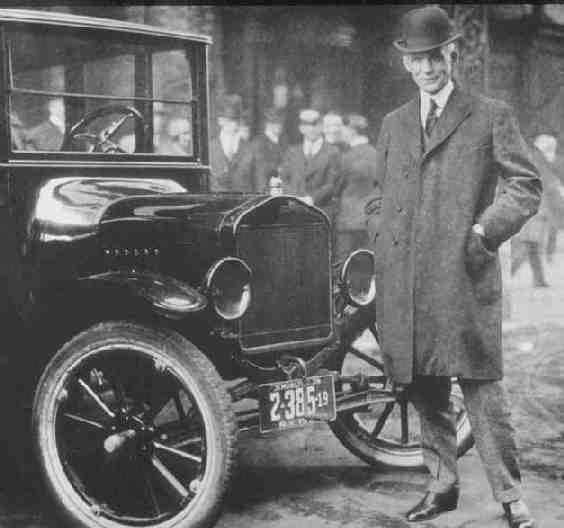
Babbitt and More identified themselves as fiercely right-wing.  Babbitt’s political testament, his 1924 book Democracy and Leadership, was widely criticised as being all leadership and no democracy; More, as editor of The Nation, responded to the Ludlow massacre by proclaiming that “To the civilized man, the rights of property are more important than the right to life” (in an essay collected in Aristocracy and Justice, page 136.)   Yet I would argue that the emphasis Babbitt and More place on tradition, gentility, transcendental belief, and historical continuity puts them in need of a thoroughgoing critique of capitalism.  These things simply cannot coexist with the demands of the modern market economy.  Tradition counts for nothing against the new new thing; self-restraint and well-curated taste count for nothing against the tides of fashion; transcendental belief counts for nothing against the need to appeal to youthful demographics; historical continuity counts for nothing against the need to impress the shareholders today.  Babbitt acknowledged as much on several occasions.  For example, in Democracy and Leadership Babbitt quoted Henry Ford’s remark that the prohibition of alcohol was a necessary consequence of mass production, that “Liquor had to go out when the Model T came in.”  Babbitt’s responded was that Americans had become so craven a people that they would degrade the Constitution for the sake of mere things. 

Another article in this issue brought Babbitt and More to my mind.  That was William Deresiewicz’ essay about Tolstoy.  Deresiewicz uses a construction that Babbitt and More labored to avoid, what might be called the “Academic We.”  There is of course the Royal “We“, first-person plural pronouns monarchs use to refer to themselves when they are speaking in their official capacity.  And there is the Editorial “We,”  which editorialists use when expressing the official position of their publications.  In a case of the Academic “We,” a college professor uses first person plural pronouns when characterizing the current state of knowledge or opinion among some unspecified group of people.    Deresiewicz’ essay includes a splendid example.  Tolstoy’s later writings are:

Not a body of work the contemporary reader is apt to find congenial. Leave aside the religiosity. We have learned to distrust the story with a message, any message. We disdain the writer who comes to us bearing ideas or ideologies. We don’t like a moralizer, don’t want to be preached at, don’t believe in answers, in endings. We put our faith in ambiguity, complexity, irresolution, doubt. Life isn’t that simple, we think. It doesn’t happen that way. But that is exactly what Tolstoy believes.

The Academic “We,” even when I hear myself using it, always leaves me with a desire to quote Oscar Brown, Junior’s song about the Lone Ranger and Tonto.  “What do you mean ‘we,’ white man?”  Who is this “contemporary reader” who has learned all these attitudes?  Deresiewicz’ description fits my habitual impulses fairly well, I admit.  But that may just be because living among markets and machines has inclined me to disbelieve in narrative.  Perhaps there are “answers” in the world.  Perhaps there are “endings” to be reached. 

(more…)

The Nation, 22 February 2010

Some left-of-center readers may become impatient with this blog from time to time.  Quite often, I post notes about The American Conservative or Chronicles in which I quote pieces in these right-wing publications calling for a return to a conservatism that, they tell us, once existed in the USA, a conservatism that was critical of capitalism and of militarism.  Surely, readers may ask, there’s a reason why the left came to have a near-monopoly on incisive critiques of these things.  Neither nostalgia for a precapitalist order in which the peasantry could thrive nor an appeal to an imaginary sort of “free enterprise” in which the owners of capital disdain corporatist state intervention and seek advantage over their competitors only in the open market can offer a useful economic policy for the world in which we actually find ourselves.  Nor can any amount of regional resentment or localist suspicion of the government in Washington immunize the public against the siren song of nationalism, and the lure of big defense contracts coming to town.  Only a politics that is willing to put social equality front and center can really challenge the power elite and remake America as a humane, just society. 

So it may be.  But the idea of a better Right, a conservatism that once graced American life with its principled opposition to the dehumanizing aspects of mass society and the modern state, does make an appearance in this issue of The Nation.  Alexander Cockburn, himself a frequent contributor to Chronicles, quotes the cover story of the current American Conservative, in which its publisher analyzes crime statistics indicating that, contrary to popular opinion, undocumented workers are not in fact more likely to commit crimes than are other residents of the USA.  The “Noted” column begins with a paean to, of all people, the late Chief Justice of the United States, William Rehnquist.  I have to quote it in full, since no abridgement would sound like anything that could possibly have appeared in The Nation:

WHAT WOULD REHNQUIST DO? The Supreme Court’s gift of constitutionally protected political speech to paper entities in the Citizens United case would have elicited a vigorous dissent from the late Chief Justice William Rehnquist for a simple and compelling reason: he was a conservative. As a conservative, he would have agreed with dissenting Justice John Paul Stevens that the decision “represents a radical change in the law.” This is clear from Rehnquist’s mostly forgotten dissent in a 1978 case, First National Bank of Boston v. Bellotti.

(more…)