The Nation, 8 December 2008

The Fall Books Issue“- it seems a bit late this year… but worth the wait.

Torie Osborn wonders how California could have passed anti-same sex marriage Proposition 8.  Her view is that No on 8 forces neglected Los Angeles County, despite decades of experience showing that antigay measures win or lose based on the margins in that county.  She also has some harsh words for the Obama campaign for allowing voters to believe (mistakenly!) that Mr O backed Proposition 8. 

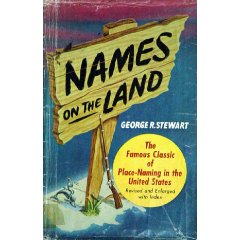
Christine Smallwood reviews a new edition of George R. Stewart’s 1945 book Names on the Land.  A collection of anecdotes about how various places in the USA got their names, this highly regarded work inspires Smallwood’s unreserved praise.  She goes on at some length about Stewart’s other works, including environmental fiction like Earth Abides, “the first American postapocalyptic thriller,” and Ordeal by Hunger, a novelization of the Donner Party.  She tells us that Names on the Land was Stewart’s own favorite of his books.  It raises no less a question than “what is America?,” Smallwood says.  And answers that question: “Not the leader of the Free World and not the scourge of the world, but a history of settlement.”  This answer would hardly have been extraordinary in 1945.  The book does sound interesting.   The cover of the first edition illustrates Smallwood’s review, and is reproduced below.

0189b2c008a04d1d62183010__aa240__l

(more…)

Chronicles, December 2008

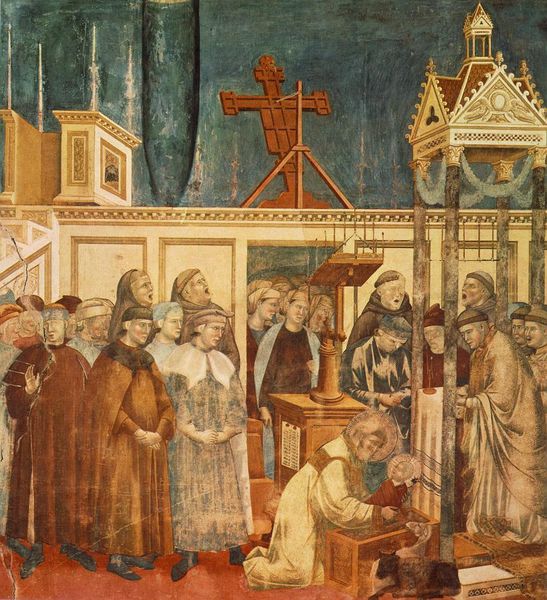
Giotto painting reproduced on the cover of this issue


Giotto painting reproduced on the cover of this issue

(image)

Three articles about Christmas in this issue of Chronicles.  Editor Thomas Fleming, who I seem to recall occasionally describes himself as having been raised an atheist, then converted to arch-traditional Roman Catholicism, describes in the third person the attitudes of an unnamed man who was raised anatheist, then converted to arch-traditional Roman Catholicism.  As a boy, this anonymous person disliked Christmas.  The months-long buildup, the morning moments unwrapping toys that could never live up to the expectations that buildup engendered, the endless anticlimax of the day as of adult relatives hung on and bored him with their chatter.  Far better Halloween, an ordinary day that ended with a burst of total anarchy.  As he grew, he preferred the moral atmosphere of Halloween to that of Christmas.  The Christians he knew pretended that death was nothing to be afraid of and embedded that pretense into the holiday, while Halloween began by taking the cold terror of death and everything touching death for granted.  Evidently this preference remains with him in his religious phase, as the terror of death gives Easter its power.

Contributor Thomas Piatak defends Christmas, not against the severe theology of Fleming, but against opponents of public piety at Christmastime.  Apparently it was Piatak who coined the phrase “The War Against Christmas.”  While Fleming inveighs against a religious Christmas that soft-pedals or denies the hard truths of lifeand thus denatures Christianity, Piatak fears a secular Xmas that is “devoid of religious or cultural significance or indeed of beauty, with nothing left but multiculturalist pap and tawdry sentimentalism.”  As examples of this creeping insipidity, Piatak cites a case in Columbus, Ohio in 2003, when the school district banned a performance of Handel’s Messiah unless equal time were given to “Frosty the Snowman” and “Jingle Bells.” 

Columnist Aaron D. Wolf has little use for the idea of a secular “War Against Christmas,” though he does agree that such a thing exists.  He tells us of wishing a store clerk “Merry Christmas.”  “She looks directly at me, smiling, eyes narrowed, and nods.  “Yes.  Merry CHRISTMAS!”… It wasn’t a bright, elven (sic) “Yes!  Merry Christmas!”  She spoke with a knowing, in your face, liberal America air of defiance.”  Later: “That Merry Christmas seemed more like a countercultural protest statement, that kind that says, yeah, you’re one of us, or yeah, I’m one of you.  One of you… what?  Believers in Christ Jesus?  … Or perhaps it was one of you proud white Americans.”  Wolf’s suspicion that many of those most exercised about the “War Against Christmas” are in fact not very much devoted to Christ at all, but are only interested in sticking it to educated secularists, gains verisimilitude from the high December sales of mugs bearing the slogan “Don’t be a Pinhead.”  

(more…)

Funny Times, December 2008

currentcover_small0812I’ve never objected to corny jokes, and this issue includes quite a few.  The corniest are to be found in Richard Lederer‘s “Blessed be the Children,” a collection drawn from his “Revenge of Anguished English” of startling things children have said about religious topics.  Some of the funniest:

A teacher was explaining the story of Noah and his ark to her young students.  She asked the class if they thought Noah did a lot of fishing during the Flood.  “No,” said a bright boy, “he only had two worms.” 

A woman was trying hard to get the catsup to come out of the jar.  During her struggle the phone rang so she asked her four year old daughter to answer it.  “It’s the minister, Mommy,” the child said to her mother.  Then she added, “Mommy can’t come to the phone right now.  She’s hitting the bottle.”

A friend of mine took her four year old daughter to a baptismal service at her church.  Later that night, her daughter took all of her dolls into the bathtub with her and held her own “baptism.”  As she dunked each doll under the water, she repeated, “Now I baptize you in the name of the Father, the Son, and hold your nose.” 

These may be true stories, they may not be.  It scarcely matters.  One case where it does make a difference is the first item on the list:

A little boy’s prayer: “Dear God, please take care of my daddy and my mommy and my sister and my brother and my doggy and me.  Oh, and please take care of yourself, God.  If anything happens to you, we’re gonnabe in big trouble.”

If you actually heard a little boy saying this prayer, it would be very funny.  But it sounds so much like a joke a preacher would make up to open a sermon that the phoniness gets in the way of the laugh. 

Jon Winokur’s “Curmudgeon” column has some good quotes on the topic of work.  Robert Benchley: “Anyone can do any amount of work, provided it isn’t the work he is supposed to bedoing at the moment.”  Benchley made this claim decades ago, but in the last 12 years the world’s bloggers have established the truth of it beyond doubt.  Don Marquis: “When a man tells you that he got rich through hard work, ask him ‘Whose?'”  Well, ask away- I doubt you’ll get much of an answer.  Robert Frost: “By working faithfully eight hours a day, you may eventually get to be the boss and work twelve hours a day.”  Lane Kirkland: “If hard work were such a wonderful thing, surely the rich would have kept it all to themselves.” 

(more…)

The Nation, 1 December 2008

Nick Turse looks into American forces’ conduct of the war in Vietnam’s Mekong Delta in the period from 1 December 1968 to 1 April 1969.  Turse concludes that the facts were much worse than has generally been known in the USA.  Civilians were targeted more systematically than has been acknowledged, more of them were killed than has been acknowledged, and a coverup of the some of the worst atrocities continued for decades.  Turse quotes a contemporary letter signed “Concerned Sergeant.”  The otherwise anonymous soldier denounced the operations to which he was attached and estimated that the rate at which unarmed civilians were being killed amounted to “a My Lai a month.” 

Ever since Studs Terkel died, The Nation has been memorializing him.  In this issue, his editor, Andre Schiffrin, remembers their attempt to put together an oral history on the topic of power.  The project failed because none of their prospective subjects would even admit that he held power, let alone give insight into what it was like to use it.  That’s hardly surprising when Schiffrin describes the key to Terkel’s work.  His subjects talked to him, Schiffrin explains, because “he approached people with utter respect.  Those he talked to immediately felt this and poured their hearts out.”  Powerful people usually seem to expect to be approached with utter respect, if not indeed with abject servility.  That so many people from so many backgrounds found it a shock to be approached with respect is a sad commentary on our society. 

Hoosiers and others marveling at the fact that Indiana voted for Obama will enjoy Mark Hertsgaard’s piece about Luke Lefever, a plumber (a real one!) who volunteered for the Obama campaign in Elkhart. 

Siddhartha Deb reviews several novels by Elias Khoury.  At first, Deb praises the “fragmented” style of Khoury’s work as suitable to his native Lebanon, but at the end he suggests that the time may have come for a smoother style of writing and, apparently, a more settled view of Lebanese identity.

This brings us to Barry Schwabsky’s review of Art Worlds by Howard S. Becker and Seven Days in the Art World by Sarah Thornton.   Becker’s newly reprinted 1982 book is a sociological study of various milieux from which products came that could be called “art,” while Thornton, also a sociologist, spent her time in “an art world that claims the right to call itself the art world.”  Schwabsky puts the question:

In the sociologist’s art world, hierarchies, rankings, and orders of distinction proliferate.  Status and reputation are all, and questions about them abound.  Why does the seemingly kitschy work of Jeff Koons hang in great museums around the world while the equally cheesy paintings of Thomas Kinkade would never be considered?… How do conflicting views on the value of different kinds of artworks jell into a rough and shifting consensus about the boundaries of what will be considered art in the first place?

That’s quite a weighty question.  As for the Koons/ Kinkade riddle, my suspicion is that perspective drawing and the rest of the conventional skills of representational art are not really all that difficult to master.  Some years ago I read an essay by Eric Gill called “Art in Education: Abolish Art and Teach Drawing,” in which he argued that given a chance virtually any child could and would learn these techniques.  I haven’t seen any scientific work testing this hypothesis, but it doesn’t seem fantastic to me to think that if all children were introduced to art in the same way that, let’s say, Thomas Kinkade was, that some large percentage of the population would grow up to paint pictures very much like his.  If that is so, then the problem with Kinkade isn’t that he’s cheesy, but just that they are nothing special.  If a collector wants to attain a high rank, s/he can hardly buy paintings that may be very pleasant but that could be equalled by, let’s say, a third of the adult population. 

(more…)

The American Conservative, 17 November 2008

In a used book store years ago, I bought some old issues, circa 1965, of National Review.  They weren’t all that interesting on their own merits.  What stuck in my mind about them was the sadness that ran through them.  Each article seemed to be a form of mourning for a kind of politics that was no longer possible, for a kind of country that no longer existed.

That’s very much the feeling I got from this issue of The American Conservative.  The cover features a checklist of G. W. Bush’s “Missions Accomplished”: “Start a war (or two); Shred Constitution; Crash economy” etc, etc.  Inside is a five article retrospective on the horrors of the Bush-Cheney administration (including articles by our old friends Alexander Cockburn and Allen Carlson.)  As Bush and company prepare to leave office, these articles take on a strangely distant sound.

Michael Brendan Daugherty looks at the results of California’s Proposition 8 and concludes that it is likely to be the last victory that he and his fellow opponents of same-sex marriage will be likely to celebrate.  Pointing out that Proposition 8 and similar measures have passed only because so many voters aged over 65 backed them, Daugherty claims that “Absent an incredible shift in attitudes, same sex marriage will soon command majority support.”

David Gordon gives a favorable review to James Kalb’s The Tyranny of Liberalism.  Apparently Kalb defines “liberalism” as “the rejection of moral authorities that transcend human purposes,” and from this definition lays great mischief at the feet of the liberal tradition.  I’ve read several interesting articles by Kalb, for example in the journal Telos, and have gone to his blog in hopes of finding more like those articles.  But I must say I’ve been disappointed.  His editors must add a lot of value to his work- the blog usually includes several overly abstract defenses of the Roman Catholic faith that Kalb has adopted, interspersed with current affairs commentary from what it might be charitable to call an anti-Zionist perspective.

I’m getting to be quite fond of their backpage columnist, Bill Kauffman.  This time around Kauffman remembers novelist John Gardner, who like him lived in Batavia, New York.  After describing the lengths to which he and his fellow Batavians have gone to keep the memory of Gardner and his works alive, Kauffman interjects, “You know what?  Gardner is not even among my hundred favorite American novelists.  But he is ours.  That is enough.”  When I was a teenager, I read Gardner’s The Art of Fiction.  I remember that it was pleasant to read, that’s all I do remember of it.

The Nation, 24 November 2008

She doesn't look like this anymore(image)


This issue is mostly topical and therefore unlikely to bring me back for a second look.  I always enjoy Stuart Klawans’ movie reviews, so I’ll make note of his contributions here on A Christmas Tale and Synecdoche, New York.  Catherine Deneuve is in A Christmas Tale, so I’ve included the image above (she doesn’t look like that anymore, but this is the most interesting photo of her I could find) (not counting nudes, of course.)

The Nation, 17 November 2008

This issue includes a note by Robert Pollin about the late economist Hyman Minsky, noting a recent vogue for Minsky and praising him as “his generation’s most insightful analyst of financial markets and the causes of financial crises.”   So he may have been, but Pollin doesn’t show why.  I suspect he would have needed more space to do that.  For example, Pollin writes that for Minsky, “financial crises and recessions actually serve a purpose in the operations of a free-market economy… Minsky’s point is that without crises, a free-market economy has no way of discouraging investors’ natural proclivities towards ever greater risks in pursuit of ever higher profits.”  Minsky may have had original ideas on this point, but this statement doesn’t bring them out- what Pollin has given as “Minsky’s point” is precisely the Austrian economists’ theory of malinvestment.  Indeed, what Pollin presents as “another of Minsky’s major insights- that in the absence of a complimentary regulatory system, the effectiveness of bailouts will diminish over time”- is a statement of another aspect of the Austrian theory of malinvestment, that regulation and subsidy imply one another.  I’m willing to believe that Minsky had original insights.  Perhaps Pollin made it clear how Minsky advanced on the work of Hayek & co. in the article he submitted and the Nation‘s editors cut the key parts for space.  What sticks in my mind is Pollin’s closing quote from Minsky’s 1986 book Stabilizing an Unstable Economy,  “Only an economics that is critical of capitalism can be a guide to successful policy for capitalism.”

Ange Mlinko reviews Susan Stewart’s poetry collection, Red Rover, praising the humanity of Stewart’s dirge for the Amish girls killed in the October 2006 massacre at their schoolhouse near Lancaster, Pennsylvania, the austere simplicity of her nature poems, and her commitment to slowness.  Mlinko quotes from Sterwart’s poem “The Forest”; Stewart posted “The Forest” in full at the Academy of American Poets website, and it’s worth reading a few times.

The American Conservative, 3 November 2008

The cover of this issue features caricatures of Senators John McCain and Barack Obama, advertising 18 short pieces by various contributors explaining how they reacted to the presence of that pair as candidates for US president.  Of those 18, 4 expressed support for Obama, 3 for McCain, 2 for Constitution Party nominee Chuck Baldwin, 2 for Libertarian Party nominee Bob Barr, 1 each for non-candidates Ward Connerly and Ron Paul, and the remaining 5 backed no one

John Schwenkler reports from the Middlebury Institute’s Third North American Secessionist Conference in Manchester, New Hampshire.  Headed by old-time New Left leader Kirkpatrick Sale, the Middlebury Institute gives equal footing to far left groups like the Second Vermont Republic and far right groups like the League of the South, much to the dismay of bien-pensant liberals.  Sale and company argue that “the so-called American Revolution… was a war of secession, not a revolt” and that separatism has a long history in American history, a history reaching far beyond the late unpleasantness between the states.  Schwenkler quotes Emory University philosopher Donald Livingston, a scholar of the Scottish Enlightenment who has apparently turned in recent years to Aristotle’s Politics and its emphasis on the proper scale of human communities.  Aristotle might have argued that the United States is simply too big to do any good.  Aristotle followed Plato in his belief that there was an appropriate size for a human society, that too small a group would be doomed to perpetual poverty while too large a group would lack any real bond of community.  This focus on the need for human communities to be built on a human scale has been one of the recurring themes in political theory ever since.  Because Livingston has spoken harsh words against Abraham Lincoln and the centralization of power in Washington that followed the Civil War, he has occasionally been smeared as a racist. 

Austin Bramwell argues that conservatives would be better off if there were no conservative political movement.  One may be tempted to add that in this they are like everyone else.  Bramwell’s claim is that what conservative intellectuals have to offer is something of value to independent minded individuals, but useless as a battle cry for partisans.  As examples of the kind of conservative intellectuals he has in mind, Bramwell offers Joseph Schumpeter, Jane Jacobs, Tom Wolfe, Jacques Barzun, Noam Chomsky, E. O Wilson, and Steven Pinker.  Bramwell classifies Schumpeter as conservative for precisely the reason so many on the right are uncomfortable with him today, his support for a “semi-feudal, mixed constitution” that would act to temper capitalism.  Jacobs self-identification as a leftist does not trouble Bramwell; her focus on the need for society to be constituted on a human scale and her opposition to centralized planning put her in his camp.  Chomsky, Wilson, and Pinker make the list because of the defenses each has offered for the idea that human behavior has biological bases that social planning cannot overwrite.  Indeed, Bramwell turns Chomsky’s ceaseless denunciations of US foreign policy into a conservative credential by pointing out that “Chomsky describes his politics as an attack on social engineering as he perceives it.” 

Howard Anglin reviews Marilynn Robinson’s novel Home, declaring that “Without artists like Robinson, without books like Home and the institutions they celebrate, our civilization cannot last long… If Marilynn Robinson is a liberal, then America needs more liberals.”  Considering that the review opens by quoting Robinson’s 2004 statement that “I am myself a liberal,” this last sentence would seem rather odd in a magazine called The American Conservative.  The rest of the quote (from her 2004 essay “The Tyranny of Petty Coercion” ) shows that she is about as conservative as Noam Chomsky and Kirkpatrick Sale:

I am myself a liberal.  By that I mean I believe that society exists to nurture and liberate the human spirit, and that large-mindedness and openhandedness are the means by which these things are to be accomplished.  I am not ideological.

(more…)

The Nation, 10 November 2008

As you would expect from its cover date, this issue was devoted primarily to the 2008 presidential election.  As that event recedes into the past, I find it hard to imagine myself going back to re-read any articles about it.  Perhaps I may wake up some morning and find it impossible to believe that it ever really happened, and may want to look up this issue as proof that it did. 

What I want to note now is a review essay by Moustafa Bayoumi.  Bayoumi treats three books, Mirror of the Arab World: Lebanon in Conflict, by Sandra Mackey; Artillery of Heaven: American Missionaries and the Failed Conversion of the Middle East, by Ussama Makdisi; and Origins: A Memoir by Amin Maalouf.  Bayoumi aligns Mackey’s book with “a budding movement on anthropology’s right wing.”  Thinkers associated with this movement look at Arab societies and see one institution as paramount, the tribe.  Bayoumi cites Philip Carl Salzman, who argues (in Bayoumi’s paraphrase) “that Arabs, universally and throughout history, organize their societies along a series of ‘nested’ relationships- family, lineage, clan, tribe, confederacy, sect, and religion- with each group larger than the preceding one.  Indeed, Islam, on this account, postdates tribalism; with its ability to magnify the difference between believer and nonbeliever, it’s simply the largest tribe of all.”  The tribalist school has had great influence in recent US policy in the Middle East; a 2003 Brookings Institution report on Iraqi tribalism (“The Iraqi Tribes and the Post-Saddam System,” Brookings Iraq Memo #18, 8 July 2003) has apparently served as one of the blueprints for US occupation policy in Iraq.   Inasmuch as, according to Bayoumi, “tribalist theory presumes that tribes always impede the growth of the state,” the influence of the tribalist school over Iraq’s occupiers may explain why so little appears to have been done in the last five and a half years to develop a viable state in Iraq.

(more…)

The Peace Testimony

I read an article in Quaker Life Magazine’s September/October 2008 issue called Renewing the Quaker Testimony of Peace.  The article was written by long time world peace worker Landrum Boling.  It is an excerpt from a speech he made that can be found on fum.org.  The article starts in true Quaker fashion by calling for self reflection.  “Who are we?  Where are we going?  What are our basic values and purposes?  What are our ultimate goals?  What are our most important daily interests and responsibilities?  What are the real guidelines, spoken and unspoken, by which we live?  He writes that, “we are called to search for new and better ways, strategies, processes and procedures by which to work more effectively towards achieving the highest purposes that inspire us.”  He uses reflection along with question when thinking about, “Renewing the Quaker Testimony on peace.”  Next, he cautions Quakers against being prideful about their long standing commitment to peace.  He writes.  “The doctrine of nonviolent resistance to war and to other manifestations of hatred, oppression and violence, have been taken up by both evangelical and mainstreams Christians, by Jews and by Muslims.  It is widely supported by Buddhists and Hindus.  Gandhi, we remember, was a devout practicing Hindu.”  He ends the article with the biblical points that Quakers use for guidance with the issue of peace.