Predictability and humor

Some things in life are very predictable, other things are not at all predictable.  When something that we had expected to be unpredictable turns out to be very predictable, sometimes we laugh.  Lenore Skenazy’s column “Obama, Haiti, and Lard” in the March 2010 Funny Times points out that some stories in the news have endings that are a lot easier to guess than the people who decide what goes on the front page want you to think.  For example, what effect will the January 2010 earthquake in Haiti have on attitudes toward that country in the USA?  Well, we know the answer to that already.  At first we’ll all be very concerned and agree that we should stay focused on Haiti.  “Except that the next time the media actually DO focus on Haiti, it’ll be in late December, when they put out their ‘Biggest Stories of 2010’ lists, at which point we’ll think ‘The earthquake!  Wow!  Was it really THIS year?”  That cycle of shock, compassion, fatigue, and nostalgia is as predictable as what American school systems will ultimately do with the  information they are gathering from the standardized tests they’re always giving students.  They will decide to “NOT use standardized tests.  They’ll use student pantomimes or clay figurines or something, but not standardized tests, which will be shown to be not only inaccurate but harmful.” 

The same issue contains a couple of columns and lots of cartoons about Scott Brown, recently elected by Massachusetts as America’s newest and nakedest Republican US Senator.  In addition to the front cover, reproduced above, there’s the back cover, on which Jen Sorenson illustrates the way in which Brown’s victory was utterly predictable.  In one of his cartoons, Matt Bors suggests that Edward Kennedy should have been able to predict that a Republican might succeed him if he died in office.     

Dave Maleckar’s 100 Word Rant opens: “Let’s skip right past the hybrid and electric cars and start believing in magical ones.  The only way to make a green automobile is with a coat of paint.”  The point seems to be the only reason we think the auto industry might surprise us with an environmentally sound product is that we are dominated by wishful thinking.  Look at the facts, and you can predict that their future products  will be as unsustainable as their past ones. 

Curmudgeon has some funny lines about the rottenness of the human race in general.  Mark Twain defined “Man” as “A creature made at the end of the week’s work, when God was tired.”  Oscar Wilde was a bit less charitable to the Almighty, sharing his suspicion “that God in creating man somewhat overestimated His ability.”  The same thought has been phrased in secular terms; Nietzsche said that “The Earth has a skin and that skin has diseases; one of its diseases is called Man.”  I think Edward O. Wilson’s quote qualifies as secular, though he does sound like a Calvinist preacher declaiming on the Utter Depravity of Man: “If all mankind were to disappear, the  world would regenerate back to the rich state of equilibrium that existed ten thousand years ago.  If insects were to vanish, the environment would collapse into chaos.”  Holbrook Jackson wondered why Nature gave rise to us.  “Was it to show that She is big enough to make mistakes, or was it pure ignorance?”  Samuel Johnson declared “I hate mankind, for I think myself one of the best of them, and I know how bad I am.”

Left-wing conservatism

I’ve long been curious about the phrase “left-wing conservative.”   It’s a label that’s been applied to Christopher Lasch, for example.  And Jacques Delors once declared that “We have to struggle against the conservatives from all sides, not only the right-wingers, but also the left-wing conservatives.”  Though I’ve never gotten around to any of Christopher Lasch’s writings, I’ve always been under the impression that they were well worth reading.  And of course, any enemy of Jacques Delors is a friend of mine.  So one of my goals in life is to get a clear understanding of what the phrase “left-wing conservatism” might mean and to live up to that idea. 

In the 1 March issue of The Nation, Rebecca Solnit makes some general remarks that might serve as a definition of of left-wing conservatism.  Writing of the traditional Mardi Gras celebrations in New Orleans, Solnit grants that for some participants those celebrations might reinforce the privileged positions they enjoy in the existing social order.  But even the conservative aspects of Mardi Gras don’t keep it from being something leftists should embrace.  Considering the ways that the African-American “Indians” and other groups use Mardi Gras to assert power against the local elites, Solnit writes:

The Mardi Gras Indians head out on their own without announced routes on Mardi Gras and a few other days every year, but making the costumes and maintaining the communities lasts all year. This is probably the very essence of Mardi Gras and all Carnival as I understand it: maintaining community.

Now, I believe that community is a subversive force. To understand what I mean by subversive, let’s go back to the defeatists. They, like much of our society, speak a language in which everything but a pie-in-the-sky kind of victory is defeat, in which everything that isn’t black is white, in which if you haven’t won, you’ve surely lost. If you asked them, they’d say we live in a capitalist society. In fact, we live in an officially capitalist society, but what prevents that force from destroying all of us is the social aid and pleasure we all participate in: parents don’t charge their children for raising them; friends do things for each other, starting with listening without invoicing for billable hours; nurses and mechanics and everyone in between does a better job than money can pay for for beautiful reasons all their own; people volunteer to do something as specific as read to a blind person or as general as change the world. Our supposedly capitalist society is seething with anticapitalist energy, affection and joy, which is why most of us have survived the official bleakness. In other words, that’s not all there is to our system. Our society is more than and other than capitalist in a lot of ways.

To say that Carnival reconciles us to the status quo is to say that it affirms the world as it is. Now, for people in Rex, their Mardi Gras probably reinforces their world, but for those in some of the other krewes and rites, the same is true, and the reinforcement of the survival of the mutual aid societies that emerged after slavery is not reaffirmation of capitalism, domination, etc. It reinforces, in other words, their ongoing survival of capitalism and racism. Carnival also reinforces joy and ownership of public space and a kind of confidence in coexisting with a wide array of strangers. New Orleans itself is the place where, unlike the rest of the United States, slaves were not so cut off from chances to gather and chances to maintain their traditions. Jazz and jazz funerals, second-line parades and more derive in many ways from this subversive remnant of a non-European tradition. They didn’t bow down. This is something to celebrate, and it is what is celebrated by some of the people in the streets.

To me, these paragraphs make sense of the revolutionary rhetoric and destabilizing policies that have long characterized the American Right.   For Marx and Engels, the wild churning of capitalism was proof that the system would eventually shake itself apart, generating a proletarian uprising and ushering in communism.  For Newt Gingrich and Mitt Romney, that same wild churning is the proof that capitalism is destined to reign forever and ever. 

And Gingrich and Romney may well be right.  A labor market in which the highest rewards are reserved for people who are willing to move frequently and move across continents will tend to produce a large population of atomized individuals, unconnected to any community of equals, dependent on their employers not only for their income, but also for their identity.  The flux and churn of hypercapitalism dissolve every relationship not based on monetary exchange, smashing every social refuge in which working people might look for shelter.  Isolated from each other, those who do not own capital are helpless to resist those who do. 

Solnit’s words about tradition and community imply a defense, not only of Mardi Gras and of Carnival, but also of narrative.  A tradition allows us to feel connected to people at other times and in other places because we are all part of the same story; a community takes people who share this sense of connectedness and puts them to work together.  Hypercapitalism drains narrative from life.  Narrative concepts like tradition, community, meaning, endings, seem artificial to people whose lives are largely bounded by markets and machines.  Markets fluctuate, and may in time dissolve.  Machines operate, and may eventually stop.  However, neither system reaches a conclusion.   The forces that drive them into action at one moment are the same forces that stop them at another moment.  To the extent that my life is bounded by markets and machines, therefore, narrative seems to me like an artificial convention imposed on experience.  But how do we know that history is not in some real sense a grand narrative, that our lives are not in some real sense narratives nested inside it?  I can’t see why one of these views should bear a heavier burden of proof than the other.     

Perhaps “left-wing conservatism” is not an oxymoron, but a tautology.  If we are to resist the power elite, whether to overthrow them or simply to put limits to the power they wield over the rest of us, we cannot do so as solitary individuals, but only as communities.  Communities need cultivating and defending.  It takes multiple generations to cultivate and defend a community; so, community is an inherently conservative value.  If leftism means opposition to the power elite, it therefore is an inherently conservative project. 

One conservative thinker who would have reacted with horror if he had ever been described as a leftist was Irving Babbitt (1865-1933.)  Babbitt taught French at Harvard from 1894 until his death.  His name is often mentioned these days by American academics of a traditionalist conservative bent.  Babbitt and his friend Paul Elmer More were  the founders and guiding lights of the “New Humanism,” a school of thought that made a splash in 1930 when it protested against the attempt of another, quite different, group of American thinkers to appropriate the same label. 

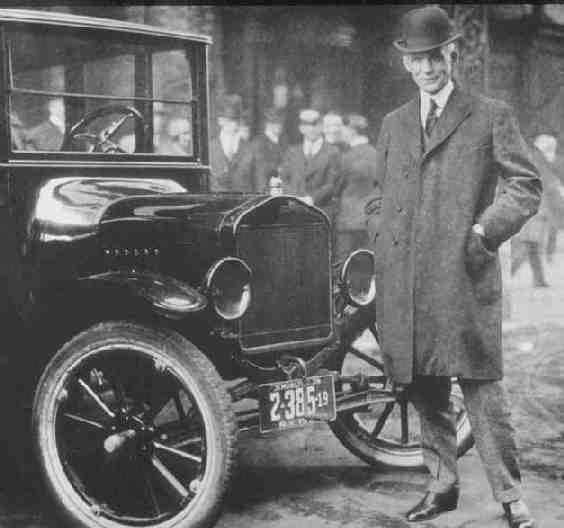
Babbitt and More identified themselves as fiercely right-wing.  Babbitt’s political testament, his 1924 book Democracy and Leadership, was widely criticised as being all leadership and no democracy; More, as editor of The Nation, responded to the Ludlow massacre by proclaiming that “To the civilized man, the rights of property are more important than the right to life” (in an essay collected in Aristocracy and Justice, page 136.)   Yet I would argue that the emphasis Babbitt and More place on tradition, gentility, transcendental belief, and historical continuity puts them in need of a thoroughgoing critique of capitalism.  These things simply cannot coexist with the demands of the modern market economy.  Tradition counts for nothing against the new new thing; self-restraint and well-curated taste count for nothing against the tides of fashion; transcendental belief counts for nothing against the need to appeal to youthful demographics; historical continuity counts for nothing against the need to impress the shareholders today.  Babbitt acknowledged as much on several occasions.  For example, in Democracy and Leadership Babbitt quoted Henry Ford’s remark that the prohibition of alcohol was a necessary consequence of mass production, that “Liquor had to go out when the Model T came in.”  Babbitt’s responded was that Americans had become so craven a people that they would degrade the Constitution for the sake of mere things. 

Another article in this issue brought Babbitt and More to my mind.  That was William Deresiewicz’ essay about Tolstoy.  Deresiewicz uses a construction that Babbitt and More labored to avoid, what might be called the “Academic We.”  There is of course the Royal “We“, first-person plural pronouns monarchs use to refer to themselves when they are speaking in their official capacity.  And there is the Editorial “We,”  which editorialists use when expressing the official position of their publications.  In a case of the Academic “We,” a college professor uses first person plural pronouns when characterizing the current state of knowledge or opinion among some unspecified group of people.    Deresiewicz’ essay includes a splendid example.  Tolstoy’s later writings are:

Not a body of work the contemporary reader is apt to find congenial. Leave aside the religiosity. We have learned to distrust the story with a message, any message. We disdain the writer who comes to us bearing ideas or ideologies. We don’t like a moralizer, don’t want to be preached at, don’t believe in answers, in endings. We put our faith in ambiguity, complexity, irresolution, doubt. Life isn’t that simple, we think. It doesn’t happen that way. But that is exactly what Tolstoy believes.

The Academic “We,” even when I hear myself using it, always leaves me with a desire to quote Oscar Brown, Junior’s song about the Lone Ranger and Tonto.  “What do you mean ‘we,’ white man?”  Who is this “contemporary reader” who has learned all these attitudes?  Deresiewicz’ description fits my habitual impulses fairly well, I admit.  But that may just be because living among markets and machines has inclined me to disbelieve in narrative.  Perhaps there are “answers” in the world.  Perhaps there are “endings” to be reached. 

(more…)

A great artificial man

In the introduction to Leviathan, English thinker Thomas Hobbes famously compared the state to a “great artificial man, or monster, composed of other men, with a life that might be traced from its generation under the pressure of human needs to its dissolution through civil strife proceeding from human passions.”  The nerves and sinews of this artificial man, as he is constituted in modern society, are the laws and regulations of a rationalized bureaucracy.  He can function because he acts in accord with these laws and regulations as predictably as automata made of metal follow the algorithms of their programming.  As a being made of rules, the state interacts most smoothly with other beings made of rules.  Whenever possible, the state will tend to reduce everything it touches to a body like itself, a body defined by rules.  

Where the modern state has been established longest, bureaucratization respects the fewest boundaries.   The March 2010 issue of Chronicles carries a piece by a man from Hobbes’ own homeland, Thomas McMahon.  McMahon writes of the policies which the New Labour governments led by Tony Blair and Gordon Brown have adopted in the name of protecting children from sex offenders.  After the 2002 killing of 10 year old girls Jessica Chapman and Holly Wells, the government introduced plans to require everyone in the United Kingdom who comes “into regular contact with children in any semioffical capacity to register with a national database.”  As McMahon points out, “‘Regular’ could mean mean as little as a few times per year, and ‘semiofficial’ covers everyone from cleaners at sports facilities to a parent who gives lifts to a group of kids in the morning.  Anyone wishing to help out with after-school activities would be required to register.”  How is this registry to be compiled?  McMahon explains:

Upon application for membership on the list, opinions would be sought on the suitability of the candidate.  Acquaintances and workmates may be asked for their comments, internet forums and networking sites may be trawled, “lifestyles” would be examined.  Even the most baseless accusation would be recorded in perpetuity on a central state database.  There would be no investigation to determine whether the accusation was malicious.  There would be no requirement that the accusations be proven in court. 

How closely were these provisions designed to address the case of Misses Chapman and Wells?  Not at all, as it turns out; the man convicted of their murder was not an employee of their school, nor did he fill any other “semiofficial capacity” that might have brought him into contact with them.  He was, rather, the boyfriend of one of their teachers.  He happened to be alone at her house when the girls dropped in to see her.  The law does not require teachers to date only people from the approved list, and so would have done nothing to protect Jessica Chapman and Holly Wells had it been in effect in 2002. 

(more…)

Places to go when you can’t stay anywhere

None of the three pieces that I wanted to note were mentioned on the cover. 

The state of Florida has a long list of crimes that require a convict to be registered for life as a sex offender.  Registered sex offenders in the state are prohibited from being close to schools, playgrounds, and other areas where children congregate.  Some Florida towns decree that registered sex offenders must stay at least 1000 yards (914.4 meters) from such areas; most put the boundary at 2500 yards (2286m.)  Since the average town has quite a few child-friendly spaces, the consequence of these laws is that Floridian sex offenders cluster into little ghettoes.  Irina Aleksander spent some time following a man who runs a business that shepherds registered sex offenders into these ghettoes.  The man, himself a registered sex offender whose crime was watching a 19 year old girls perform a sex act on a 15 year old boy, is evidently getting pretty rich.  The neighborhoods where he send his clients tend to get very inexpensive very quickly.  He seems like a good person to know if you are a real estate developer and want to find a way to reduce startup costs for redevelopment projects in Florida…

A person who has a lot of anger might answer the question of where registered sex offenders should go by referring to another article in this issue.  A business in Switzerland has taken advantage of that country’s very lax laws on assisted suicide to offer foreigners an easy death.  Zurich has thus become the world’s capital of “suicide tourism.” 

French playwright and novelist Henry de Montherlant committed suicide in 1972.  Had he asked for assistance, one suspects he would have found no end of volunteers.  (more…)

Can the USA become a normal country again?


He wanted to to return to normalcy

I posted a “Periodicals Note” about The American Conservative‘s March issue a few weeks ago, then realized I’d never put one up for the February issue.  That’s a shame, because there was a lot of great stuff in it. 

I loved this line, a quote from Julian Sanchez of the libertarian Cato Institute: “Thus far, the approved conservative position appears to have been that Barack Obama is some kind of ruthless Stalinist with a secret plan to turn the United States into a massive gulag—but under no circumstances should there be any additional checks on his administration’s domestic spying powers.”

Ted Galen Carpenter sums up The American Conservative‘s whole worldview with the opening paragraphs of his piece titled “New War Order.”   So I’ll quote them in extenso:

For a fleeting moment 20 years ago, the United States had the chance to become a normal nation again. From World War II through the collapse of European communism in 1989, America had been in a state of perpetual war, hot or cold. But with the fall of the Berlin Wall, all of that could have changed. There were no more monsters to destroy, no Nazi war machine or global communist conspiracy. For the first time in half a century, the industrialized world was at peace.

Then in December 1989, America went to war again—this time not against Hitler or Moscow’s proxies but with Panamanian dictator Manuel Noriega. Tensions between George H.W. Bush’s administration and Noriega’s government had been mounting for some time and climaxed when a scuffle with Panamanian troops left an American military officer dead. On Dec. 20, U.S. forces moved to oust and arrest Noriega. Operation Just Cause, as the invasion was called, came less than a month after the Berlin Wall fell, and it set America on a renewed path of intervention. The prospect of reducing American military involvement in other nations’ affairs slipped away, thanks to the precedent set in Panama.

How real was the opportunity to change American foreign policy at that point? Real enough to worry the political class. Wyoming Sen. Malcolm Wallop lamented in 1989 that there was growing pressure to cut the military budget and that Congress was being overwhelmed by a “1935-style isolationism.” But the invasion of Panama signaled that Washington was not going to pursue even a slightly more restrained foreign policy.

That the U.S. would topple the government of a neighbor to the south was hardly unprecedented, of course. The United States had invaded small Caribbean and Central American countries on numerous occasions throughout the 20th century. Indeed, before the onset of Franklin Roosevelt’s Good Neighbor Policy in the 1930s, Washington routinely overthrew regimes it disliked.

During the Cold War, however, such operations always had a connection to the struggle to keep Soviet influence out of the Western Hemisphere. The CIA-orchestrated coup in Guatemala in 1954 and the military occupations of the Dominican Republic in 1965 and Grenada in 1983 all matched that description. Whatever other motives may have been involved, the Cold War provided the indispensable justification for intervention. And for all the rhetoric about democracy and human rights that U.S. presidents employed during the struggle against communism, there was no indication that Washington would later revert to the practice of coercing Latin American countries merely, in Woodrow Wilson’s infamous words, to teach those societies “to elect good men.” Thus the invasion of Panama seemed a noticeable departure. Odious though he may have been, Noriega was never a Soviet stooge.

(more…)

The Nation, 22 February 2010

Some left-of-center readers may become impatient with this blog from time to time.  Quite often, I post notes about The American Conservative or Chronicles in which I quote pieces in these right-wing publications calling for a return to a conservatism that, they tell us, once existed in the USA, a conservatism that was critical of capitalism and of militarism.  Surely, readers may ask, there’s a reason why the left came to have a near-monopoly on incisive critiques of these things.  Neither nostalgia for a precapitalist order in which the peasantry could thrive nor an appeal to an imaginary sort of “free enterprise” in which the owners of capital disdain corporatist state intervention and seek advantage over their competitors only in the open market can offer a useful economic policy for the world in which we actually find ourselves.  Nor can any amount of regional resentment or localist suspicion of the government in Washington immunize the public against the siren song of nationalism, and the lure of big defense contracts coming to town.  Only a politics that is willing to put social equality front and center can really challenge the power elite and remake America as a humane, just society. 

So it may be.  But the idea of a better Right, a conservatism that once graced American life with its principled opposition to the dehumanizing aspects of mass society and the modern state, does make an appearance in this issue of The Nation.  Alexander Cockburn, himself a frequent contributor to Chronicles, quotes the cover story of the current American Conservative, in which its publisher analyzes crime statistics indicating that, contrary to popular opinion, undocumented workers are not in fact more likely to commit crimes than are other residents of the USA.  The “Noted” column begins with a paean to, of all people, the late Chief Justice of the United States, William Rehnquist.  I have to quote it in full, since no abridgement would sound like anything that could possibly have appeared in The Nation:

WHAT WOULD REHNQUIST DO? The Supreme Court’s gift of constitutionally protected political speech to paper entities in the Citizens United case would have elicited a vigorous dissent from the late Chief Justice William Rehnquist for a simple and compelling reason: he was a conservative. As a conservative, he would have agreed with dissenting Justice John Paul Stevens that the decision “represents a radical change in the law.” This is clear from Rehnquist’s mostly forgotten dissent in a 1978 case, First National Bank of Boston v. Bellotti.

(more…)

How to avoid becoming a “faceless, slinking thing”

If only Robert A. Taft were still alive...

The March issue of The American Conservative notices a reissue of Russell Kirk’s The Political Principles of Robert A. Taft.  Taft, long the Republican Party’s leader in the US Senate, opposed US entry into the Second World War; that was a common position on the American Right before 7 December 1941.  Unlike many of the conservatives who had been reluctant to commit the USA to war with Germany, Taft continued to resist the creation of a militarized superstate after America’s would-be warlords shifted their attentions from the defeated Germany to the insurgent Communist powers.  

Taft never accepted the premises of the Cold War.  He led opposition to the formation of NATO, faulted President Truman for ignoring the Constitution and sending US troops into the Korean War without congressional authorization, argued against the doctrine of “collective security,” demanded reductions in military spending, and in 1950 braved widespread derision to predict that if the US continued the interventionist policies of the day, American troops might someday be sent to war in some preposterous place like Vietnam.  Not even Taft would dare to incite the laughter that would greet a warning that Americans might someday be sent to make war in Afghanistan. 

When Taft died, the New Bedford, Massachusetts Standard Times said that he had left a void that the Republican Party would never fill.  While there might still be a political group under that name for many years to come, it was destined to be a “faceless, slinking thing” for want of a man like Senator Taft.  I don’t suppose we can call today’s Republicans “faceless,” and their spokesmen are more likely to strut and preen than to slink, at least when the cameras are on them.  But their unfailing support of ever-larger military budgets and an ever-wider scope of authority for the government headquartered in Washington DC would have struck Taft and his coevals as the very opposite of conservative. 

You might think that cultivating a cheerful outlook and making a consistent effort to show that cheerfulness would be a sure way to avoid becoming a “faceless, slinking thing.”  But depending on what brings you to those habits, they may have the opposite effect.  Self-declared misanthrope Florence King reviews Barbara Ehrenreich’s Bright-Sided: How the Relentless Promotion of Positive Thinking Has Undermined America.   King begins with Ehrenreich’s description of her time as a breast-cancer patient, a time spent in a world slathered with pink and buried under teddy bears.  While breast-cancer professionals may intend to create a space where women can feel free to let go of burdens that might get in the way of their healing, what they have actually brought about suggests to Ehrenreich and to King not a liberation from troubles, but an exile from adult womanhood.  Relentless cutesiness infantilizes women, while “The emphasis placed on industrial-strength cheerfulness also [leads] to victim-blaming… and self-punishing guilt… Ehrenreich soon discovered that ‘dissent is a form of treason.’  One day she posted hers on an online message board and heard back ‘You need to run, not walk, to some counseling.'”  It wasn’t enough she had to be in medical treatment to be freed of cancer, she was also supposed to go into psychological treatment to be brought into conformity with the prescribed attitudes.  

When a person is diagnosed with a major disease, the number and variety of people who wield power over that person often increases dramatically.  Suddenly, one is dependent on the good conduct of health-care professionals and the goodwill of friends and relatives.  Such an experience of subjection can be quite demoralizing all by itself.  Added to the suffering and weakness that disease inflicts on the body, this subjection might be enough to teast any person’s mettle.  If one’s new masters use their power to force one to display cheerfulness amid the agonies of disease, one might well be stripped of one’s dignity, and feel like a “faceless, slinking thing.” 

I suppose people who wield power might themselves become “faceless, slinking things.”  That was the point the New Bedford editorialist was making about the post-Taft Republican Party, that under the leadership of Dwight Eisenhower that party had come to echo the Democrats’ will to make war abroad and centralize authority at home.  Traditional conservatives had traded their principled opposition to statism, and with it their dignity, for a chance to play the role of Caesar in the new drama of empire.  One statesman who seems to have thought along lines that Senator Taft might have favored was George Ball, who was undersecretary of state in the Kennedy and Johnson administrations.  A piece in this issue carries the subhed “From Vietnam to Palestine, George Ball got it right.”  Taft and Taftians may well have thought Ball was right, but did he escape the fate of becoming a “faceless, slinking thing”?  This question haunts the piece.   

(more…)

Funny Times, February 2010

Bruce Cameron tackles that hardy perennial of comedy, English cookery.  His funniest line: “Or how about my friend’s bottle of ‘brown sauce’?  Only the Brits would think ‘brown’ was a flavor.”  Suggests a whole nation of synesthesiacs

Jon Winokur’s “Curmudgeon” collects remarks about the afterlife.  A. Whitney Brown (someday he hopes to be the Whitney Brown) has said that “At an early age I decided that living a life of pious misery in the hope of going to heaven when it’s over is a lot like keeping your eyes shut all through a movie in the hopes of getting your money back at the end.”  Susan Ertz noted that “Millions long for immortality who do not know what to do with themselves on a rainy Sunday afternoon.”  Heinrich Heine must have enjoyed his life immensely; his view was that “It must require an inordinate share of vanity and presumption, too, after enjoying so much that is good and beautiful here on earth, to ask the Lord for immortality in addition to it all.” 

Andy Borowitz seems to be unhappy with the direction the health-care debate in the US Congress is taking.  He tells us that, under “CompromiseCare,” “people with no coverage will be allowed to keep their current plan”; “Medicare will be extended to 55 year olds as soon as they turn 65”; “A patient will be considered ‘pre-existing’ if he or she exists”; and “Patients will have access to natural remedies, such as death.”     

Lenore Skenazy ran a contest for updated nursery rhymes; of the entries she prints here, my favorite is from Patty Vespereny of Saint Louis, Missouri:

Little Miss Muffet sat on her tuffet, eating her curds and whey.

Along came a spider and sat down beside her and discussed his lactose intolerance all day.

Chronicles, January and February 2010

When I wonder what’s gone wrong with the USA in recent years, I often come back to the idea that many of my countrymen have succumbed to a sort of mass narcissism.  US news outlets and public figures seem to believe that they have; when any sort of anti-Americanism anywhere in the world makes news, few voices with a national audience dare to go into depth about what might drive people to act against the USA or its citizens.  It’s as if the American public could not tolerate any reference to itself except in the form of a continuous stream of unrestrained flattery. 

Thus the US media often depicts acts of violence against Americans, be they acts of war carried out by enemy combatants or acts of terrorism carried out by private individuals, as if they were not only unjustified, but unmotivated.  Since we are not to admit that there is anything about the USA that could possibly be seen as unattractive, we are not allowed to say that anyone could have a reason, even a bad reason, to attack Americans.  When Americans are attacked, therefore, the attacks appear in the news not as the deeds of people who are driven to respond to some or other event or policy that has angered them, but as things that exist independently of any sort of cause-and-effect.  In that way, the attacks are taken out of time and are presented to the public as entities that have always existed and will always exist.  Thus we have obsessive coverage of  security lapses, even very minor lapses such as the gate-crashers at the White House last year.  An attack might be lurking nearby, seeking an opportunity to occur.  We must therefore be ever more on guard against attacks, which means in practice that we must be ever more submissive to the demands of the security apparatus and its masters.  Mass narcissism thereby leads to mass degradation. 

The two most recent issues of ultra-conservative Chronicles magazine both contain pieces that challenge this narcissism.    Ted Galen Carpenter’s article in the February issue about US torture policies that took shape under the Bush/ Cheney administration and that continue under Obama and Biden cites reports that show those policies to be the main motivation for foreign fighters who went to Iraq to fight Americans in the years after 2003.  It’s a shame Carpenter’s article isn’t online; the whole thing is a powerful indictment of torture, and of advocates in the Bush and Obama administrations. 

The January 2010 issue carries a column in which “paleolibertarian” Justin Raimondo says that his job as editor of antiwar.com is complicated by the fact that most of his readers and many of those who write for the site are on the political left.  He is often puzzled by his readers’ unwillingness to accept the conclusions of their own arguments.  So, “For years, opponents of endless military intervention in the Middle East have been warning that our actions will lead to ‘blowback,’ a term used by the CIA to indicate the old aphorism that ‘actions have consequences.'”  Thus far Raimondo and his readers are in agreement.  However, when Raimondo suggested in a recent antiwar.com column that Major Nidal Malik Hasan may have acted on behalf of al-Qaeda when he massacred fellow US soldiers at Fort Hood, he was deluged with harsh criticism.  Unwilling to see the shooting as the major’s attempt to retaliate for US policies that had killed his fellow Muslims, many fans of the site insisted that the attack was orchestrated by the US national security apparatus to inflame anti-Muslim sentiment and rebuild public support for the wars in Afghanistan.  The mainstream press, meanwhile, tried in those early days after the massacre to ignore Major Hasan’s religion and his record of vehement opposition to US Middle Eastern policy, instead peddling the theory that as a psychiatrist he “had, in effect, ‘caught post-traumatic stress disorder, the very affliction it was his job to ameliorate.  According to this theory, the warfare-induced stress experienced by his patients had rubbed off on Hasan to such an extent that he went ballistic.”  The PTSD-by-proxy theory may preserve our national narcissism, ascribing the attack to a cloud of mental illness that drifts from one person to another, giving us an excuse to dismiss any questions about what we as a people may have done to provoke it.  Raimondo is having none of it:

[T]he facts are these: Major Hasan was perfectly correct in stating that the United States is embarked on a war against Islam, and that no one who is a practicing Muslim can consider taking up arms against his fellows in this fight.  All pieties to the effect that we’re on the side of the “good” Muslims notwithstanding, the United States has been fighting what is essentially a religious war.  Is it an accident that we’re currently occupying two Muslim countries, and are threatening to make war on a third?

Of course, the September 11 attacks didn’t have to be the first shot in a “clash of civilizations,” as the famous phrase goes.  We could have treated Osama bin Laden and his crew the same way we treated the Mafia and other criminal gangs from the land of my ancestors:  not by invading Italy, but by targeting their leaders, tracking them down, and pursuing them relentlessly until they were all captured or killed.

Later in the same column:

The horror of my left-liberal readers at the arrival of blowback in the form of Major Hasan is understandable, but the denial of reality is self-defeating and, as I have shown, self-contradictory.  You can’t say a “civilizational” war is a bad idea because we’re not prepared to accept the consequences, and then, when the war commences, refuse to accept the consequences.  We do indeed have a “Muslim problem” in this country as a direct result of our crazed foreign policy.  That is the lesson of the Fort Hood massacre, and denial won’t get us anywhere. 

Raimondo goes on to draw further conclusions.  We can sustain “our crazed foreign policy” only if we adopt an equally crazed domestic policy, and create “Muslim-free zones” wherever there are potential targets for sabotage or terror attacks.  I suspect that Raimondo intends the construction “Muslim-free” to jolt readers by its similarity to the Nazis’ word Judenrein.  Nor does Raimondo see this nightmare scenario as an impossiblity: indeed, he declares that “Another attack on the scale of September 11 would effectively lead to the de facto abolition of the Constitution, the disappearance of liberalism, and the end of any hope that we can rein in our rulers in their quest to dash the American ship of state on the rocky shoals of empire.”  The very leaders who speak to us only in words of the sweetest flattery may be preparing us for a future of servitude.  The very media enterprises that treat us as if our sensibilities were too delicate to endure a word of criticism may be preparing themselves for a future under the direction of a ministry of propaganda.

The Nation, 15 February 2010

Ramon Fernandez was a French fascist who actively collaborated with the Nazis during their occupation of France.  His son, Dominique Fernandez, has written a biography of his father.  The Nation‘s review describes this biography as the culmination of Dominique Fernandez’ life’s work, his attempt to comprehend what his father did and why he did it.

Anyone who hoped that the election of Barack Obama as US president heralded a return to the rule of law will be dismayed by the news sections of this issue.  An article on “America’s Secret Afghan Prisons” lays out evidence that the Mr O’s administration, so far from ending Bush-Cheney’s policies of torture  and disappearance, has intensified those policies.  That article’s author, Anand Gopal, gave an interview about the story, which you can listen to here

Reports suggesting that three men who allegedly hanged themselves at the Guantanamo Bay detention camp in 2006 were in fact murdered move the editors to say that Mr O’s refusal to order investigations into the charges against his predecessor amount, not only to dereliction of his duty as a law-enforcement officer, but to a cover-up of crimes against humanity. 

Defense Secretary Robert Gates’ acknowledgement that the Blackwater Group’s soldiers-for-hire are operating in Pakistan and the Pentagon’s subsequent assertion that the secretary never said the words he was shown on television saying prompts the magazine to quote the Washington adage, “Never believe anything until it’s been officially denied.”  Any Nation readers unconcerned by Blackwater’s expanding operations might want to look at a web-only piece, “Blackwater’s Youngest Victim.”