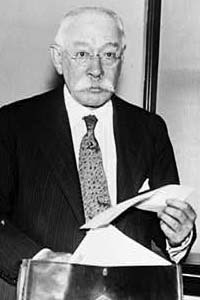
I’ve been meaning to post a “Periodicals Note” about the July issue of Counterpunch, in which “Peter Lee” wrote about the report that a commission headed by one George Wickersham submitted to US President Herbert Hoover on 7 January 1931. The Wickersham Commission had investigated charges that US law enforcement agencies were using torture to enforce the prohibition of alcohol that was then in effect across the United States. The commission’s staff was led by a civil liberties lawyer named Zechariah Chafee, and Chafee turned up evidence that made the Wickersham report impossible to ignore. Lee gives considerable detail from the report, and points out that all of the “enhanced interrogation” techniques that CIA and military interrogators have been accused of using against captives in the “war on terror” were familiar to Prohibition agents in the 1920s. Those methods disgusted the American public then, and the exposure of them did a good deal to spur the movement that ended Prohibition. The difference in the outraged public reaction of 1930 and the muted public reaction to the exposure of the same methods in the last five years cannot be attributed to the difference between accused bootleggers and accused terrorists; Lee points out that torture is not in fact a very effective way of thwarting terrorists. What has changed is us. The headline above Lee’s piece is “When America Said No!” His implication is that the American people have lost the moral compass that once enabled them to say no to torture.
All posts by acilius
The Wickersham Report on Lawlessness in Law Enforcement
Posted by acilius on September 10, 2009
https://losthunderlads.com/2009/09/10/the-wickersham-report-on-lawlessness-in-law-enforcement/
The American Conservative, October 2009
The cover may suggest an alarmist piece about Pakistan. The article actually in the issue, though, is precisely the opposite. Granting that Pakistan is an important country that has very serious problems, it asserts that there is no chance that it will break up, fall into the hands of Osama bin Laden, or launch a nuclear attack. If the USA sobers up and pursues a more realistic policy in Afghanistan, Pakistan might even make progress on its real problems.
Elsewhere in the issue, Andrew Bacevich quotes Cold Warrior Richard Pipes’ 1979 declaration to the effect that since Afghanistan is a place of no strategic importance, the Soviet invasion of that country must have been a step towards a goal elsewhere. Bacevich agrees that Afghanistan was without strategic importance when Pipes said that, and says that it continues to be so. Where he disagrees with Pipes is in his assessment of the rationality of the Soviet leadership of the 1979-1989 period, and indeed of the US leadership of today. He claims that the Soviets invaded Afghanistan because they believed that showing power there would shore up their empire; in fact, the Soviet occupation of Afghanistan was a significant factor in the eventual collapse of the USSR. Likewise, America’s leaders want to persist in Afghanistan, not because of they have made any rational calculation indicating that they should, but because they are dare not make a calculation that might indicate that they should not.
This issue includes a piece by always-intriguing, highly eccentric writer Eve Tushnet. Tushnet has a gift for the lapidary; she describes growing up in Washington, DC as one of very few white children in her neighborhood, albeit one “weird enough that my skin color was not one of the obvious targets of teasing.” Recounting her childhood Halloweens, she writes that “A mask is above all an attempt to communicate, to create and reshape meaning over the silence of skin.” Quite a provocative phrase, “the silence of skin.” On a par with her line from 2008, “by religion, I mean an understanding of the nature of love.”
Posted by acilius on September 9, 2009
https://losthunderlads.com/2009/09/09/the-american-conservative-october-2009/
Colin R Tribe can see clearly now
I can’t seem to embed videos this afternoon, so you’ll have to follow this link if you’d like to see Johnny Nash‘s hit played by our favorite British Columbian fingerstylist.
Posted by acilius on September 8, 2009
https://losthunderlads.com/2009/09/08/colin-r-tribe-can-see-clearly-now/
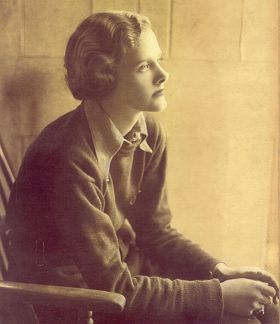
Rebecca and The Idea of History
During our vacation, Mrs Acilius and I read Daphne du Maurier’s Rebecca. At the same time, I was reading R. G. Collingwood’s The Idea of History. These two books were both written in the mid-1930s by English authors; otherwise, they seemed to have nothing in common at all. Rebecca was a popular novel, intended for a mass audience; The Idea of History is a rather austere work of philosophy, which its author never even attempted to publish. It was found among Collingwood’s papers after his death, and brought to his publishers’ attention by his friends. We wanted to read Rebecca because we had seen Hitchcock’s movie and were curious about some themes hinted at there; I’d been meaning to read The Idea of History for several years. They just happened to turn up on our reading lists at the same time.
I was surprised to find that the two books complement each other rather nicely. The narrator and main character of Rebecca is a woman who never gives her own name; we know that her husband is named Maxim de Winter, and that Maxim de Winter’s first wife, Rebecca, died suddenly about a year before the story begins. Rebecca was a powerful personality, and once the second Mrs de Winter arrives at her husband’s estate to start her new life with him she finds that everyone she meets there seems to be obsessed with her predecessor. Having spent her life up to the moment when she married Maxim in a modest station, the second Mrs de Winter had already been intimidated by Maxim’s great wealth and prestige. She was also keenly aware of the fact that she had none of the skills required to manage Maxim’s immense household. The second Mrs de Winter hides from the servants and comes to feel that the contrast between her own homely self and Rebecca’s great brilliance must be a painful disappointment to everyone. To escape from her fears and find her place in her new home, the second Mrs de Winter must come to understand her husband’s relationship with his late wife.
The challenge facing the second Mrs de Winter was one that Collingwood would have diagnosed as a task for historianship. Collingwood sees a great deal of historianship in everyday life. To quote from the 1968 Oxford University Press paperback I read (hereafter I’ll just call this book “Collingwood”):
If we look out over the sea and perceive a ship, and five minutes later look again and perceive it in a different place, we find ourselves obliged to imagine it as having occupied intermediate positions when we were not looking. That is already an example of historical thinking… (Collingwood 241)
Posted by acilius on September 8, 2009
https://losthunderlads.com/2009/09/08/rebecca-and-the-idea-of-history/
The Nation, August and September 2009
It’s been a busy few weeks in the Acilius household, and the blog has suffered. Here are quick notes on four recent issues of The Nation.

21 September: A special issue on food brings a bit of New Left- Old Right convergence as Michael Pollan writes in praise of Wendell Berry.
Alice Waters writes about the idea of “Edible Education,” and describes what happens in schools where the cafeteria not only serves wholesome food, but involves students in the processes of preparing and cleaning up after the meal. Waters quotes Thomas Jefferson on the virtues of the yeomanry, and concludes with a claim that “Edible Education” can help to build an ocietyethic of stewardship and with it a caring society.
14 September: A call for an investigation of the CIA’s conduct in recent years addresses claims that such an investigation would demoralize the agency’s staff. The article quotes former NSC official Richard Clarke:
Richard Clarke has little patience for it. “What bothers me,” he says, “is the CIA’s tendency whenever they’re criticized to say, If you do your job, if you do oversight seriously–which Congress almost never does–then we’ll pout. Some of us, many, will not just pout; we’ll retire early. Our morale will be hurt.” And if morale is hurt and the agencies are gutted, they argue, the country will be exposed to attack. In other words: “If you, Congress, do oversight, then we’ll all die. Can you imagine FEMA or the agricultural department saying we’re all going to retire if you conduct oversight?” Clarke asks in disbelief.
A harshly negative review of a retrospective of the works of artist Dan Graham mentions a work the reviewer considers superior to Graham’s, Mel Bochner and Robert Smithson’s Domain of the Great Bear, which appeared as an article in Art Voices magazine in Fall of 1966, and thus “inaugurated this genre” of magazine piece as conceptual art, the genre in which Graham would earn fame.
A review of a new selection of Wallace Stevens’ poetry mentions many poems,but leaves out that we might have expected to see discussed in a magazine with its issue date, “The Dwarf”:
Now it is September and the web is woven.
The web is woven and you have to wear it.
The winter is made and you have to bear it.
The winter web, the winter woven, wind and wind.
For all the thoughts of summer that go with it,
In the mind, pupa of straw, moppet of rags.
It is the mind that is woven, the mind that was jerked
And tufted in straggling thunder and shattered sun.
It is all that you are, the final dwarf of you,
That is woven and woven and waiting to be worn,
Neither as mask nor as garment but as a being,
Torn from insipid summer, for the mirror of cold,
Sitting beside your lamp, there citron to nibble
And coffee dribble… frost is in the stubble.

31 August: Benjamin Barber points out that public space
is not merely the passive residue of a decision to ban cars or a tacit invitation to the public to step into the street. It must be actively created and self-consciously sustained against the grain of an architecture built as much for machines as people, more for commercial than common use.
He argues that public art is an essential part of public space. Getting rid of cars is the easy part; filling a space with art, and with people who are alive to that art and to each other, is harder.
Posted by acilius on September 5, 2009
https://losthunderlads.com/2009/09/05/the-nation-august-and-september-2009/
The Economist, 5 September 2009
I can’t resist quoting some lines of verse that appear in this week’s obituary for Stanley Robertson, a Scotsman who made his living filleting fish in a cheap eatery in Aberdeen and who made his name as a storyteller, a bard who had learned a vast number of traditional tales and songs of the Scottish Travellers and who held audiences spellbound on both sides of the Atlantic. Here’s a playground rhyme Robertson liked:
Eenie meenie mackaracka,
Rair roe dominacka,
Soominacka noominacka,
Rum tum scum scoosh!
A short article describes “Quest to Learn,” a new school in New York City that does away with the division of the day into class periods themed around particular subjects and replaces it with “domains” in which students work collaboratively using various methods that have been studied by educational psychologists and developed by video gamers. The video game theme is incorporated so deeply that tests aren’t called tests, but “Boss Levels.”
Also in this issue, a review of Richard Dawkins‘ The Greatest Show on Earth: The Evidence for Evolution, takes a rather mystified tone in discussing the existence of so many people in the USA who disbelieve in evolution. Facing the idea of “Intelligent Design,” the reviewer asks why an intelligent designer would not have created an ecosystem in which all life-forms lived out full life-spans with a minimum of fuss and bother. “All trees would benefit from sticking to a pact to stay small, but natural selection drives them ever upward in search of the light that their competitors also seek. Surely an intelligent designer would have put the rainforest canopy somewhat lower, and saved on tree trunks?”
Posted by acilius on September 4, 2009
https://losthunderlads.com/2009/09/04/the-economist-5-september-2009/
Weighty matters
About seven years ago, I read G. R. Watson’s The Roman Soldier (originally published by Cornell University in 1969; I read a copy of the 1985 paperback reissue), a handbook summarizing what scholars in 1969 knew about life in the ancient Roman army. One point Watson made that I’ve been thinking about ever since I read the book had to do with the field packs Roman soldiers wore. Some scholars in Germany had tended to give very high estimates of the amount of weight that Roman soldiers had to carry, in some cases solemnly asserting that a legionary would march about all day with over a hundred pounds of equipment on his back. Dismissing these estimates as a self-evident absurdity, Watson tries to figure out just how heavy the pack might have been (in the 1985 reissue, that discussion is on pages 62-66, continued in note 140 on pages 175-176.) The best estimate he can come up with puts the average weight of the Roman soldier’s pack at 30 kilograms (66 pounds,)which happens to be identical to the standard for most modern armies.
Watson’s evidence suggests that throughout history armies have tended to increase the amount of weight soldiers have to carry, until the kit becomes so heavy that the high command has no choice but to cut it down to something weighing about 30 kilograms. I suppose that the obvious reason for this tendency is that many people are involved in deciding what it is essential that a soldier should carry in the field. Each of those people has ideas about items that should be on that list, and each sees the addition of his or her favorite item as a victory. When no one involved in decision-making at that level has to wear a full field pack on a regular basis, the decision makers have no immediate incentive to deny each other their little victories.
I wonder if there might not be a second, less obvious reason for this tendency. Ed Yong’s Not Exactly Rocket Science reports on a psychological experiment which indicates that people who are holding heavy objects tend to take matters more seriously than the same people do when they are not holding heavy objects. If this tendency is and has long been general among all humans everywhere, then we would expect that people who are interested in human behavior would have noticed it. Military commanders are interested in human behavior. Perhaps, noticing the overlap between the category “people holding heavy objects” and the category “people showing seriousness,” commanders have formed the idea that they could induce ever greater seriousness in their subordinates by weighing them down with ever more heavily loaded field packs.
If there’s anything to this speculation of mine, perhaps it is also part of the reason why there is so little protest against the spine-damagingly heavy backpacks that so many American children are forced to lug to and from school every day. Of course, many people are involved in deciding what a student should learn and do in school, and that is an obvious reason why the collection of textbooks and other materials students must transport on their persons tend to grow so heavy.
But perhaps a belief that the weight of the physical burden one carries correlates directly with the seriousness of one’s attitude is also part of it. We want children to take school seriously. We have observed that people holding heavy objects tend to be serious. If holding heavy objects translates into seriousness, maybe holding even heavier objects will translate into even more seriousness! It will definitely translate into more back injuries, but isn’t that a small price to pay for keeping the wee ones doubled over for much of the day?
Posted by acilius on August 27, 2009
https://losthunderlads.com/2009/08/27/weighty-matters/
An unexpected visitor
Yesterday was the first day of school. I taught in the morning, Mrs Acilius had her classes in the afternoon. We went in together on the 7:14 AM bus. We have a little bath mat that Mrs Acilius’ assistance dog P—— uses to keep from sliding in the aisle of the bus. When we take the bus to school, I keep the mat in my office so that Mrs Acilius doesn’t have to carry it with her everywhere she goes.
At about 1 pm, I was doing paperwork at my desk. A student appeared in the doorway of my office. “Excuse me, sir, this cat was running around in the hallway.” She was holding a little kitten. “He’s bleeding rather badly. I have to go to class. Can you do something for him?” I stood up and reached for the kitten. She looked relieved and held him out to me. Of course he scratched my hand. I handed the kitten back to the student, then picked up P——‘s mat. I held the mat out, the student set the kitten down in it. As I wrapped him up, she rushed off to her class.
So there I stood with an injured kitten. What next? I decided to take him to the nearest office and appeal for help. My office is about equidistant from the Dean’s office and the Psychological Science department office. I decided to take him to the Psychological Science office.
That turned out to be a very good decision. Their office assistant took the mat and set it on her desk. Also in the room were the department’s administrative coordinator, a couple of undergrads, and the department chair. They all gathered around the kitten in a circle. The office assistant got a little jar, filled it with water, and offered it to the kitten. The chair got a little cardboard box and put the jar and the kitten in it. The administrative coordinator had some dog food in her office for some reason; she put a couple of pieces of that in the box. The chair then went to his office and retrieved some tuna left over from his lunch.
The kitten was very badly hurt. He sniffed the water and the tuna, but didn’t take any of either. The student hadn’t been exaggerating when she said he was bleeding rather badly. The end of his tail was missing and blood was streaming out of it; there were deep scratches on the front of his chest. Someone I told about it this morning thought the kitten might have tangled with the hawk who circles the Quad; I’m sure that’s exactly what happened.
Seeing how much attention he was getting in the Psych office, I decided it was time to get back to work. So I excused myself and returned to my office. A half hour later, a psychology professor whose first initial is H came to my office. H—— told me that she had made a 4 PM vet appointment for the kitten. She swore up and down that she wouldn’t be able to keep him. “We already have two cats, and our place is so small- we can not have another cat.” Oh, she said, she would keep him for a while after he was released from the vet, but he’d have to live in the bathroom to keep him away from her two rambunctious older cats.
A few hours later, I was meeting with a student when Mrs Acilius came by my office. As Mrs Acilius waited for the end of my meeting, H—— saw her. H——- went up to Mrs Acilius and told her the whole story. She’d already taken the kitten to the vet. The vet had said the kitten was in shock from loss of blood and would need surgery to repair some mangled bones. H—— had agreed to pay for the surgery and was going to take the kitten in afterward, but she repeated that she could not have another cat. Apparently she went on and on about the sheer impossibility of taking another cat into her home.
When Mrs Acilius and I were leaving for the day at 4:30 or so, she reported what H—— had told her. I remarked that in my experience, swearing that you will not take in another cat is one of the stages in the process of adopting a cat. She said she suspected that it would prove to be the case here.
Posted by acilius on August 25, 2009
https://losthunderlads.com/2009/08/25/an-unexpected-visitor-2/
The American Conservative, September 2009
One of the traits of this magazine is a tendency to grandiose theoretical explanations. That’s one of the things I like about it; I’m into grandiose theoretial explanations myself. It isn’t scholarly publication, and few of its authors have academic reputations to defend, so that tendency is not always restrained by the standards that keep theorizing under control in academic journals. Sometimes that means that the magazine runs a provocative, bold idea that might not have survived heavier editing; sometimes it means that it runs something that’s just plain cheesy quality. Again, I’m a pretty cheesy guy, so that’s okay with me.
For example, this month Ted Galen Carpenter points out that Americans by and large are quick to view political disputes in foreign countries in a romantic light, seeing the ghost of Thomas Jefferson in all sorts of unlikely figures. The next piece, by John Laughland, picks up on this same theme, explaining this American tendency as a sign of the influence of the philosophy of the Enlightenment. Laughland writes that “the key to understanding the West’s love of revolutions” is Westerners’ characteristic desire to believe that “politics can and should be a story with a happy ending.” This desire has run rampant in the West ever since the thinkers of the Enlightenment undermined the traditional Christian belief that the cosmos was ordered in a hierarchy, that justice was to be found in that hierarchy, and that the ruler’s power should be limited because the ruler was subordinate to God. Laughland identifies Immanuel Kant as “the greatest of all Enlightenment philosophers,” and summarizes Kant’s theory as a belief that ordinary reality is unknowable, but that the highest reality is “the categorical imperative- an abstract universally valid proposition that becomes real when it is willed.” Proceeding from these rather drastic simplifications, Laughland declares that:
The attraction of Enlightenment liberalism, therefore, is the result of a deep emotional need for a philosophical sytem that enables man to create a reality in a universe he does not understand and thereby to escape from the difficulties of the world by believing that everything will turn out all right in the end. Lacking a real belief in the afterlife, it also holds that the drama of human salvation is played out in this world, in history and politics.
Again, this is a severe oversimplification, but it has a certain plausibility. Where Laughland really goes off the rails is in his closing section, in which he argues that Enlightenment liberalism has an “objective ally” in Islam:
[B]ecause it has no priesthood, Islam, and especially Shi’ism, is fundamentally a “democratic” religion comparable to Puritanism and other forms of Presbyterianism. There is no established hierarchy; the Koran must be read equally by all. Of course Allah is supreme and Islam demands absolute submission to Him; on the face of it, this seems the opposite of the liberal model in which the individual is subjected only to himself. But this very submission is egalitarian, creating a mass of individuals who are equal in their abstractness. Moreover, God’s will is [merely] will, it has no correlation with natural law as in the Christian or Jewish traditions. Islam is therefore a profoundly voluntarist religion. Because Allah is absolutely transcendent and unknowable, he is like the Kantian thing-in-itself: mere command.
Posted by acilius on July 31, 2009
https://losthunderlads.com/2009/07/31/the-american-conservative-september-2009/
The Funny Times, August 2009
Ray Lesser’s “Your Inner Fish” includes these two memorable paragraphs:
In his book Your Inner Fish, [Professor Neil] Shubin describes many of the recent amazing discoveries in paleontology and genetic research to explain human origins and evolution. We quite literally contain the entire tree of life inside our bodies. He says humans are the fish equivalent of a Volkswagen Beetle souped up to race 150 mph. “Take the body plan of a fish, dress it up to be a mammal, then tweak and twist that mammal until it walks on two legs, talks, thinks, and has superfine control of its fingers — and you have a recipe for problems.”
The difficulty of engineering a fish to walk on two legs has resulted in many a sore knee and sprained ankle, not to mention closets full of poorly fitting shoes. The strange loops and detours our nerves and veins have to take to get around various organs lead to other common annoyances such as hiccups and hernias. Four of the leading causes of death in humans — heart disease, diabetes, obesity, and stroke — are mostly due to having at our core a body that was designed to swim around all day, rather than sit on its keister surfing the Internet, or drive truckloads of sardines from L.A. to Indianapolis. Fish don?t get hemorrhoids, either.
Jon Winokur’s “Curmudgeon” column collects quotes on boredom. My favorite is from Henry Kissinger, “The nice thing about being a celebrity is that when you bore people, they think it’s their fault.” Norman Mailer and Bertrand Russell are not as far apart as one might suppose; Russell said, “Boredom is a vital problem for the moralist, since at least half the sins of mankind are caused by it.” Mailer said, “”The war between being and nothingness is the underlying illness of the twentieth century. Boredom slays more of existence than war.” These two are not far from an author Winokur leaves out, Blaise Pascal, who famously attributed most of the trouble in the world to people’s inability to sit quietly in their rooms. Frank Moore Colby said, “Every improvement in communication makes the bore more terrible.” Nancy Astor said, “The penalty for success is to be bored by the people who used to snub you.” Rochefoucauld said, “We often forgive those who bore us, but we cannot forgive those whom we bore.”
Harper’s Index reports that in April of this year, 27 percent of the respondents to a poll identified as Republicans, while another poll in the same month reported that 20 percent of respondents agreed the “Socialism is better than capitalism.” So perhaps we should put the GOP on the same footing as socialists.
Posted by acilius on July 25, 2009
https://losthunderlads.com/2009/07/25/the-funny-times-august-2009/