
I can’t seem to embed videos this afternoon, so you’ll have to follow this link if you’d like to see Johnny Nash‘s hit played by our favorite British Columbian fingerstylist.
All posts for the month September, 2009
Colin R Tribe can see clearly now
Posted by acilius on September 8, 2009
https://losthunderlads.com/2009/09/08/colin-r-tribe-can-see-clearly-now/
Rebecca and The Idea of History
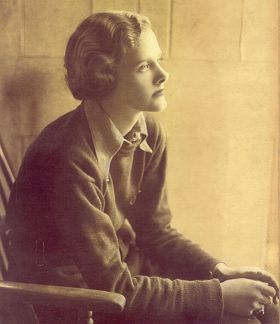
The young Daphne du Maurier
During our vacation, Mrs Acilius and I read Daphne du Maurier’s Rebecca. At the same time, I was reading R. G. Collingwood’s The Idea of History. These two books were both written in the mid-1930s by English authors; otherwise, they seemed to have nothing in common at all. Rebecca was a popular novel, intended for a mass audience; The Idea of History is a rather austere work of philosophy, which its author never even attempted to publish. It was found among Collingwood’s papers after his death, and brought to his publishers’ attention by his friends. We wanted to read Rebecca because we had seen Hitchcock’s movie and were curious about some themes hinted at there; I’d been meaning to read The Idea of History for several years. They just happened to turn up on our reading lists at the same time.
I was surprised to find that the two books complement each other rather nicely. The narrator and main character of Rebecca is a woman who never gives her own name; we know that her husband is named Maxim de Winter, and that Maxim de Winter’s first wife, Rebecca, died suddenly about a year before the story begins. Rebecca was a powerful personality, and once the second Mrs de Winter arrives at her husband’s estate to start her new life with him she finds that everyone she meets there seems to be obsessed with her predecessor. Having spent her life up to the moment when she married Maxim in a modest station, the second Mrs de Winter had already been intimidated by Maxim’s great wealth and prestige. She was also keenly aware of the fact that she had none of the skills required to manage Maxim’s immense household. The second Mrs de Winter hides from the servants and comes to feel that the contrast between her own homely self and Rebecca’s great brilliance must be a painful disappointment to everyone. To escape from her fears and find her place in her new home, the second Mrs de Winter must come to understand her husband’s relationship with his late wife.
The challenge facing the second Mrs de Winter was one that Collingwood would have diagnosed as a task for historianship. Collingwood sees a great deal of historianship in everyday life. To quote from the 1968 Oxford University Press paperback I read (hereafter I’ll just call this book “Collingwood”):
If we look out over the sea and perceive a ship, and five minutes later look again and perceive it in a different place, we find ourselves obliged to imagine it as having occupied intermediate positions when we were not looking. That is already an example of historical thinking… (Collingwood 241)
Posted by acilius on September 8, 2009
https://losthunderlads.com/2009/09/08/rebecca-and-the-idea-of-history/
The Nation, August and September 2009
It’s been a busy few weeks in the Acilius household, and the blog has suffered. Here are quick notes on four recent issues of The Nation.
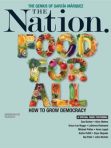
21 September: A special issue on food brings a bit of New Left- Old Right convergence as Michael Pollan writes in praise of Wendell Berry.
Alice Waters writes about the idea of “Edible Education,” and describes what happens in schools where the cafeteria not only serves wholesome food, but involves students in the processes of preparing and cleaning up after the meal. Waters quotes Thomas Jefferson on the virtues of the yeomanry, and concludes with a claim that “Edible Education” can help to build an ocietyethic of stewardship and with it a caring society.
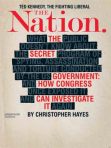
14 September: A call for an investigation of the CIA’s conduct in recent years addresses claims that such an investigation would demoralize the agency’s staff. The article quotes former NSC official Richard Clarke:
Richard Clarke has little patience for it. “What bothers me,” he says, “is the CIA’s tendency whenever they’re criticized to say, If you do your job, if you do oversight seriously–which Congress almost never does–then we’ll pout. Some of us, many, will not just pout; we’ll retire early. Our morale will be hurt.” And if morale is hurt and the agencies are gutted, they argue, the country will be exposed to attack. In other words: “If you, Congress, do oversight, then we’ll all die. Can you imagine FEMA or the agricultural department saying we’re all going to retire if you conduct oversight?” Clarke asks in disbelief.
A harshly negative review of a retrospective of the works of artist Dan Graham mentions a work the reviewer considers superior to Graham’s, Mel Bochner and Robert Smithson’s Domain of the Great Bear, which appeared as an article in Art Voices magazine in Fall of 1966, and thus “inaugurated this genre” of magazine piece as conceptual art, the genre in which Graham would earn fame.
A review of a new selection of Wallace Stevens’ poetry mentions many poems,but leaves out that we might have expected to see discussed in a magazine with its issue date, “The Dwarf”:
Now it is September and the web is woven.
The web is woven and you have to wear it.
The winter is made and you have to bear it.
The winter web, the winter woven, wind and wind.
For all the thoughts of summer that go with it,
In the mind, pupa of straw, moppet of rags.
It is the mind that is woven, the mind that was jerked
And tufted in straggling thunder and shattered sun.
It is all that you are, the final dwarf of you,
That is woven and woven and waiting to be worn,
Neither as mask nor as garment but as a being,
Torn from insipid summer, for the mirror of cold,
Sitting beside your lamp, there citron to nibble
And coffee dribble… frost is in the stubble.
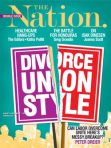 31 August: Benjamin Barber points out that public space
is not merely the passive residue of a decision to ban cars or a tacit invitation to the public to step into the street. It must be actively created and self-consciously sustained against the grain of an architecture built as much for machines as people, more for commercial than common use.
He argues that public art is an essential part of public space. Getting rid of cars is the easy part; filling a space with art, and with people who are alive to that art and to each other, is harder.
Posted by acilius on September 5, 2009
https://losthunderlads.com/2009/09/05/the-nation-august-and-september-2009/
The Economist, 5 September 2009
 I can’t resist quoting some lines of verse that appear in this week’s obituary for Stanley Robertson, a Scotsman who made his living filleting fish in a cheap eatery in Aberdeen and who made his name as a storyteller, a bard who had learned a vast number of traditional tales and songs of the Scottish Travellers and who held audiences spellbound on both sides of the Atlantic. Here’s a playground rhyme Robertson liked:
Eenie meenie mackaracka,
Rair roe dominacka,
Soominacka noominacka,
Rum tum scum scoosh!
A short article describes “Quest to Learn,” a new school in New York City that does away with the division of the day into class periods themed around particular subjects and replaces it with “domains” in which students work collaboratively using various methods that have been studied by educational psychologists and developed by video gamers. The video game theme is incorporated so deeply that tests aren’t called tests, but “Boss Levels.”
Also in this issue, a review of Richard Dawkins‘ The Greatest Show on Earth: The Evidence for Evolution, takes a rather mystified tone in discussing the existence of so many people in the USA who disbelieve in evolution. Facing the idea of “Intelligent Design,” the reviewer asks why an intelligent designer would not have created an ecosystem in which all life-forms lived out full life-spans with a minimum of fuss and bother. “All trees would benefit from sticking to a pact to stay small, but natural selection drives them ever upward in search of the light that their competitors also seek. Surely an intelligent designer would have put the rainforest canopy somewhat lower, and saved on tree trunks?”
Posted by acilius on September 4, 2009
https://losthunderlads.com/2009/09/04/the-economist-5-september-2009/
Who writes this?
 acilius
 believer1
 lefalcon
 losthunderlads
 vthunderlad
 Panther Red